Try Weglot for free


International expansion used to mean long timelines, in-depth research, and serious investment before making a single international sale. For most small and mid-market companies, it wasn’t a question of whether they should expand internationally; it was how they could afford to.
But AI is transforming the playing field. The cost has dropped, the complexity has shrunk, and businesses of any size can enter a new market in days.
In this article, we’ll break down the barriers that AI removes, what an AI-powered international expansion strategy looks like, and 5 tools to help you along the way.
Traditional international expansion was slow because every step depended on specialized people and disconnected processes.
But AI now automates and accelerates much of the manual work, making international expansion less of a giant monolithic project and more of a series of fast tasks that employees can complete without decades of experience.
Here’s how AI is removing 3 of the biggest hurdles to expanding internationally.
Cost has traditionally been one of the biggest barriers to international expansion. Market research, translation agencies, development work, and market-specific advertising campaigns can quickly push budgets into 6 or 7 figures before companies see a return.
Take translation, for example. Professional rates average around $0.17–$0.50 per word, so that’s $25,000 for an average ecommerce site with 50,000 words. If you want to expand to four markets at once, that’s 6 figures in translation costs alone.
With AI, translation costs are a fraction of that, and the quality is strong, not to mention the speed to launch instantly. You can use a website translation tool like Weglot to instantly translate your entire site into 5 languages for just €79 ($87) per month.
Humans can remain part of the process, but you can instead use them for the highest-value work, such as localizing your messaging and optimizing product pages for international SEO.
Weglot even lets you order professional translations directly from your dashboard:
Few small or mid-market businesses could handle the complexity of international expansion on their own. Traditionally, it required coordinating with an entire ecosystem of specialists that included:
Each of these had its own lead time, cost, and potential to delay everything else. It would be easy for a small business to take one look at that list and conclude international expansion was beyond its capabilities.
While AI hasn’t eliminated all these requirements, it has drastically reduced the operational and technical overhead businesses need to get started.
Weglot is a great example of this because it handles content translation, multilingual URL structures, hreflang tags, and more from a single dashboard without any developer involvement. The result? Businesses can test new markets without first partnering with a dozen experts.
When they’re ready to commit to a market, businesses can use AI tools to accurately classify products according to international tariff schedules, calculate the VAT and check compliance in multiple locations at once.
The speed at which businesses can enter new markets may be the biggest shift of all. A comprehensive international expansion strategy, including market research, hiring, and legal, could take a year or more, making it extremely difficult for smaller businesses to respond quickly to market changes.
But AI now means businesses can see how new markets respond to their offering with almost no delay.
Take Volant, a Scandinavian homeware brand. It used Weglot to translate its 100,000-word website into 9 languages across 11 markets in less than 1 month, in response to a Covid-era surge in demand. Within a month of launch, international traffic increased by 2x and international revenue rose by 39%.
Given the impact of AI, it’s no wonder that almost one-third of UK businesses, 56% of US businesses, and 39% of Spanish businesses are following suit and considering cross-border growth.
But AI hasn’t just lowered the barriers to international expansion. It’s also changed the approach that most small and mid-market businesses should take.
The speed, cost, and simplicity of AI-powered international expansion mean today’s businesses can be far more experimental and customer-oriented than their predecessors.
Specifically, advances in AI mean you can take a digital-first approach to international expansion, in which your website is no longer the final step after strategy, hiring, and market validation. It’s the first step in determining which markets are worth pursuing.
Here’s why AI means an international expansion strategy should start with your website:
By using AI to launch your localized website first, international expansion feels less like a gamble to small businesses and more like a structured learning experience.
For French ecommerce brand The Bradery, using Weglot’s AI translation tool meant it could rapidly test demand in Dutch and Italian markets by translating its site with minimal manual effort. Realizing traffic was limited, it hit pause and focused its expansion efforts in the UK and Spain.
Thanks to Weglot’s high-quality automatic translations, The Bradery only needs a small Spanish team to manage 3 flash sales and 500+ product pages that get launched each day.
AI can support nearly every stage of a customer-first international expansion strategy. Here’s how you can combine a few well-chosen tools to handle research, translation, acquisition, and support.
Weglot is an AI translation tool that automatically translates your entire site, including dynamic content, plugin-generated strings, ecommerce product pages, checkout flows, and pop-ups, into 110+ languages.
It works with WordPress, Shopify, Webflow, Wix, and every other CMS and takes less than 10 minutes to set up.
Weglot guarantees high-quality translation by integrating with leading AI translation providers DeepL, Google Translate, and Microsoft Translator, and using the best machine learning model for your language pair. There’s also a built-in AI Language Model that trains on your voice and terminology to deliver brand-aligned translations, powered by OpenAI and Gemini.
A Visual Editor lets you refine translations in context. You can even invite professional translators or team members to review specific pages directly through Weglot’s Dashboard. Multilingual SEO is taken care of, too, with Weglot adding hreflang tags, translating metadata, and defining URL structures.
Weglot’s cloud-based nature makes it ideal for teams looking to expand internationally without rebuilding their website, hiring a development agency, or working with translators. It also means your website’s speed and Core Web Vitals are unaffected by how many languages you add.
Pricing: Plans start from $170 a year, which lets you translate your website into one other language up to 10,000 words.
Ahrefs is an AI-powered marketing tool that helps you decide where to expand next. You can use the platform’s built-in generative AI tool to rapidly uncover keyword opportunities across 173+ languages from a single keyword. It’s a great way to find terms that may not be obvious from an English-language perspective.
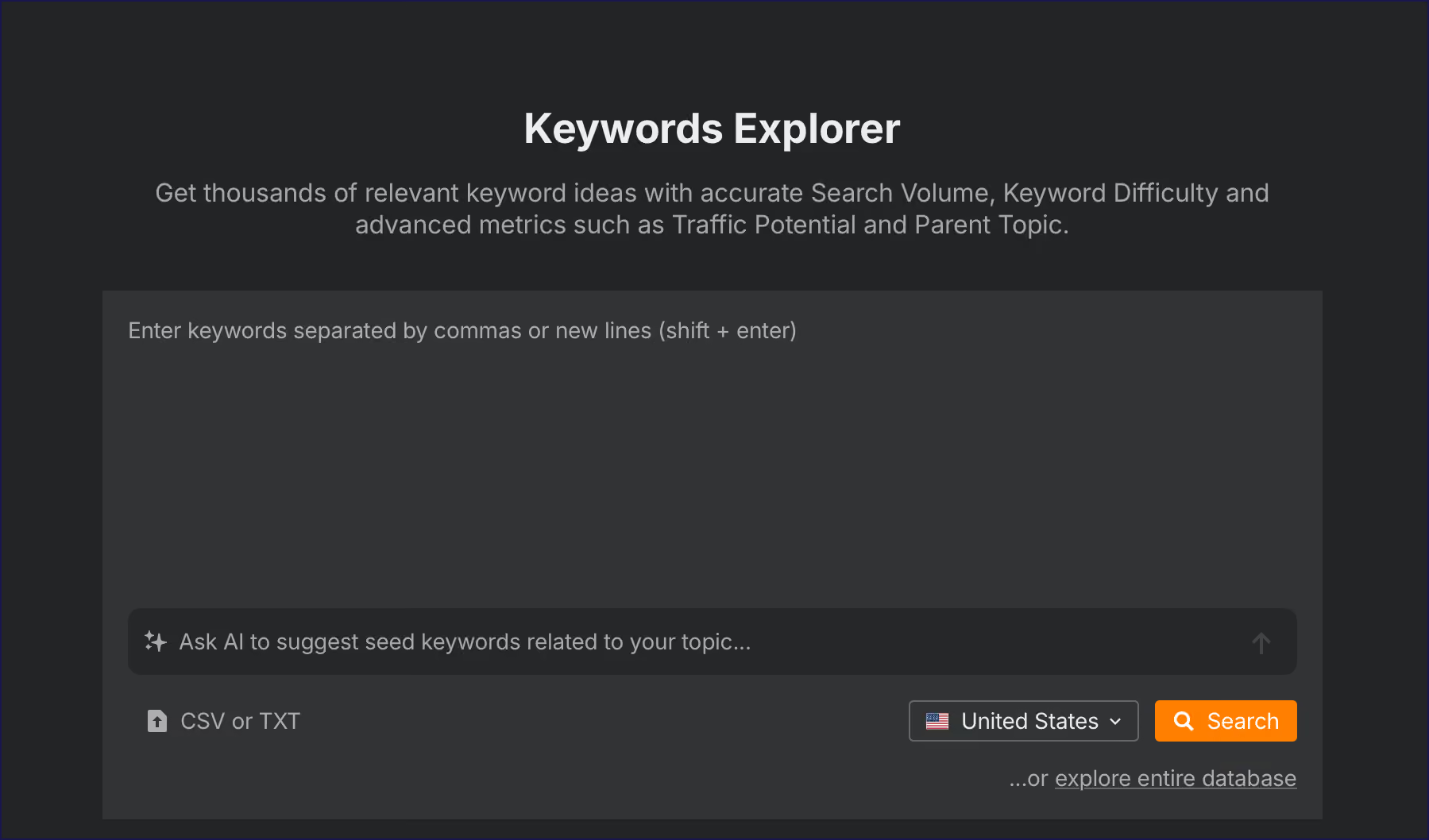
Ahrefs helps you understand the intent behind each keyword and estimate the traffic you can expect, so you can determine whether specific markets are worth your time. Compare traffic estimates between markets and your existing website to prioritize markets.
Competitor research is covered by the Site Explorer tool, which lets you analyze competitors in target markets, see which countries their traffic comes from and which keywords they target. If a competitor in your current market also has a presence in France, for example, it’s a good bet your brand will be in demand there, too.
You can even use the platform’s rank tracking functionality to measure your multilingual SEO and GEO (Generative Engine Optimization) success.
Pricing: Ahrefs’ AI features are available on its Standard plan, costing $208 per month with annual billing.
Zendesk lets you deliver multilingual support across multiple markets.
AI-powered routing detects a ticket’s language and either routes it to the appropriate agent or generates an AI response. That way, customers in new markets receive timely and relevant support immediately, without you having to hire and manage a separate customer service team.
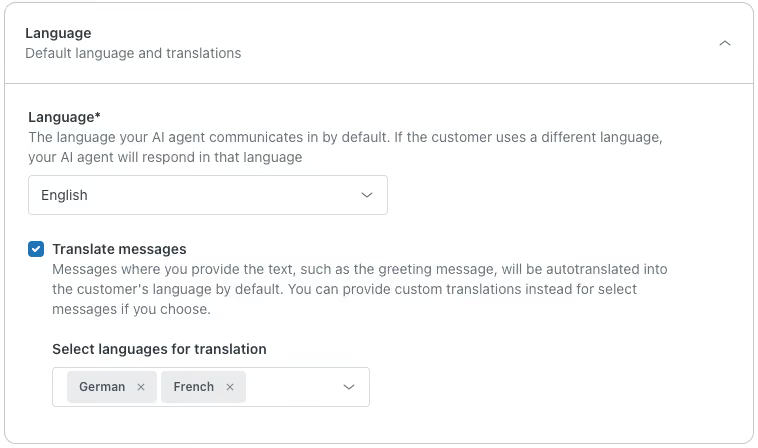
Zendesk supports over 40 languages and integrates with WhatsApp, Facebook, Instagram, SMS, and email, allowing small businesses to deliver localized support in almost every market they enter.
Pricing: Zendesk’s AI agents are available on Suite plans and above, which start at $55 per agent when billed annually.
Email marketing platform Klaviyo’s AI-powered Smart Translations feature lets you translate existing email campaigns into over 60 languages directly within the campaign editor.
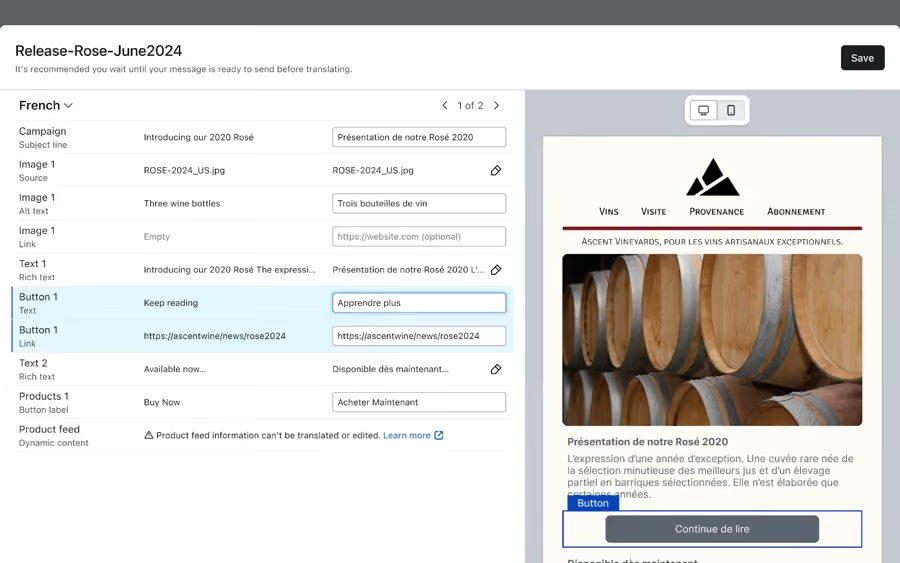
The tool automatically translates content based on each user’s preferences. So, an Austrian user receives the campaign in German while a French customer gets a French email.
Klaviyo also lets you regionalize the product content shown in emails. That means product information, currency, and pricing also match the customer’s preferences, increasing engagement and conversion.
Pricing: Klaviyo’s marketing plan starts at $45 per month for 15,000 emails.
Google Performance Max is the search giant’s AI-powered campaign type that automatically adapts ad creatives and targeting across markets. It optimizes delivery in real-time based on signals from local audiences, without you having to manage individual campaigns in each country.
Because paid ad campaigns work best when supported by localized landing pages, you’ll want to use Weglot to translate existing landing pages before you launch your first campaign. When that’s in place, international visitors will arrive on a landing page in their language, with a localized checkout flow, giving your ad spend the best chance of converting.
Pricing: There are no setup or platform fees for Performance Max. You pay only for the performance your ads generate.
Here’s what an international expansion strategy looks like when you use AI to do the heavy lifting.
Whether you’re already seeing traffic from another country or want to test demand in a neighboring market, the first step is to research the opportunity without leaving your desk.
Use Ahrefs to uncover potential keywords and estimate demand in several target markets. For example, a French eyewear retailer could look at local search terms related to glasses, frames, and prescription lenses in the UK, Italy, and Germany, and compare search volume and traffic potential side by side.
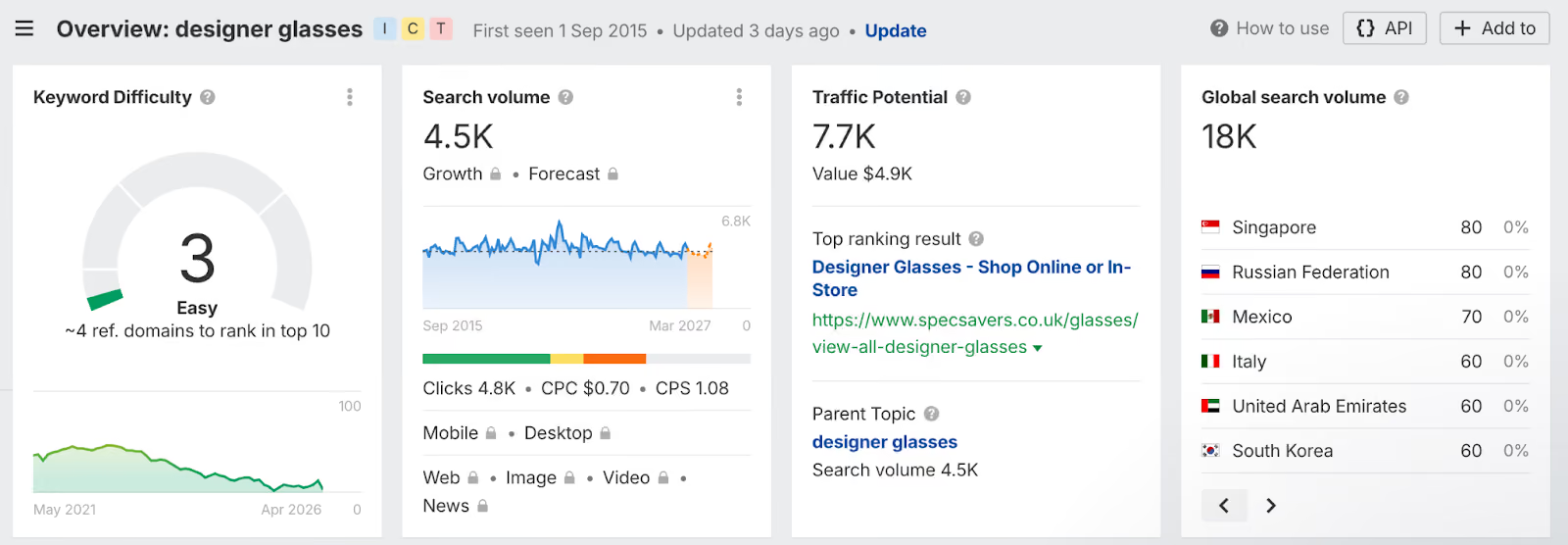
If search volume is healthy and the competition looks manageable, then you can continue to the next step.
Once you’ve decided on your target markets, use Weglot to translate your website content in minutes.
Installing Weglot is as easy as creating an account, choosing your languages, and adding a snippet of JavaScript to your website:
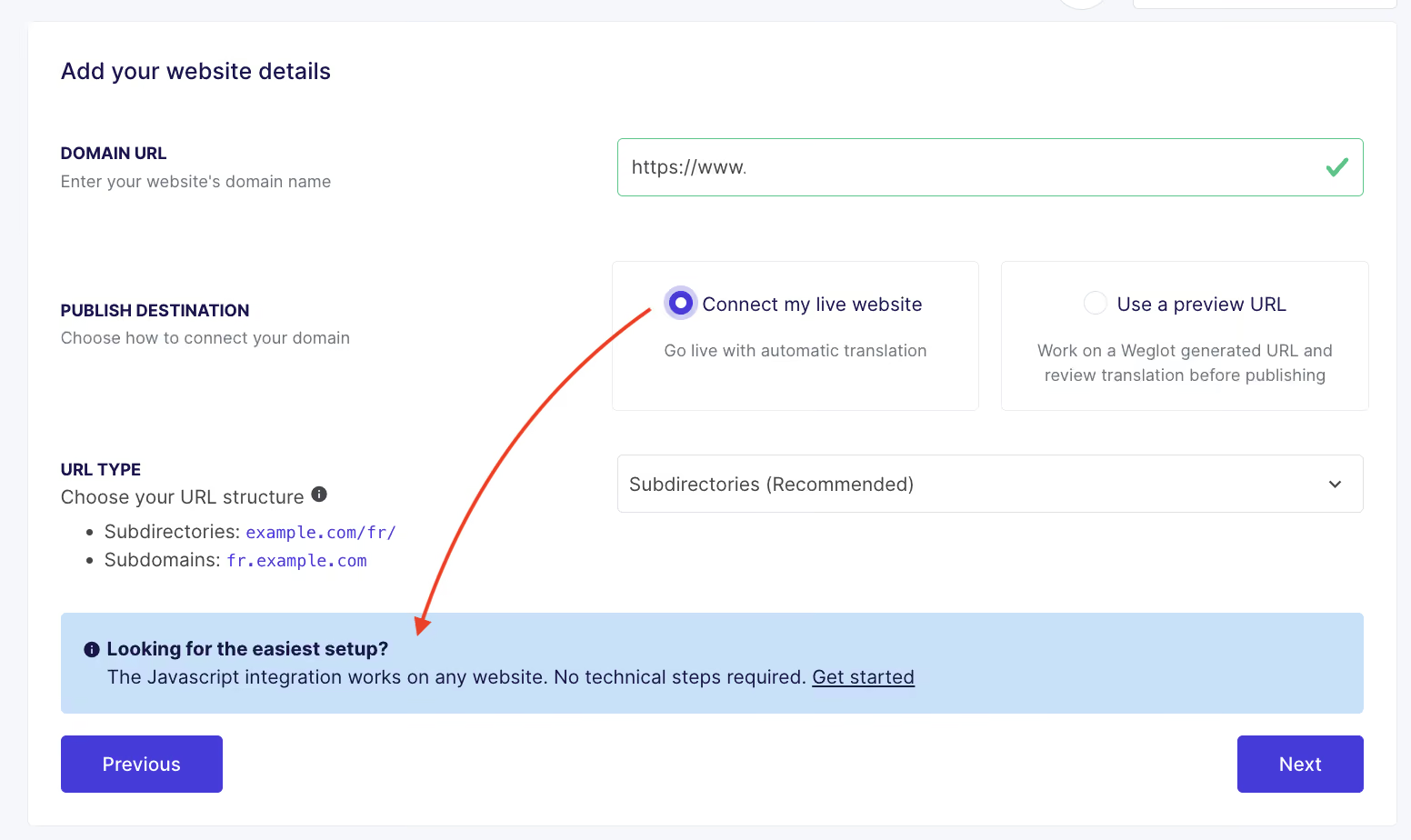
You can choose to launch in one language or several simultaneously:
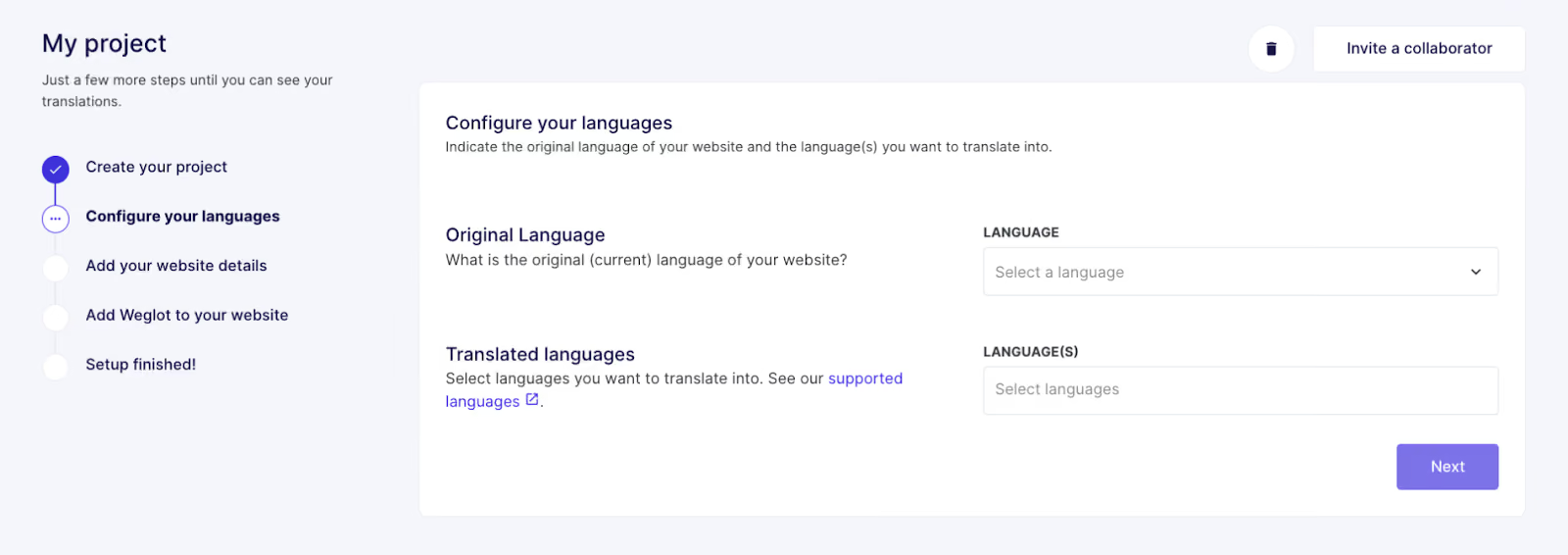
Weglot’s AI immediately scans it and translates all content using a combination of DeepL, Google Translate, and Microsoft Translator for the highest available accuracy. Add instructions to your custom AI Language Model to increase the accuracy further. Connected to OpenAI and Gemini, it uses your brand guidelines, specific prompts, rules, and instructions to create translations that are true to your brand, without involving human review.
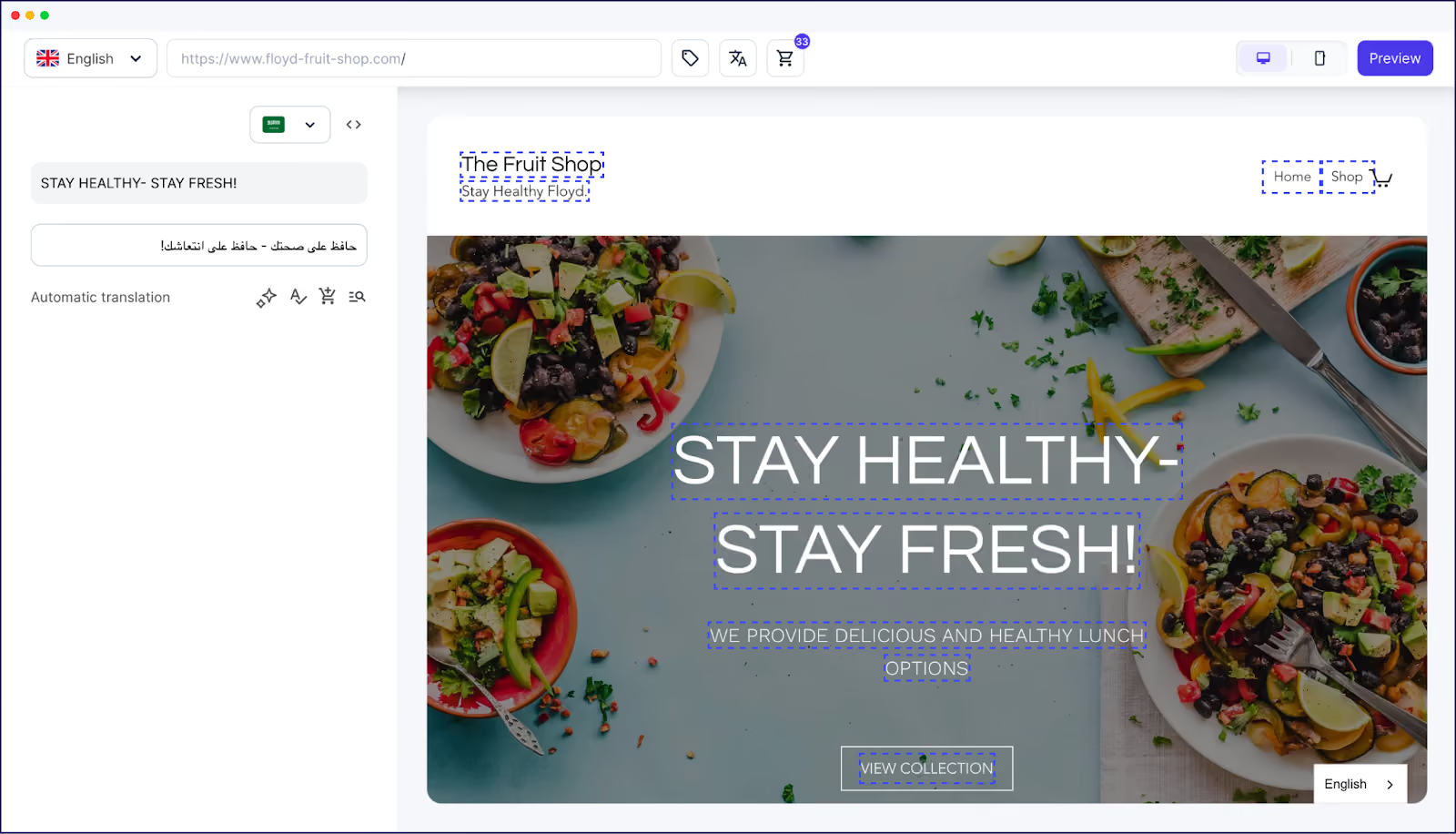
Once added, you can check and tweak individual translations using Weglot’s Visual Editor if you’d like. You can do it yourself, use AI, or order a translation from a human professional.
Here’s what the Visual Editor looks like:
Add a customizable language switcher to let visitors easily switch between languages. It will give international users a smooth experience from the first visit and help your brand feel accessible immediately.
Because Weglot handles the technical elements of multilingual SEO, your translated site will be ready to rank from the moment they go live.
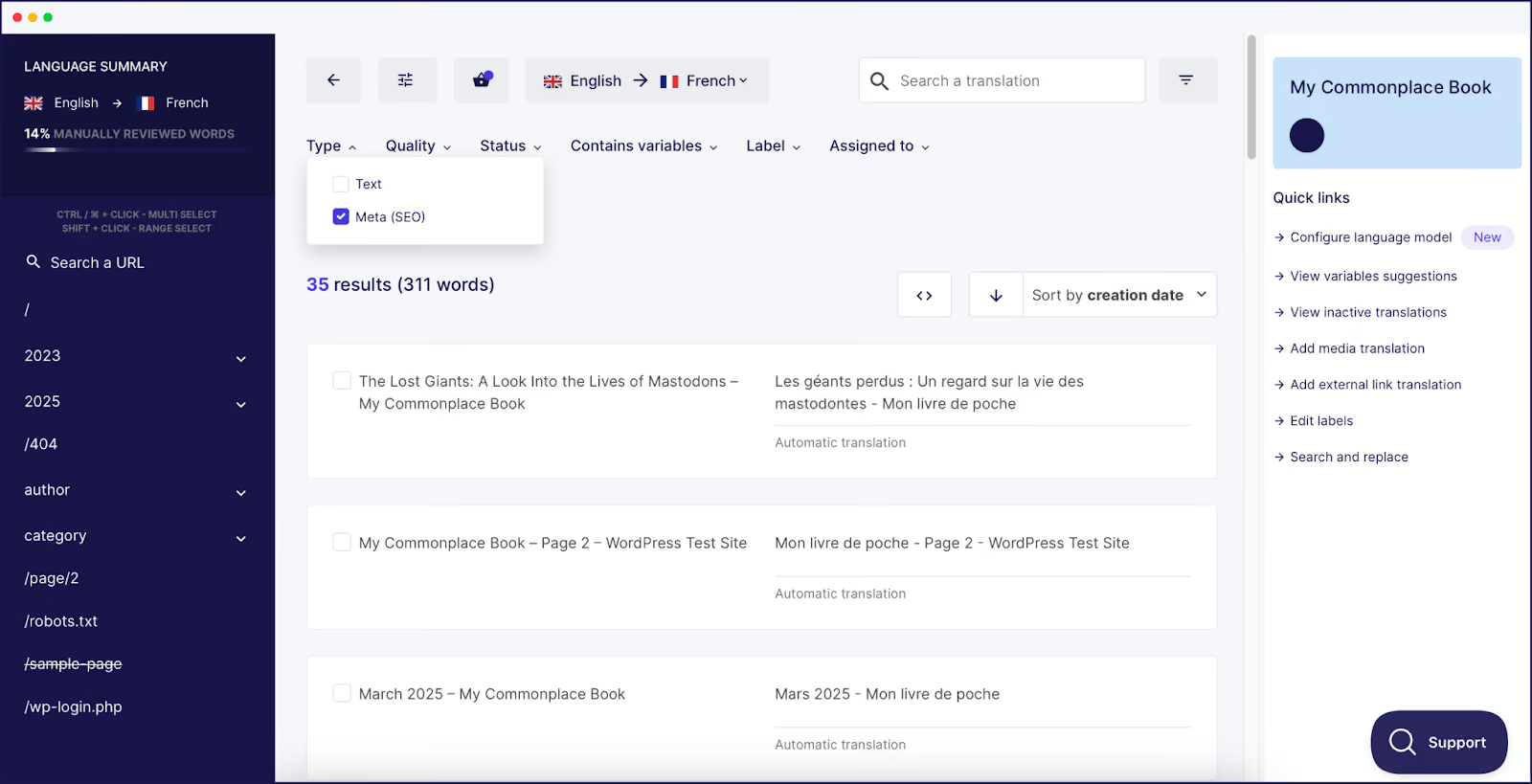
Weglot creates language-specific URLs, adds the correct hreflang tags, translates all your metadata, and updates your multilingual sitemap, so Google can crawl and index each localized URL correctly.
Keep an eye on Google Analytics in the days after launch to check that Google has indexed your website and is starting to send it traffic. Use Ahrefs to monitor keyword rankings and spot content gaps worth filling.
After 60 to 90 days, you’ll have a clear view of which languages and markets are generating traffic, engagement, and conversions.
Use an analytics platform like Google Analytics to assess each market’s performance across the following metrics:
Cross-reference analytics data with Ahrefs rank tracking to see which markets are gaining keyword visibility, as well as traffic.
You can then double down on the markets showing momentum and pause efforts in the ones that aren’t. Treat the winners as a big opportunity and the losers as a useful signal, not a sunk cost.
Once your best-performing markets are clear, extend your content localization beyond text to deliver a fully native experience for visitors.
These measures will prevent a page that’s technically translated from feeling off to local visitors when the supporting assets don’t match the market.
Here’s more information on building a content localization strategy:
AI’s real advantage is that it lets you scale your operation without increasing headcount.
Once you’re set up on Weglot, you can translate your site into more languages with a couple of clicks from your dashboard.
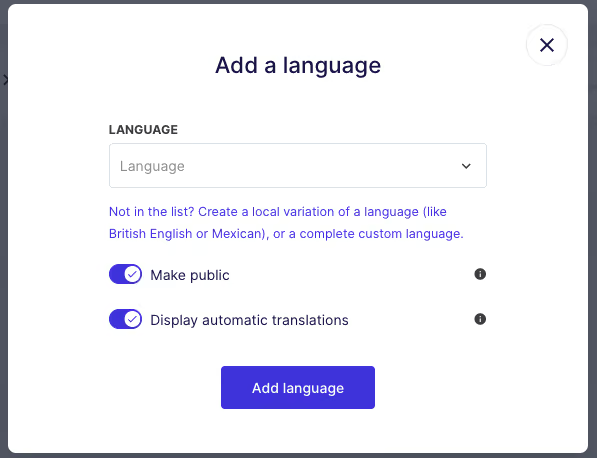
Weglot’s automatic translation function lets you continue supporting new markets without making an additional hire. It automatically translates every new product page, blog post or campaign you create into your target languages the moment you hit publish.
This lets you test and continue supporting additional markets for almost zero overhead, without the operational burden that used to accompany international expansion.
If you want to hire experts to support your growth in certain markets, then the cloud-based nature of Weglot lets you give them access to your site’s multilingual content without a CMS login.
This is exactly how SaaS resource management platform Napta approached international expansion.
Rather than building dedicated marketing teams for each new market, it used Weglot to automatically translate its site, then brought in freelance SEO experts to review and optimize the translations for market-specific keywords. This resulted in a 4x increase in German traffic and saved 100s of hours.
AI has lowered the barriers to international expansion by cutting costs, reducing complexity, and enabling small and mid-market businesses to launch a new presence in days, not months.
It’s also changed the order in which most businesses should pursue expansion. Rather than spending a six-figure budget upfront on research and distribution channels, businesses can now use a translated website to test real demand early and invest only when there’s traction.
If you’re ready to see just how quickly Weglot can translate your website, start a 14-day free trial.

We’ll get your first languages live. You decide how far you want to go. Try Weglot for free today.
Trusted by 110,000+ global brands





Weglot is tested and trusted by brands worldwide since 2016. Join them today.


Translated versions of this page received 0 visits in the last 90 days

The best way to understand the power of Weglot is to see it for yourself. Test it for free and without any engagement.
A demo website is available in your dashboard if you’re not ready to connect your website yet.