

Try Weglot for free




Brands looking to expand overseas have a major decision to make – whether to invest in professional localization services or rely on translation plugins for speed and automation. Each path offers distinct advantages.
Professional services bring cultural depth and linguistic nuance, while translation plugins like Weglot deliver scalability and agility across platforms such as Shopify and WooCommerce.
This guide explores how these two localization paths differ, and how a hybrid model that merges automation with human expertise can help ecommerce businesses scale faster while lowering costs.
‘Ecommerce localization’ is the process of adapting your online store for customers in different countries, languages, and cultures. Going beyond direct website translation, localization means every part of your website feels natural and familiar to international customers, from product descriptions and checkout flows to regulatory info.
Where translation simply swaps text from one language to another, localization reshapes your store’s content, imagery, and experience to fit each target market. This includes adapting cultural references, converting measurements, updating images, and tweaking messaging for local humor or sensitivity.
A fully-localized ecommerce store displays prices in local currency, uses recognized payment methods, and complies with local privacy laws. Product pages might feature different reviews, social proof, or compliance badges – whatever gives shoppers the confidence to buy.
Translation plugins and professional translation services bring unique strengths to ecommerce localization.
Plugins like our very own Weglot make it fast to launch a multilingual store, even for those with thousands of products on platforms like Shopify or WordPress. They use AI translation for instant results and handle the ongoing work of detecting and translating new content automatically. You control the entire process from a single dashboard and can refine translations using a visual editor or glossary.
Plugins make adding languages quick and affordable, and handle the bulk of content – especially product descriptions, navigation, and standard site pages.
Human editing can be added to deliver nuanced, market-ready copy for high-value pages – think your homepage, checkout flow, or advertising campaigns. They ensure branding, legal info, and marketing messages land correctly with locals. Human experts catch slang, cultural subtleties, and errors that machines may miss.
Successful ecommerce brands blend both. They use translation plugins for speed and reach, then apply human expertise where quality matters most. This hybrid model scales, preserves your brand, and keeps costs under control. Both are recommended for sustainable, effective localization, and as we’ll see below, the best translation plugins offer a hybrid solution as standard.
Hybrid translation solutions combine fast machine translation with human review and editing – perfect for growing ecommerce stores that need high-quality translations delivered at speed.
Here’s a look at the leading options on the market:
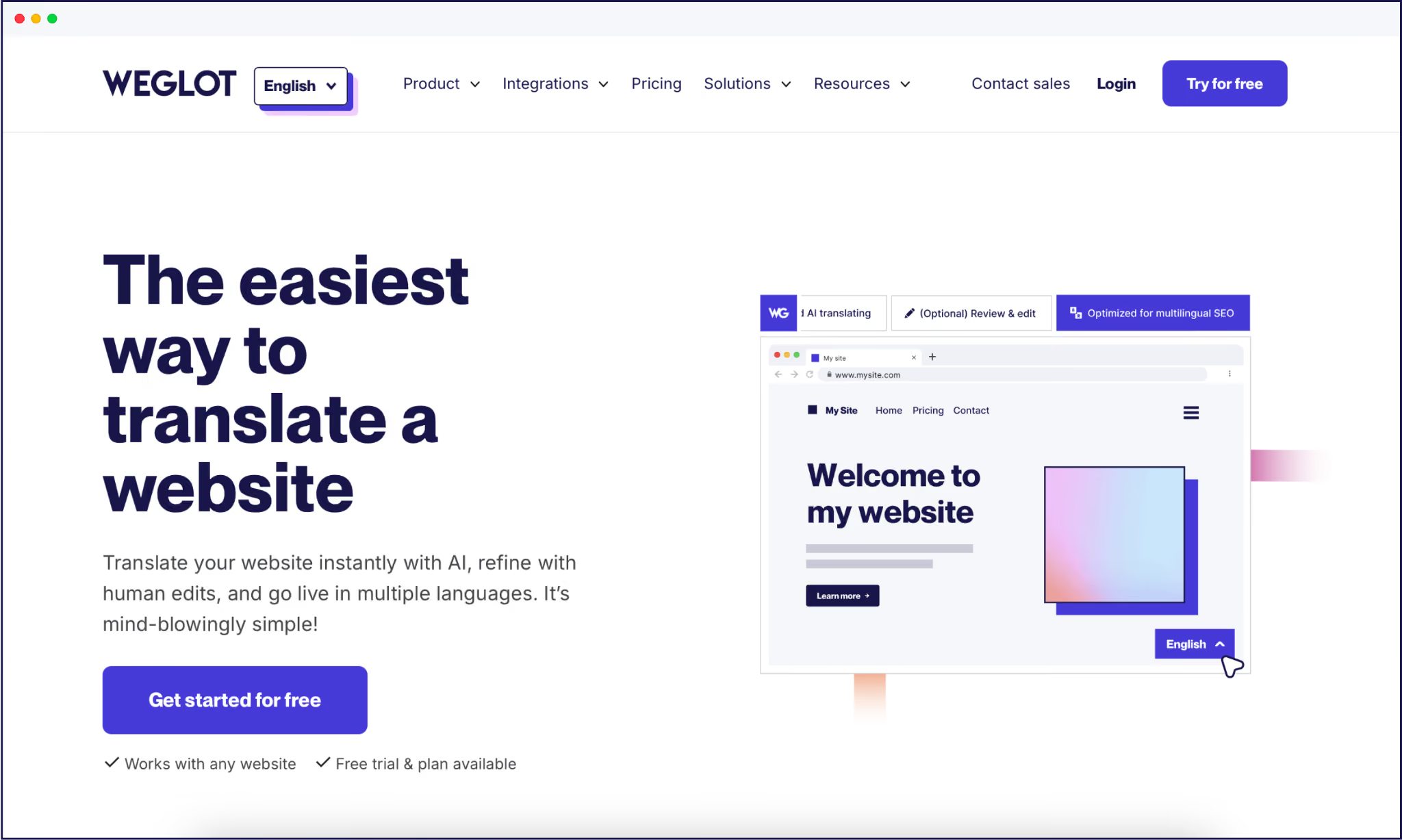
Weglot offers instant AI-powered translation for 110+ languages, with automatic content detection and the ability to edit translations or order professional reviews. It works with all platforms including Shopify, WooCommerce, and Webflow, covering SEO and brand voice. Setup is fast, with no technical skills needed.
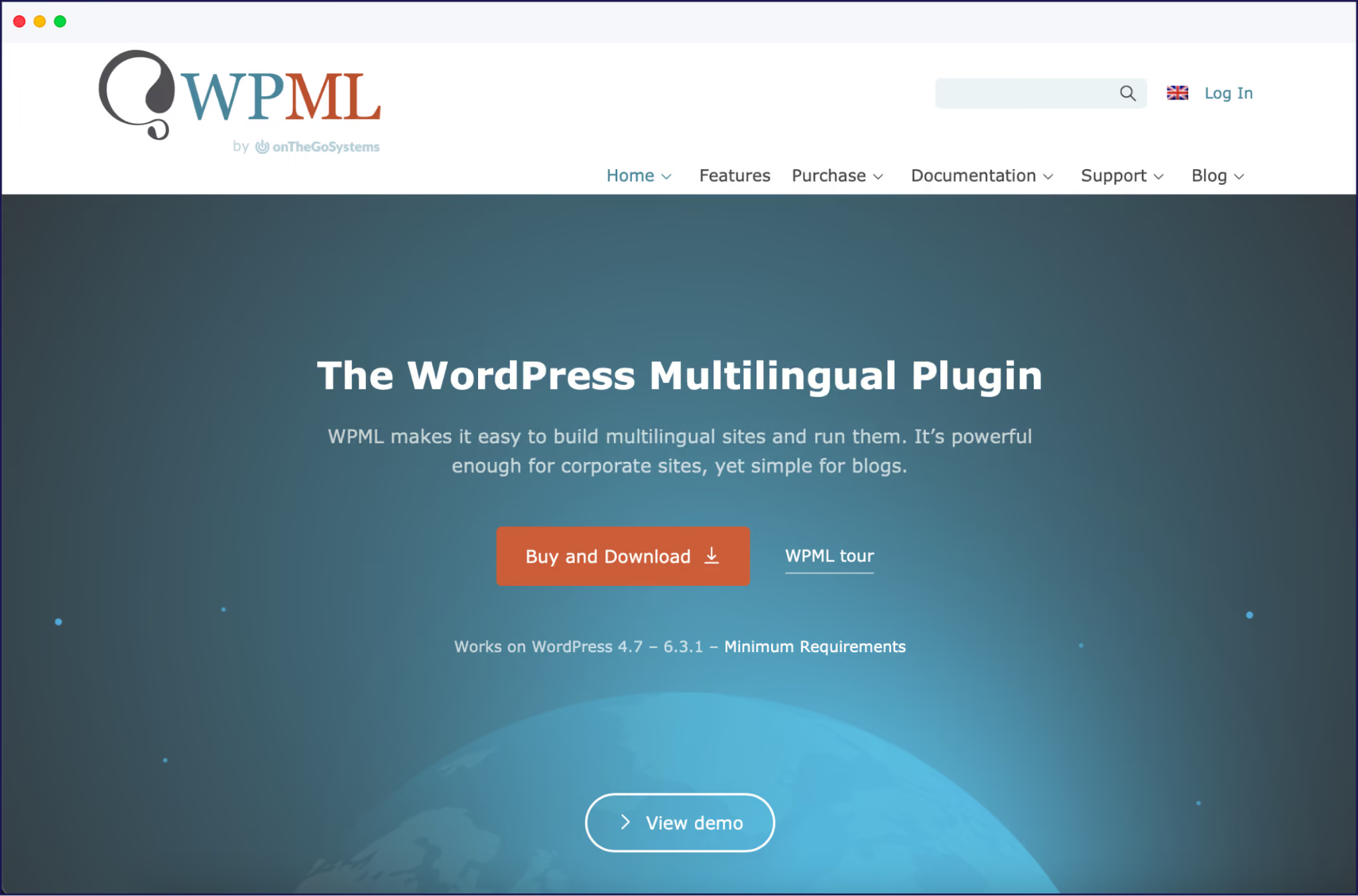
WPML focuses on hybrid translation with team workflows, but integrates with DeepL, Google Translate, and Microsoft for automatic translation. WPML gives you extensive control and it’s a strong option for complex multilingual stores, but it takes more time to set up and manage.
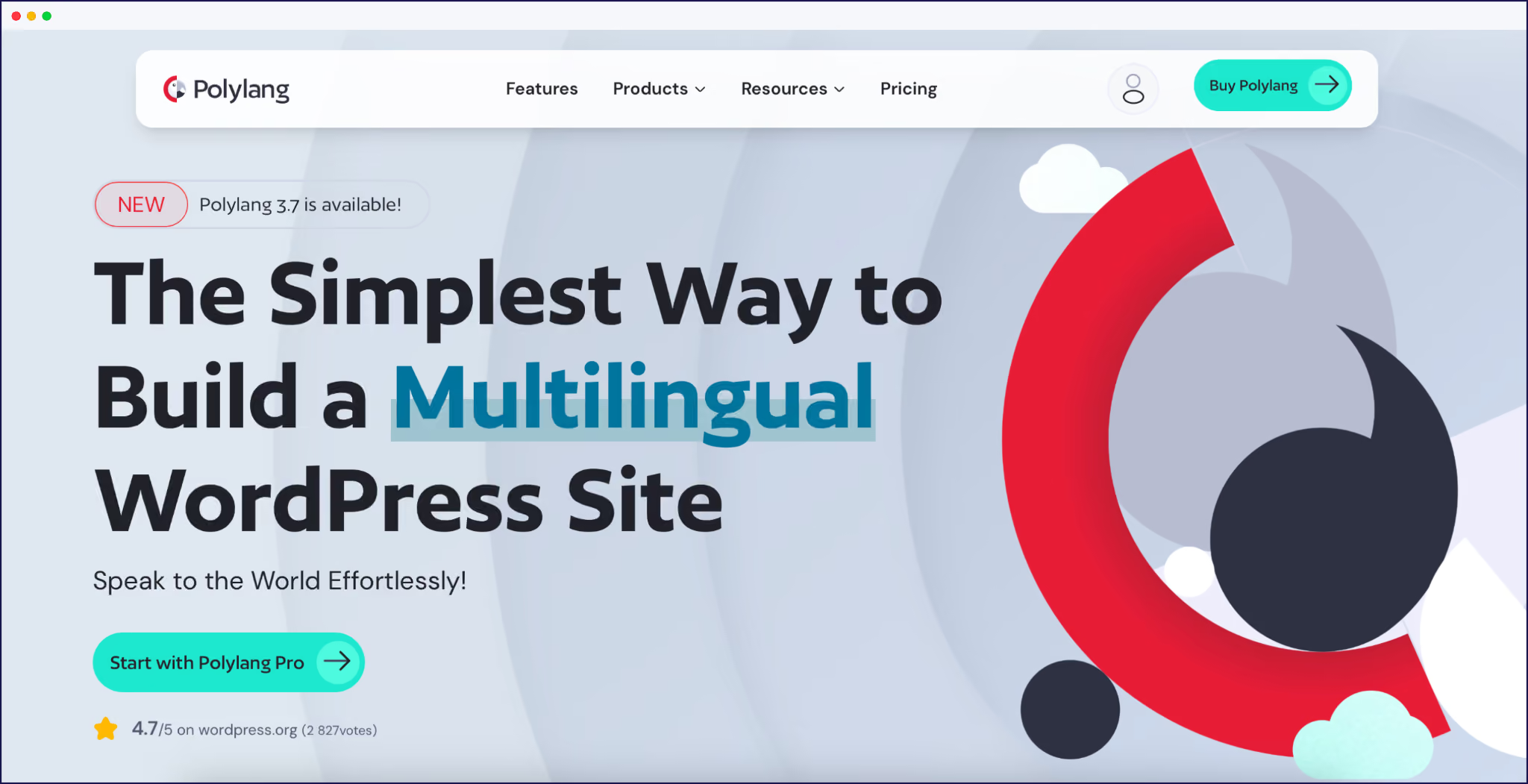
Polylang shines for hybrid translation and content management on WordPress. It’s lean, but has less automation than others, making it best for stores with in-house language skills.
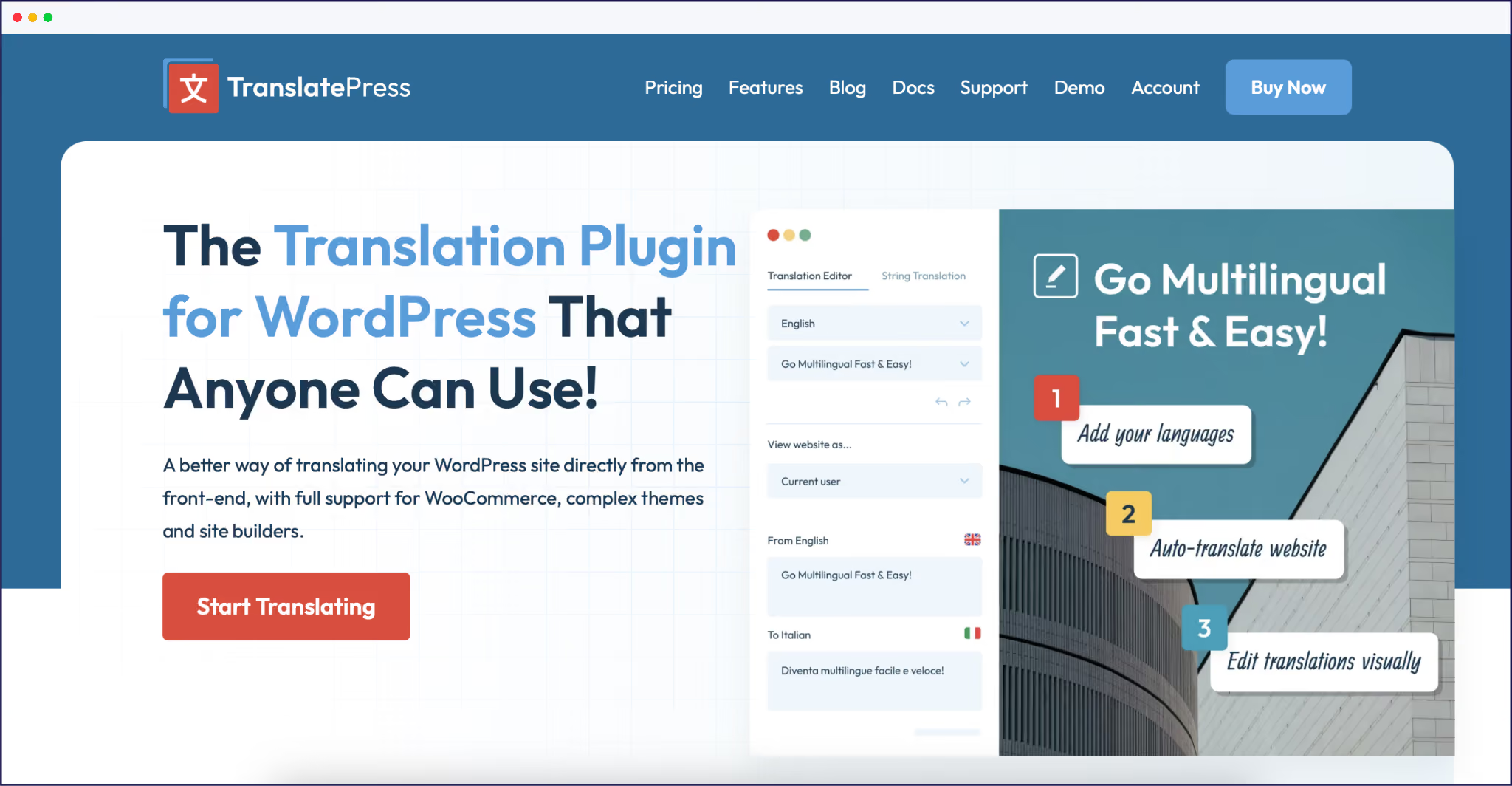
TranslatePress is visual and hands-on. It lets you translate store content as you see it, combining AI and manual edits for front-end accuracy. Works smoothly for WooCommerce.
TransPerfect offers an enterprise-grade service with customized solutions, including a platform for workflow automation, translation memory, and access to professional linguists. Great for global brands needing high-touch service and legal compliance.
Smartling is a cloud-based platform that uses machine translation with human post-editors. Comes with strong integrations for dynamic, content-heavy ecommerce sites and advanced workflow automation.
Lokalise provides a SaaS platform focused on localization workflows. Combines automatic translation, collaboration, and QA features for agile teams. Used often by SaaS and mobile-first stores.
Choosing the best translation system comes down to your priorities, content volume, and team resources. Automation is crucial for large stores or sites that update often – you need a platform that translates at scale and keeps content in sync. Look for editing features that let you review high-impact pages, fix brand terms, and share access with team members or external translators.
Fast-growing ecommerce stores should also prioritize built-in SEO, support for dynamic elements in carts and checkouts, and options to add professional human translations, with no messy exporting or migrations needed.
Weglot bundles all these essentials into a single dashboard:
You get to launch in minutes, fix details as you grow, and pay only for what you use. It’s also tech-free, so a perfect solution for non-developers.
{{quote-image-banner}}
A solid hybrid workflow helps you keep localization quality high as your store grows:
Not all pages need the same level of polish. Focus human review on pages that shape customer trust and drive revenue. These will likely include your homepage, checkout funnel, and ad landing pages.
Conversion-oriented product pages, store policies, and SEO-heavy content (titles, meta descriptions) are also smart review priorities. Use analytics to guide your quality investment, and see where your best-performing pages are.
Brand voice goes well beyond words. It’s how your store feels, no matter what language you’re using.
“A consistent voice means trust, recognition, and higher engagement from your users, so start with a clear style guide that spells out tone, humor, and values. Use translation memory and glossaries to keep repeated phrases on-brand in every market. Make sure native speakers review top pages for cultural nuance, slang, and regional quirks, as using less-popular or outdated phrases can alienate your intended consumer base. “
—Eugène Ernoult, CMO at Weglot
The best hybrid platforms help you automate the basics, then invite human reviewers at critical steps to preserve that unique brand personality, everywhere you need it.
Weglot supports every step of this workflow in one dashboard, letting you launch fast, lock in your brand voice, and keep workflows simple.
Our tool delivers AI translations for your whole site, then lets you set up a glossary of protected brand or industry terms. Future additions to your primary language pages are instantly detected and translated.
Activate a custom AI Language Model that continues to improve your AI translations automatically based on your glossary and previous edits.

The Visual Editor hands total control to your in-house team or pro linguists for on-page review, and you choose which pages get extra polish with a human touch. You can even order professional translations for your most important content, directly from the dashboard.
SEO for multilingual ecommerce needs careful attention right from the planning stage. Those using professional localization services will need to handle their international SEO themselves. Every page must be manually optimized to appear in international search results pages, which can seriously lengthen timescales for ecommerce sites launching new products every week.
Getting your international site structure right is a must-have starting point. Any misconfiguration here and you can confuse both domestic and international search engines and miss out on the rankings your pages deserve.
Subdomains (e.g. /fr.domain.com/) or subfolders suit most sites – the former function like separate websites that are distinct from the main domain, while subfolders (example: /fr/, /es/) organize content within the main site and are treated as part of the same website by search engines.
Hreflang tags are another essential. These signal language and region to search engines, helping the right users find the right page.
Canonical URLs prevent duplicate content issues when different versions of one page exist, while language switchers boost user experience by making content even more accessible for global shoppers. Check out Weglot’s customizable switcher below:
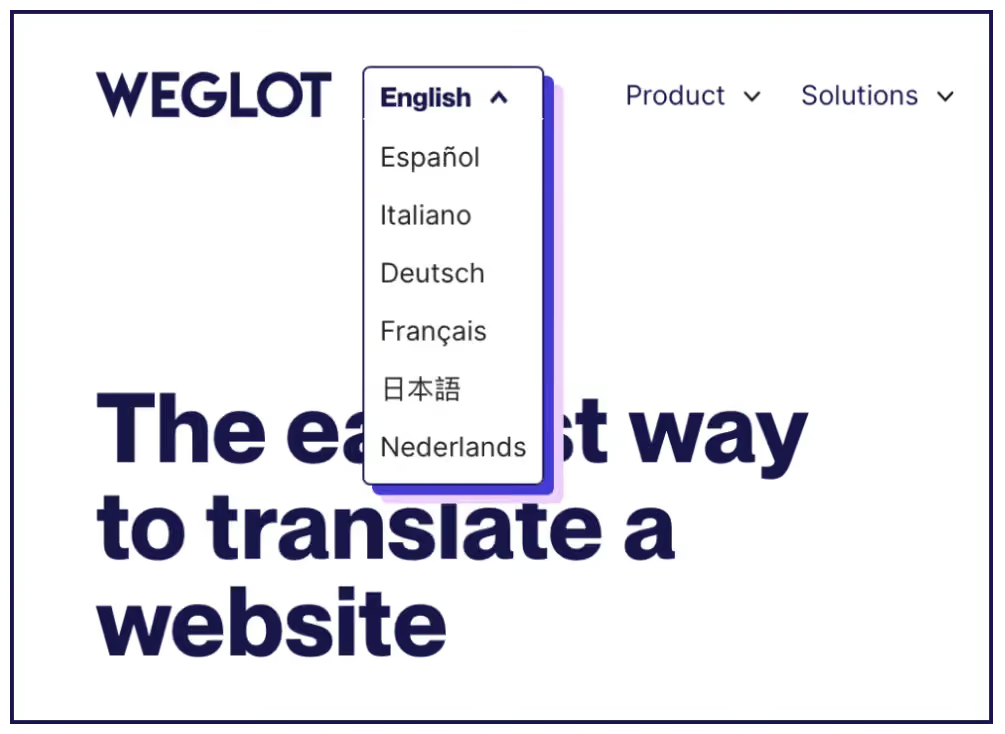
Don’t forget to optimize your metadata too, as your pages’ title tags, URLs, and meta descriptions are often the first thing your potential customers will see. Always remember to verify technical setups in Search Console, as errors are common and costly if missed.
You can avoid most manual SEO work by using a translation plugin. Although some plugins will need greater manual configuration than others when it comes to SEO, they should handle site structure, hreflang, and meta as standard. Just imagine the work and hours saved when all your international SEO is automatically done for you!
Scaling translations for large ecommerce catalogs is where manual methods show their limitations and automation becomes non-negotiable.
Stores with hundreds or thousands of SKUs quickly face integration headaches across platforms like Shopify and WooCommerce. Matching product titles, descriptions, and variant info across languages turns into a true data management challenge. Even more frustrating, hidden copy – like filter values, metafields, review snippets, alt text, and policy pages – can add up to more words than your main products and quietly explode translation costs if you’re billed per word or character.

Many free or built-in solutions hit hard limits. For example, Shopify’s Translate & Adapt app only translates two languages automatically and caps the number of auto-translatable characters per year. Once you hit this wall, you’re often forced back into manual translation or endless export/import cycles, draining time and budget.
True scalability comes from using a website translation tool – like Weglot – that automates bulk translation, detects all site text (including hidden elements), and lets you centralize edits in one dashboard. You can apply glossary enforcement, translation memory, and set priorities for machine or human review, so only critical pages use extra resources.

Take The Bradery, a fast-growing ecommerce brand pushing 500+ new products each day. Their team switched to Weglot after manual cycles proved unmanageable. Now, their English translations are set-and-forget, while high-priority markets like Spanish use hands-on post-editing – all run through Weglot’s intuitive dashboard.
Scaling ecommerce across multiple languages demands balance – efficiency through automation and authenticity through human input.
Translation plugins make localization accessible and fast, while professional translation services refine your most important pages for tone and accuracy. The most successful brands combine these approaches to build hybrid workflows that evolve with their growth. These workflows blend AI translation, glossary control, translation memory, and human post-editing into one intuitive platform.
To launch your multilingual store in minutes, try Weglot’s 14‑day free trial to see how easy global reach can be.

We’ll get your first languages live. You decide how far you want to go. Try Weglot for free today.
Trusted by 70,000+ global brands








Weglot is tested and trusted by brands worldwide since 2016. Join them today.


The best way to understand the power of Weglot is to see it for yourself. Test it for free and without any engagement.
A demo website is available in your dashboard if you’re not ready to connect your website yet.


