Try Weglot for free





In AI search, visibility depends on whether your content gets selected and cited, not just how it ranks.
Translation plays a bigger part in that process than many marketers and site owners realize. If your content doesn’t exist in the language someone searches in, it’s unlikely to be retrieved.
This guide explains how AI search works and why language matters, what multilingual GEO can do for your brand’s visibility and authority, and how to grow international reach in five steps.
Our multilingual GEO hub houses all the studies we've done on the subject.
AI search systems retrieve relevant sources, evaluate them, and generate responses based on what they consider the most valuable content.
Your website’s online visibility increasingly depends on whether it’s included in those AI responses.
This fact applies across AI overviews (AIO) in search engines and generative AI (GenAI) tools like Claude and ChatGPT.
For example, search “ChatGPT prompts for translation” on Google, and you’ll get an AI Overview that includes content from Weglot:
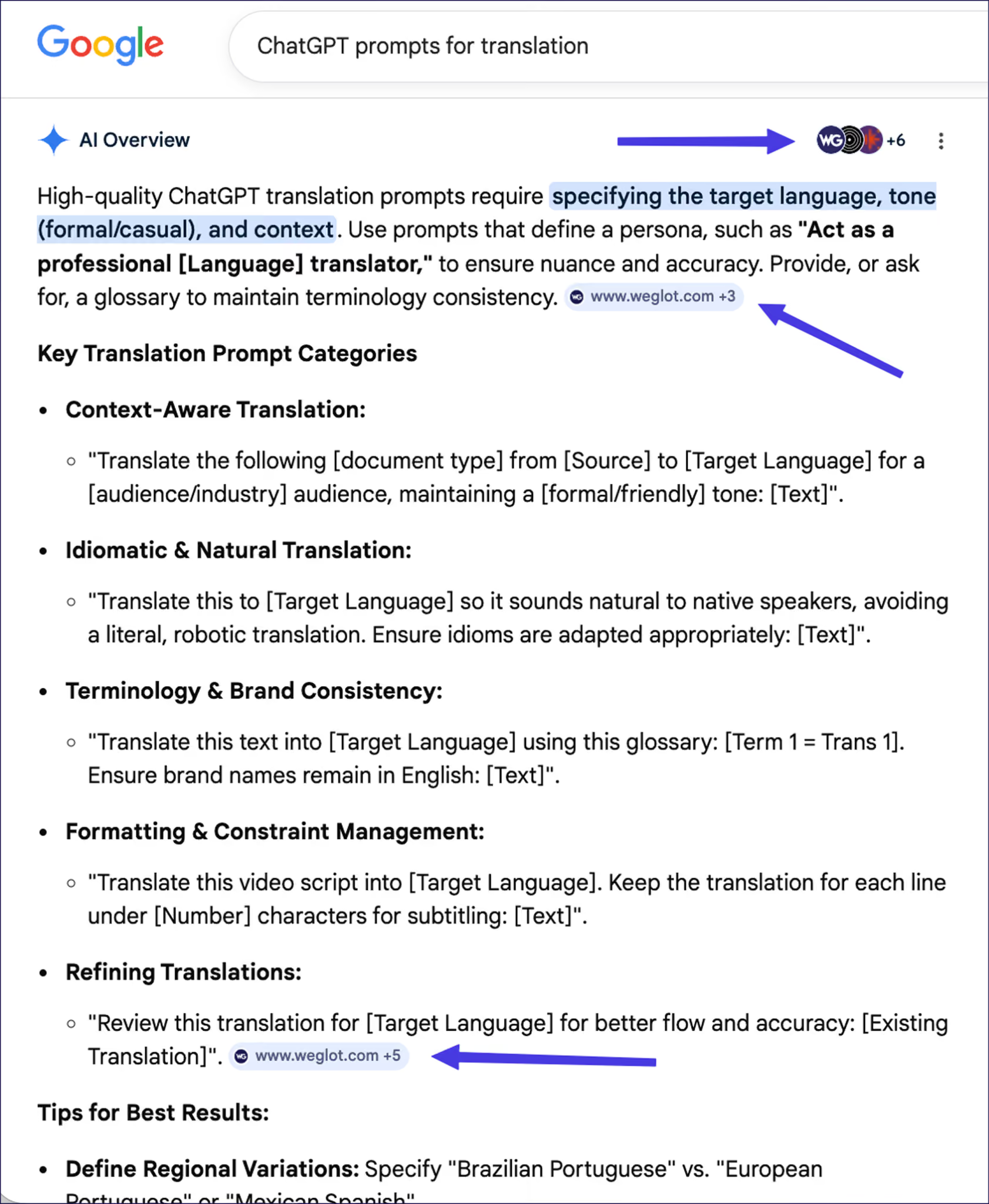
Weglot appears because Google considers our content on the topic to be relevant, well-structured, and useful for the query.
Translations play a key role in this selection process.
When users search in a given language, AI systems prioritize content they can clearly retrieve, interpret, and reuse. Which typically means content written in that same language.
Our analysis of 1.3 million citations found that translated websites gain 327% more visibility in AI Overviews than single-language sites. Even if the original-language version of your content is accurate, up-to-date, and authoritative, your competitor gets cited instead.
This is why many websites see uneven visibility across markets. It’s a simple language coverage issue, much like with SEO.
“The problem grows because untranslated sites never build authority in unserved languages. As a result, they have little user engagement, which reduces trust signals that Google values.”
- Eugène Ernoult, CMO at Weglot
So, if language has such an impact on whether your content is even considered, how do you optimize for that?
Enter GEO.
Generative engine optimization (GEO) is the practice of improving how often your content is referenced in AI-generated answers and overviews from tools like ChatGPT, Claude, and Gemini.
At a high level, GEO involves making content easy for AI systems to retrieve, interpret, and reuse by:
Multilingual GEO extends this by expanding the range of languages and markets where your content can appear.
For example, an AI overview for an English query cited our translation prompts content because it meets those general GEO criteria and is available in English.
The same high-quality content is also available in French. That allows Claude to cite it for equivalent queries in both languages.
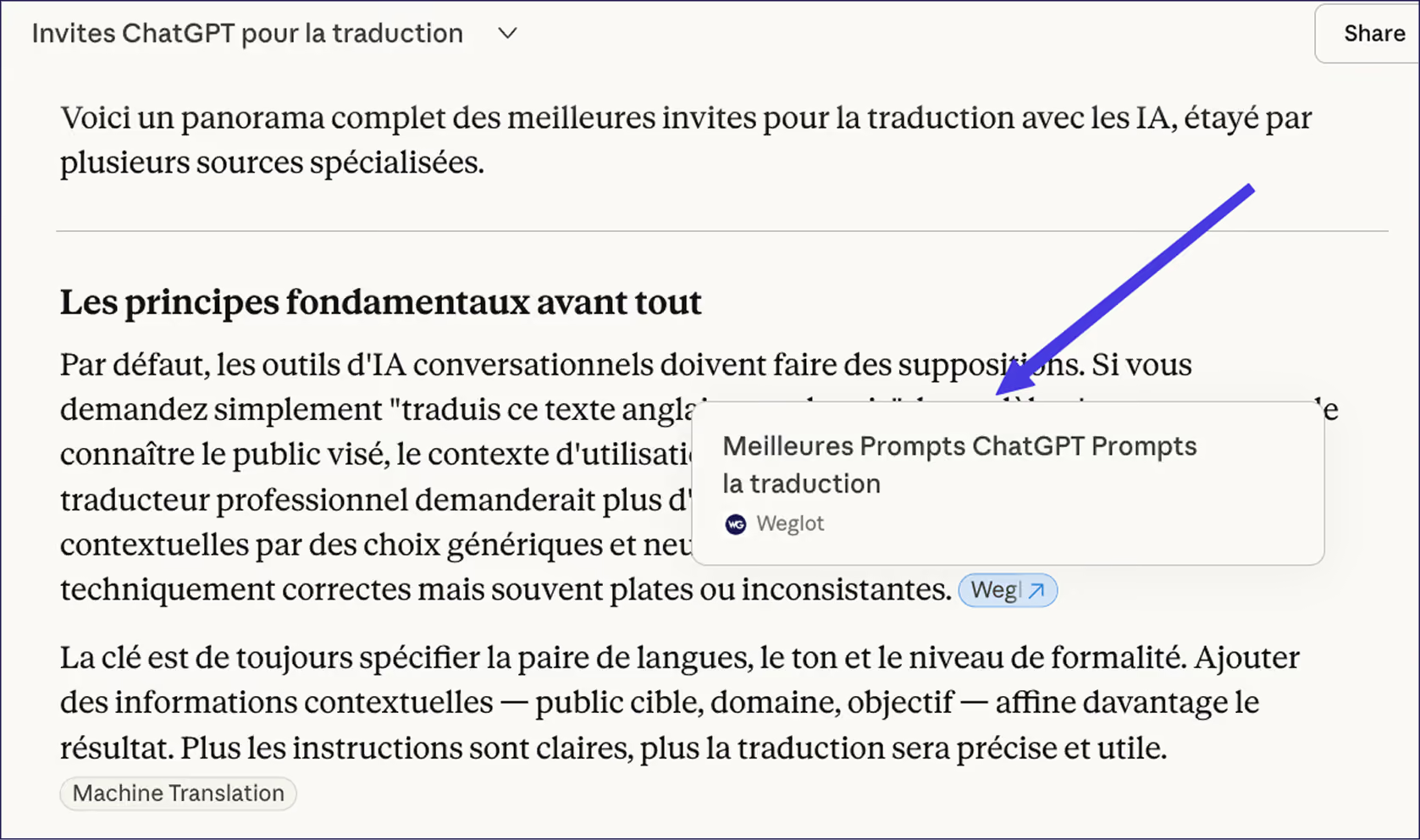
We saw the benefit ourselves: translating our content helps it show up in AI responses for different audiences.
Being multilingual directly increases Weglot’s brand visibility.
Even as multilingual GEO becomes more important to brands targeting visibility and authority, multilingual SEO still matters as much as ever for conversions.
Ahrefs found that while search accounts for two-thirds of ChatGPT’s rapidly growing user activity (~2.5 billion daily prompts in total), Google still sends 190x more traffic to websites.
That means the foundations that help search engines crawl, index, and rank your pages correctly across languages – think language-specific URLs, hreflang tags, and translated metadata – remain crucial for generating traffic and leads.
Multilingual GEO builds on that foundation to increase AI citations and expand reach further. And, with the right tools and processes, achieving that extra reach is straightforward.
The steps below combine multilingual SEO foundations with GEO-specific considerations to help your content get discovered in AI tools across more languages.
If you haven’t already, now’s the time to translate your website.
Use Weglot to create high-quality AI translations of your content in seconds. Without developer support or rebuilding a single page.
Weglot automatically detects, translates, and displays your website content across languages, handling technical elements like multilingual URLs and hreflang tags for you.
Create an account, add your site’s URL and choose from 110+ languages to get started:
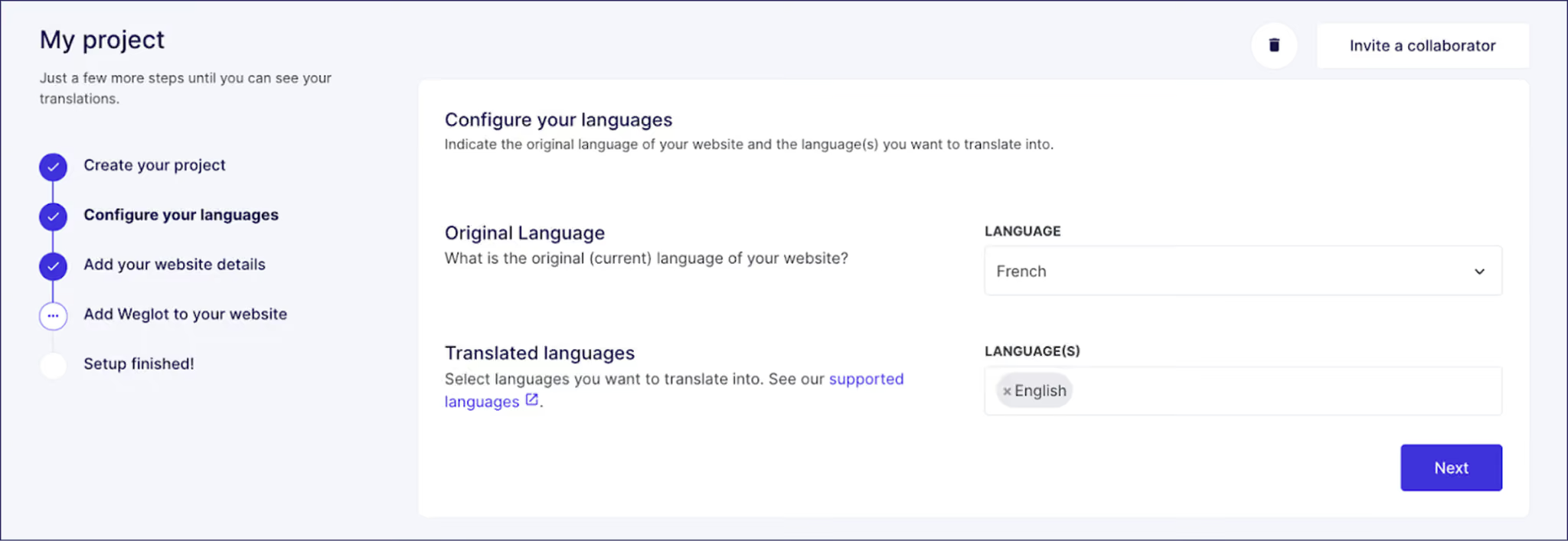
This is the first and biggest step in ensuring AI tools can access and use every language version of your content.
After translation, localize your content to fit each market and audience.
Translation converts your content into other languages, and localization optimizes it for different audiences and markets. Together, they make your content more useful and relevant across markets, increasing its chances of being used as a source.
Optimizing high-impact content first is the best use of your time.
Start with your homepage to improve the overall user experience. Then focus on informational content, which is more likely to be cited in AI responses – especially high-performing, up-to-date blog posts and core product pages.
Optimize these for each market by adapting content beyond text:
This ensures your content is useful and relevant across languages, increasing the likelihood it will be retrieved and cited.
For AI systems to reliably access, interpret, and cite your content across languages, each language version needs its own URL and a set of signals that explain what it is and who it's for.
As your site grows, keeping these signals aligned across every language becomes harder to manage manually. It takes up valuable resources.
This is where end-to-end website translation solutions like Weglot are invaluable.
Weglot handles the structure and setup alongside translation, removing all the complexity that would otherwise drain your team’s time. No technical skills needed, no stress to deal with!
Keep all language versions aligned as your site evolves. Don't let translations go stale.
Gaps and outdated translations reduce the quality signal of your multilingual presence and limit how often those pages get cited.
AirOps found that over 70% of the pages ChatGPT cited had been updated in the previous 12 months. Content less than three months old is 3x more likely to be cited.
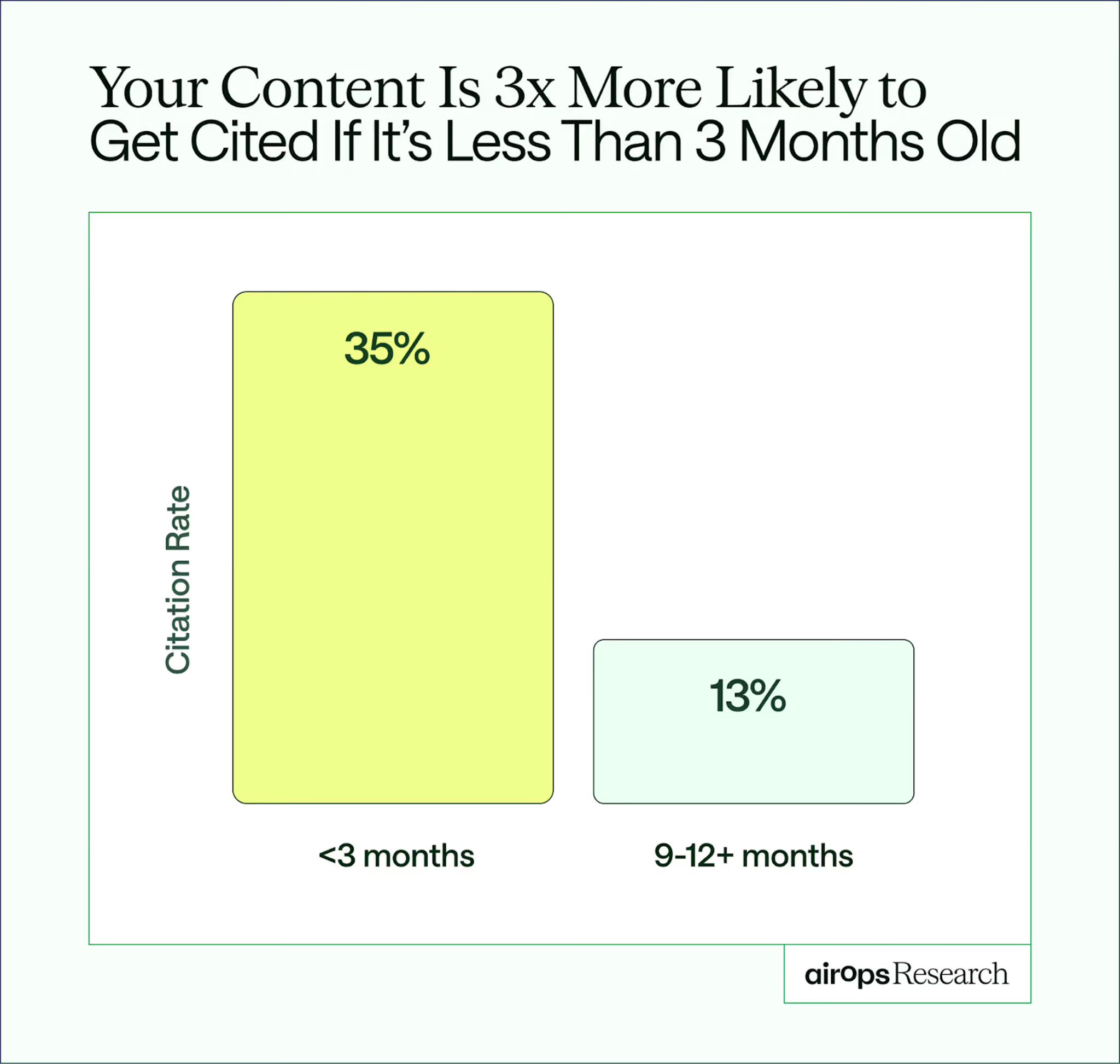
With Weglot, new and updated content is automatically detected and instantly translated via integration with your CMS. Your multilingual site stays in sync across versions without manual oversight.
You can also set up review workflows for high-priority content before it goes live, to keep full control over what your audience sees.
The final step is to make sure translation, delivery, URL structure, and technical signals are all managed in one place.
Many teams handle this manually: translations in one tool, URL configuration in another, metadata updated separately. But the disconnection creates gaps. Pages go untranslated, hreflang tags fall out of sync, and content inevitably gets missed.
AI visibility then decreases for the reasons we’ve already discussed.
Weglot brings it into a single workflow. Detection, translation, delivery, and the technical infrastructure are all connected, so visibility scales with your content rather than lagging.
Once your content is translated and structured correctly, visibility isn’t limited to your own site.
In addition to the earlier insights, AirOps’ researchers found that 85% of brand mentions in AI search come from third-party content (e.g., review sites, Reddit threads, industry media), compared to just 13% from brand-owned sites.
So, where your brand appears offsite plays a big part in whether it’s surfaced and cited.
Expanding your presence across relevant platforms in multiple languages – through partnerships, publications, and mentions – helps strengthen those signals to improve your chances of being referenced in AI-generated answers.
Weglot is built to handle both sides of multilingual visibility: the content (translation and localization) and the infrastructure (URLs, hreflang, metadata, sitemaps).
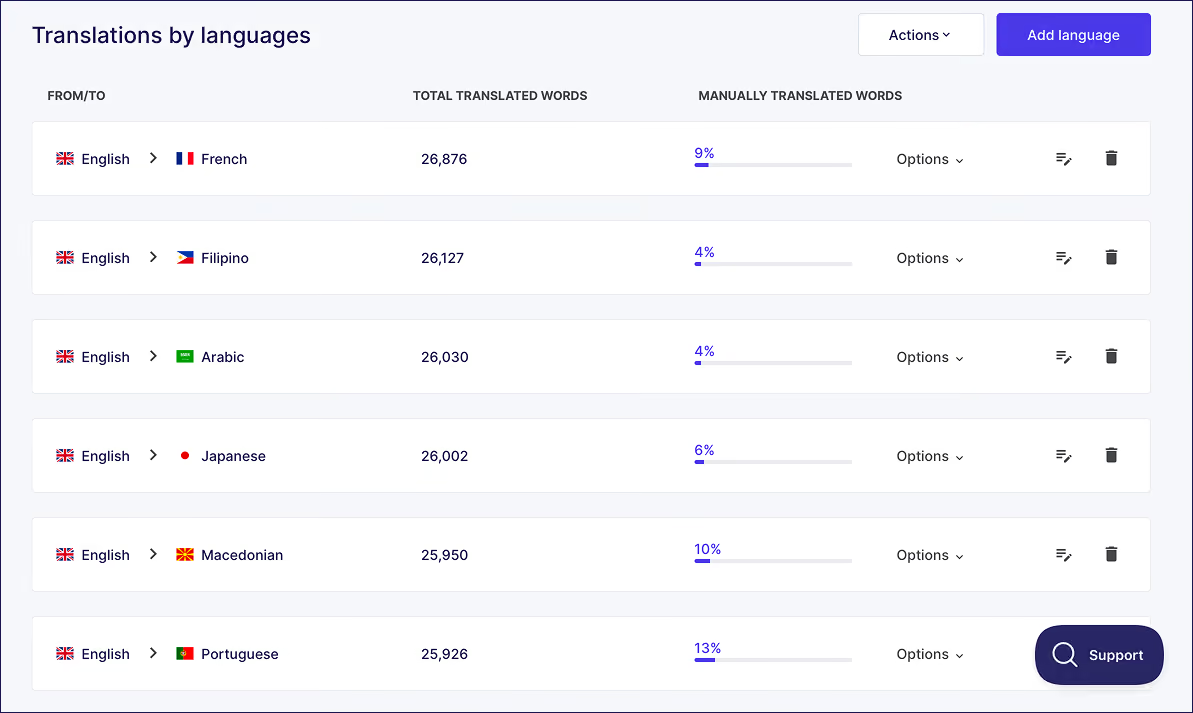
When you add a new language, Weglot automatically:
The result is a site that AI systems and search engines can fully access, interpret, and cite across every language you support, without the overhead or stress of managing it all manually.
TextCortex put this into practice, using Weglot to scale its online presence across markets. Its translated content became indexable and accessible quickly, increasing search traffic while also creating more entry points for AI citations. Read the full story.
Multilingual visibility builds over time instead of happening all at once.
Each new language you add to your site adds another way in – meaning more queries you can appear for and more opportunities for new customers to find and trust your brand.
Keep everything aligned as you grow – with the support of an AI website translation tool like Weglot – and visibility scales with every update.
Start expanding your visibility across languages with Weglot’s 14-day free trial.

We’ll get your first languages live. You decide how far you want to go. Try Weglot for free today.
Trusted by 110,000+ global brands





Weglot is tested and trusted by brands worldwide since 2016. Join them today.


The best way to understand the power of Weglot is to see it for yourself. Test it for free and without any engagement.
A demo website is available in your dashboard if you’re not ready to connect your website yet.


No, not if you implement hreflang tags correctly.
Hreflang signals to search engines that your translated pages are intentional language variants, not duplicate content.
Weglot handles hreflang automatically, so you don’t need to manage it manually.
The biggest barriers are incomplete translation (only some pages translated), missing hreflang signals, and untranslated metadata.
Together, these issues make it harder for AI systems to access and understand your content in each language.
The fix is straightforward: translate fully, implement the right technical signals, and keep content updated across all versions.
Adding a new language expands the range of queries your content can appear in, but only if the translation is complete, properly structured, and maintained.
Partial translations create coverage gaps that limit visibility, which means AI systems simply don’t ‘see’ your content for those queries.
With Weglot, new languages are implemented with the correct URL structure, hreflang, and metadata from the start, so your visibility grows as soon as the content goes live. As you add or update content, the translated versions sync automatically through CMS integration.
Translate your website first. AI search engines prioritize sources that match the query's language, and our analysis of 1.3 million citations found that translated websites gain 327% more visibility in AI Overviews than single-language sites.
Then make each language version easy to retrieve and cite: give it a dedicated URL, hreflang tags, and translated metadata, and keep translations in sync as your content evolves. Weglot handles that technical layer automatically, so your visibility grows with every language you add.
For the full 5-step process, read our multilingual GEO guide.