Try Weglot for free





Translation is what gets your content into another language, but localization is what makes it work there. The difference shows up in conversion rates, insights from local teams, and whether customers in a new market feel like the brand is addressing them rather than just communicating at them.
Weglot, a website translation tool, can be central to your content strategy framework around what does and doesn’t adapt across markets. However, you still need to know about structuring your team for consistent localization and also how AI tools handle the volume.
Translation, localization, and transcreation are three different levels of content adaptation. Applying the wrong one to a piece of content is a common way an international strategy can underperform:
The decision about which approach to apply comes down to what the content is trying to achieve. For instance, functional copy (such as UI strings, product descriptions, or help documentation) is a localization job. Marketing and brand content, where tone and emotional register carry commercial weight, is ideal for transcreation.
In DeepL’s state of localization research, almost everyone polled reported a positive Return On Investment (ROI) from localization, with a majority seeing a return of three times or more. Our opinion is that most of this ROI lives in the gap between translating and localizing content.
Before you adapt your brand for a new market, you need to settle on what you’re not willing to adapt. For example, your values, mission, and core purpose are what makes the localization process possible, so they shouldn’t change.
Without a defined core, giving local teams freedom to interpret the brand’s voice can fragment your content rather than make it feel local and authentic to the brand. Also, knowing the difference between which elements ‘travel’ or flex depending on the cultural context makes your localization repeatable.
Your brand’s values and what it stands for, the personality traits that define how you communicate, and terminology or product naming decisions typically don’t change. For other elements, you have greater scope to adapt the content:
Kim Reyes, Head of Creative at finance company Qonto sat down with us on the Next Market Live podcast to talk about how this is managed through shared tone of voice principles.
During the chat, she describes brand localization as code-switching at the brand level and adapting to context without losing a sense of who you are:
“…How do I make sure that I’m adapting to the right culture and the situation, but still staying authentically myself? That’s the core of the question as a brand: how do you stay authentically you, knowing that language is perceived differently in different parts of the world?…” – Kim Reyes, Head of Creative, Qonto
Early in Kim’s career at a company where these principles existed in documentation but weren’t embedded in the team, the website, product line, and social media all read differently per market. In short, if the principles exist but the infrastructure to make them live doesn’t, it can bite you.
With a documented core in place, the question becomes how your brand voice needs to sound in each market. The most immediate structural decision for European expansion is whether to use a formal or informal register.
Qonto operates across Germany, France, Italy, Spain, and the Netherlands. In Germany and France, Qonto uses a formal tone because this signals credibility and trust in professional financial communications. In Italy and Spain, the informal register is more accepted and relatable. A formal tone in those markets reads as cold rather than authoritative.
“Consistency doesn’t necessarily mean uniformity or rigidity. It’s really understanding the market’s audience and what customers will connect with.” –
Kim Reyes, Head of Creative, Qonto
These decisions all come from data: benchmarking competitor positioning, conversations with native speakers, and a deliberate choice about where Qonto wants to stand in each market. Once you make these decisions, they go into your brand guidelines, which is what makes them consistent rather than dependent on whoever is writing the content.
For Qonto’s Belgian Dutch expansion, the team settled on an informal tone after some benchmarking. However, when the customer onboarding team began calling new customers for the first time, the informal register felt too casual for a live conversation about business finances. Qonto documented this exception and named it “localization inside localization.”
Apart from register though, your cultural adaptation should include some other elements:
Each of these decisions belongs in your documentation. Otherwise, you end up solving them from scratch with every new content campaign.
Understanding what needs to adapt is only half of the decision when you also need to structure your team for consistency. Central content teams typically carry the assumptions of the company’s home market into everything it produces.
When Kim joined Qonto, the central content team was essentially the French team. Content going to Germany, Italy, and Spain had already been filtered through a French lens before localization began. It meant teams were adapting material shaped by one market’s assumptions rather than working from something market-neutral.
These structural fixes needed French content specialists to move onto dedicated teams. This left the central team to serve all markets from a neutral starting point.
The brief going to local teams also started to include context on key messaging in different markets. For your own content, it means you need to understand which aspects of your product or service’s functionality and features matter most in each region. The likelihood is that it’s different on a per-locale basis.
This is where a content governance model can be vital. It’s essentially cementing the decisions you’ve made so far about your content presentation across different regions through three facets:
Your documentation binds this together, but it’s also where gaps can appear if you choose to work with AI. For example, tone of voice guidelines written for human readers rely on abstraction. This can be general descriptors, analogies, or even visual cues signal intent (such as emojis). Unfortunately, this doesn’t work in a Large Language Model (LLM).
For Qonto, feeding its existing guidelines directly into an AI localization assistant model produced poor output. This was because the documentation was written for people who understood subtle context. Making the model useful required rewriting the guidance using specific, concrete instructions with no room for interpretation. In other words, as machine-readable prompts.
Qonto’s documentation now covers a universal tone of voice standard with market-specific sections for each language, complete with examples. What’s more, every new employee goes through a tone of voice onboarding session.
At one point, Qonto’s local content teams were spending nearly half of its capacity on localization requests from other teams. The work was necessary, but the volume left little room for the editorial and strategic work teams had to do.
This is an ideal job for an AI model as it handles three things well in a localization workflow:
However, what AI can’t replicate is cultural and editorial judgment, such as whether a tone that works in one market is creating the wrong impression in another. Kim Reyes describes this as a shift toward a more journalistic approach to content: forming genuine opinions and investigating multiple perspectives. While the content team contributes and focuses on this aspect, AI can handle the volume.
Qonto has a two-stage AI workflow to bridge the gap between speed and quality. Language-specific assistants handle first-pass translation into each target language, then a second AI agent evaluates the output against quality criteria. It means a team member who isn’t a native speaker of the target language can assess quality with a degree of confidence without relying on their own reading of an unfamiliar language.
Weglot’s AI Translation Model applies the same principle: configure the model with your brand context once and apply the context from the first translation. The model learns from a combination of inputs:
The AI Translation Model is built on OpenAI and Gemini and you configure it from your Weglot dashboard. It’s also included on every Weglot plan.
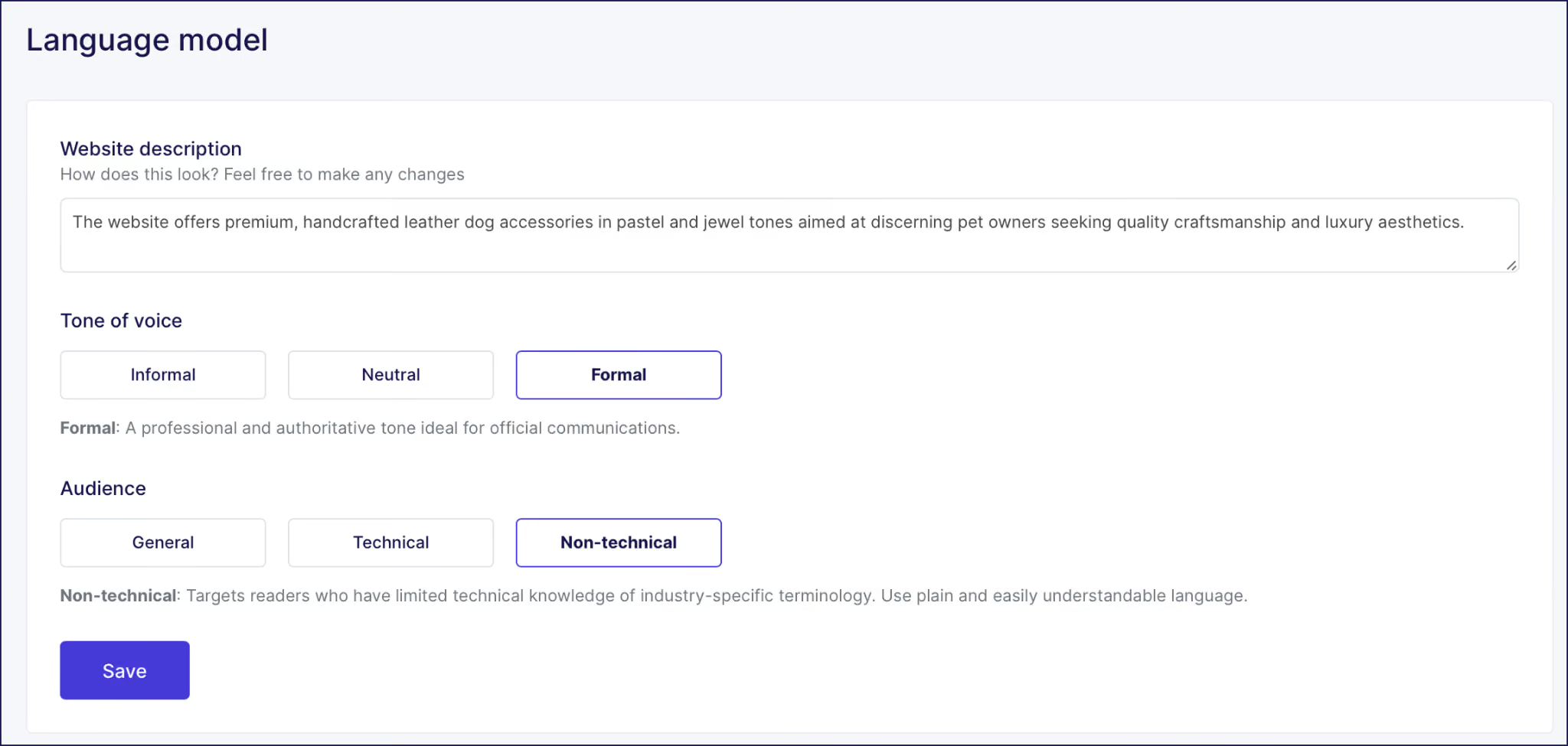
To set it up, head to Settings > Language model within Weglot. The setup screen pre-fills a brand description drawn from your website’s content, which you can refine before adding tone instructions and custom rules.
Any translation the model generates receives a GenAI label in the Translation List. You can filter by this label to review all AI-generated strings as a batch. From there, you can compare them against the base machine translation and edit inline.
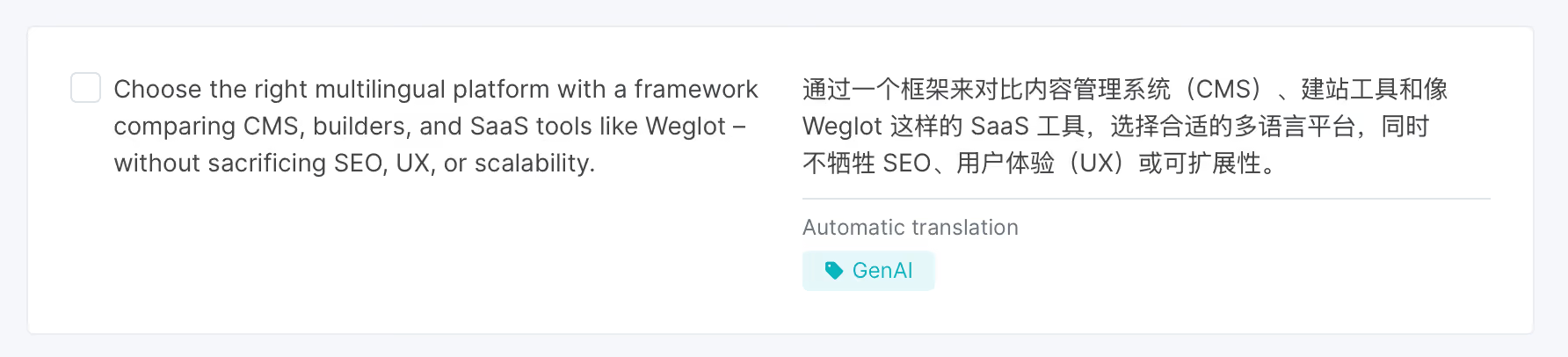
Every correction you make will refine the model’s output over time. The ideal is that while quality improves, the volume of manual edits will decrease with each review cycle.
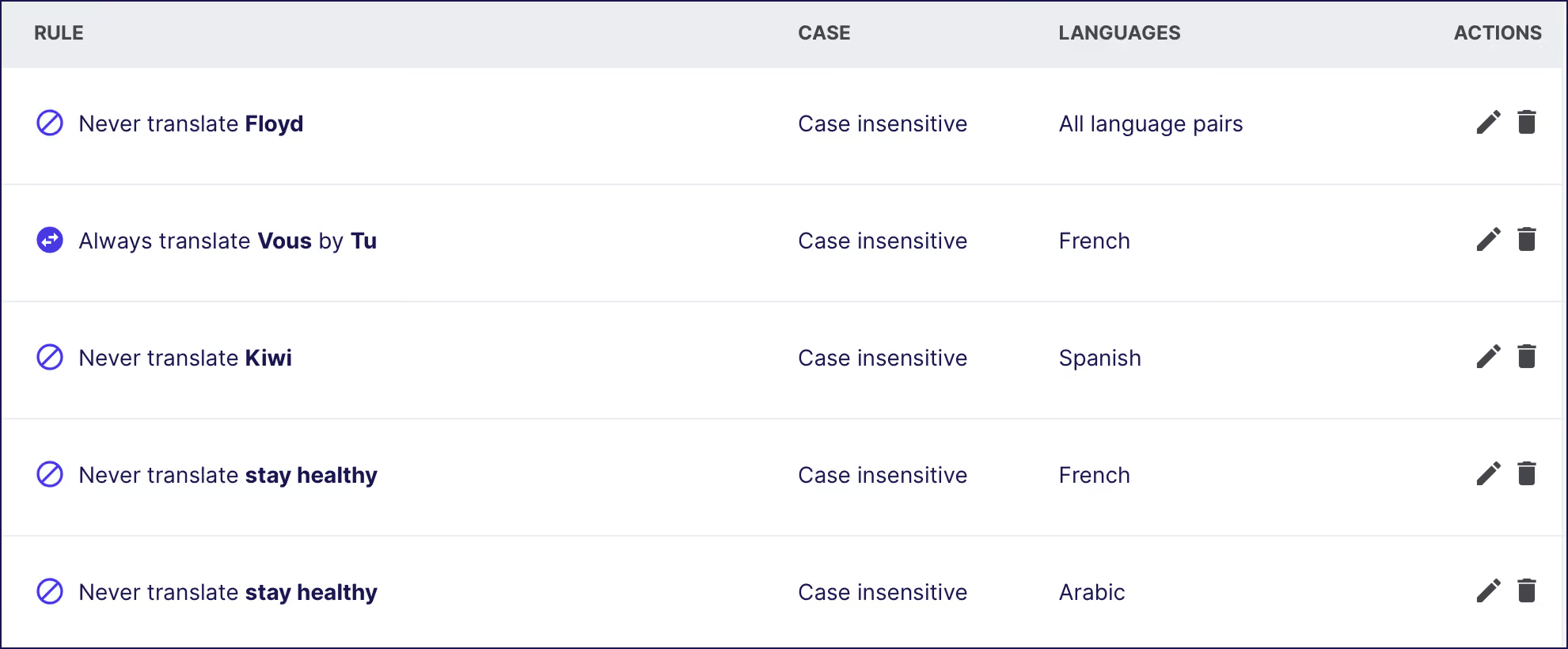
For term-level brand consistency, glossary rules (under Settings > Glossary) enforce approved terminology across every page and language version. Rules also apply retroactively to existing translations and automatically to any new content.
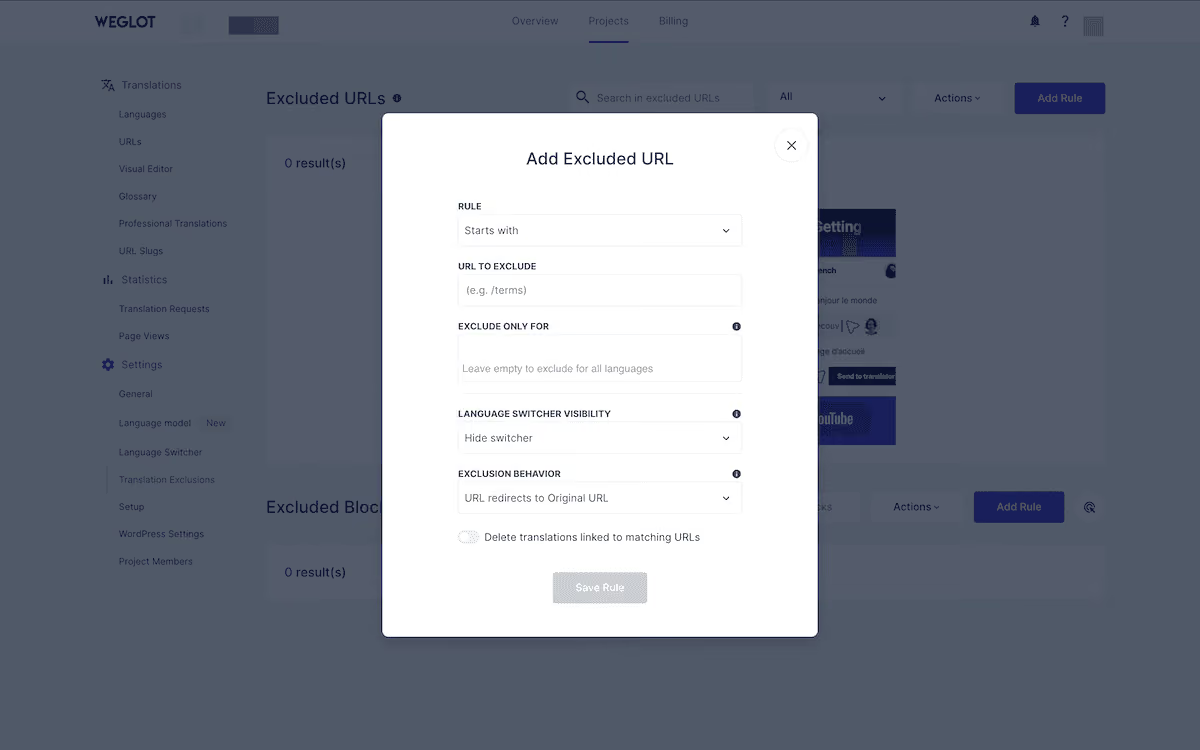
For content that should stay entirely in its original form, Translation Exclusions under Settings > Translation Exclusions lets you protect specific pages, sections, or CSS selectors from being picked up for translation at all. This could be legal notices, brand-owned proper nouns, third-party content, and more.
For reviewing translated content in context, the Visual Editor shows a live preview of your site rather than a list of strings.
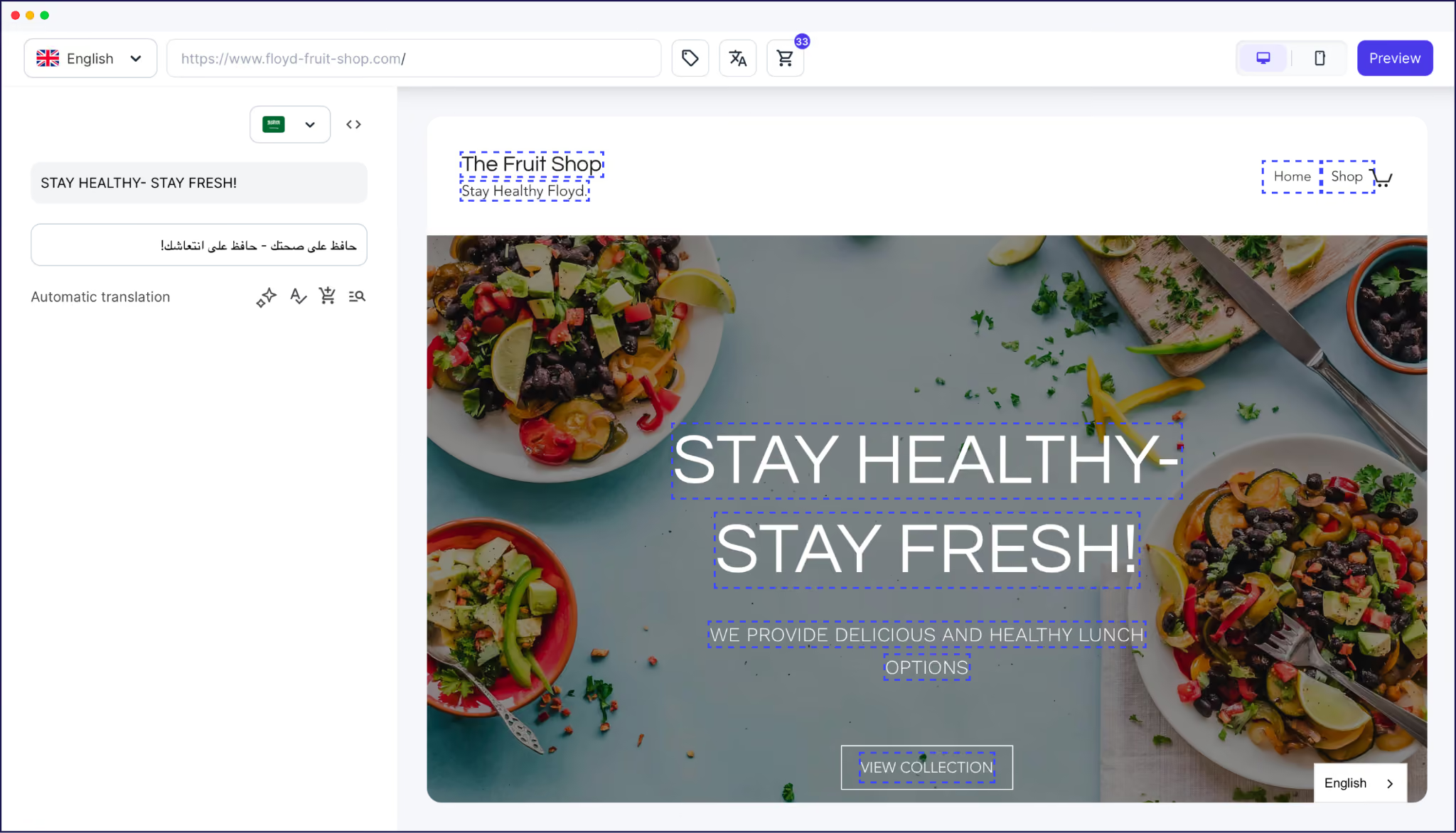
This is useful for brand-critical pages where design affects how translations land. For example, a headline that’s accurate in French may still be too long for the design space it sits in.
Our own analysis of 1.3 million citations across AI search platforms found that translated websites gain over three times more visibility in AI-powered search results compared to single-language sites.
As such, the infrastructure that makes your brand voice consistent across languages is also what determines whether your content gets found. Between Weglot’s base-level functionality and its AI Translation Model, you have a near-complete foundation for your own market adaption requirements.
The argument running through this post comes down to one thing: you can’t adapt well until you’ve decided what you won’t change. Brands that connect in new markets have resolved that tension before localization. Teams know the defining values, standards, and voice decisions in every context. What’s more, the structure is in place to protect those values while giving local teams room to work.
Weglot’s AI Translation Model, Glossary, and other functionality combines with your own governance model and per-market documentation to make these decisions repeatable. Without it, every piece of content in every language is a judgment call made by whoever has capacity.
To see how a configured translation workflow handles brand voice across every language your business operates in, start a 14-day free Weglot trial all without the need for a credit card or commitment.

We’ll get your first languages live. You decide how far you want to go. Try Weglot for free today.
Trusted by 70,000+ global brands





Weglot is tested and trusted by brands worldwide since 2016. Join them today.


The best way to understand the power of Weglot is to see it for yourself. Test it for free and without any engagement.
A demo website is available in your dashboard if you’re not ready to connect your website yet.


Translation converts content from one language to another as close to the original meaning as possible. Localization adapts the register, tone, formatting, and imagery for the culture of the target market. Transcreation rebuilds content from its emotional and creative intent. Each has different, yet vital use cases.
The decision is based on what the content is trying to achieve. Functional content (such as UI strings, product descriptions, and help documentation) works well with localization because the goal is accurate, consistent communication. Marketing and brand content where tone carries the commercial weight is more likely to need transcreation.
Start with documented principles specific enough to act on: the register decisions you've made by market and why, examples of the tone in each language, and the terms that should stay consistent. A configured AI Translation Model handles volume against those principles, while human review looks at any judgment calls.
AI can handle first-pass translations and maintains consistency when paired with Glossary rules and tone instructions. Brand accuracy comes from how you've described your brand context, how concrete your custom instructions are, and how regularly your team reviews and corrects output. The model improves with corrections over time.
Glossary rules can help you enforce approved terminology across all translations regardless of who made the edit. Translation Exclusions will protect content that should never change. Assigning specific languages to individual team members and using the Translation List to track what's been manually reviewed keeps the process auditable.