Try Weglot for free




It’s a common scenario – you’ve translated your ecommerce store but seen no visible impact on international sales. While it’s tempting to consider tearing your hair out in such situations, there’s often a common cause – a lack of website localization.
Translation alone rarely has the desired effect for a brand that’s moving into new markets. Whereas localization is usually the missing ingredient, enabling potential customers to find you, and once on your site, to stay there.
‘Localization’ is the practice of adapting your site to meet local expectations. It includes refining your translations to match local word preferences and ensuring imagery is culturally appropriate. But for real revenue boosts, sites need optimized SEO in order to be indexed by international search engines, and a localized checkout experience so customers have the confidence to buy.
Read on to discover the secret sauce behind ecommerce localization, how to calculate your ROI, and real-world results that demonstrate the effectiveness of a local approach.
As we touched on in our intro, translating your store’s content is just the beginning of any successful multilingual journey.
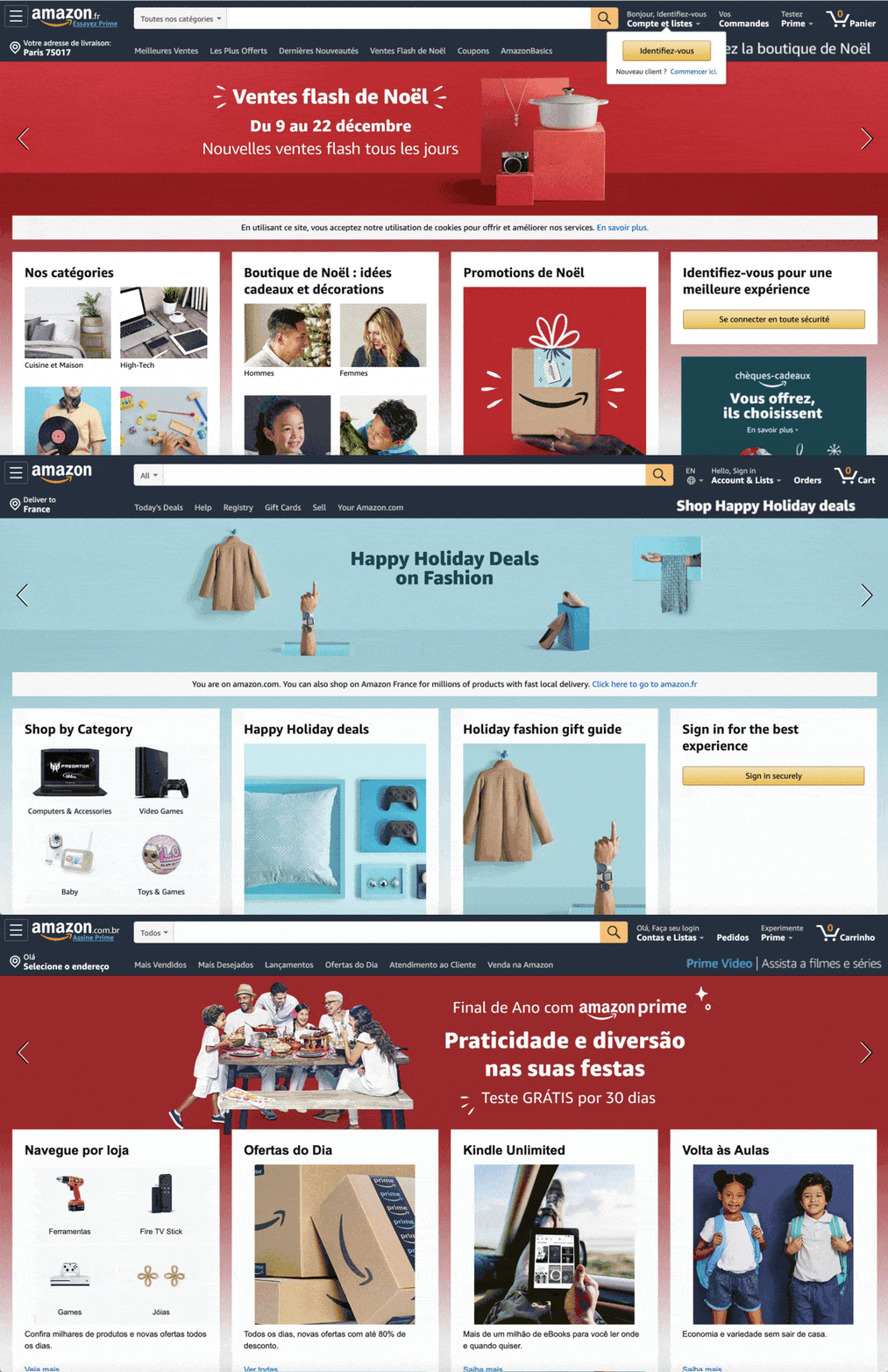
Localization means reshaping your online store to fit local trends, habits, and expectations. Take a look at how global giant Amazon handles matters – their international sites are obviously translated, but they also offer country-specific content and related offers.
Without the following localized traits, your site will still feel alien to your international customers:
Translation is a fabulous start, of course, but it’s localization that turns visitors into customers and repeat buyers.
‘Ecommerce localization ROI’ means measuring the value you get from adapting your site for new markets, beyond merely translating words. Proving real ROI justifies the time and expense of a localization project, and can help store owners avoid wasted spend when entering new markets.
The main business benefits of localizing an online store go far beyond higher conversions. You’re expanding revenue, giving your brand higher visibility, and potentially making gains over your competitors.
Here’s a practical formula for calculating ecommerce localization ROI:
((Revenue from Localization - Cost of Localization) / Cost of Localization) × 100 = Localization ROI (%)
“Start by pulling analytics for your current site. Look at conversion rates, order volumes, and AOV (average order value) for each market. Then, total your localization costs – site translation, new-language marketing, payment integrations, and team workload. Next, compare the new revenue from localized traffic to these expenses.”
– Eugène Ernoult, CMO at Weglot
Example: If you spend $5,000 on localization for Germany and generate $16,000 in new revenue, your ROI is ((16,000 - 5,000) / 5,000) × 100 = 220%.
Once you launch localization, tracking the right metrics is needed to give actual proof of ROI:
All of the above factors are of major importance, but pay particular attention to the following when localizing your site:
A beautifully localized website is one thing, but if search engines can’t find your international pages – or index the wrong ones – target customers will never find your store. Be sure to get your international SEO right, as this will truly make or break your chances of overseas success.
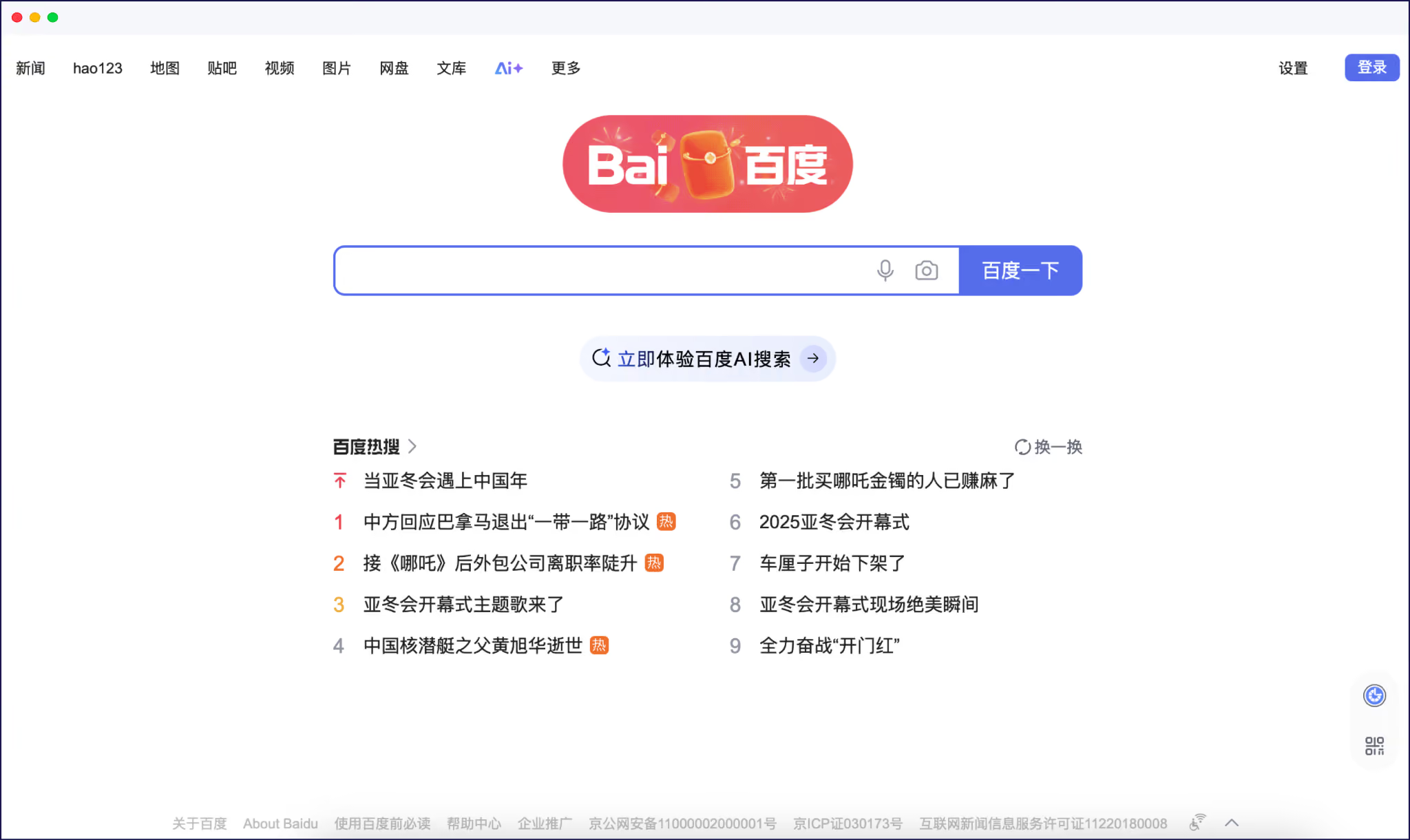
First up, be aware that there’s more to search than Google. Baidu has the biggest market share in China, and Yandex in Russia, so research which engine is most popular in your country of choice. They all have their own algorithm, so study the relevant search results and see if any patterns emerge regarding metadata structure.
Hugely important are hreflang tags. These tell search engines which language and regional version of a webpage to show users, so people always see content meant for their location and language. Missing these can lead to traffic cannibalization, index bloat, and ranking confusion.

Pair these with self-referencing canonical tags on every language and region version to signal the correct page for each audience. And make sure x-default is present when no specific language version matches that of the user.
“Using subdirectories (example.com/fr/) or subdomains (fr.example.com/) is also a must for international sites – subdirectories share domain authority, while subdomains help organize site sections for unique audiences. And potential customers are far more likely to click on your search listings if metadata and URLs are in their preferred language.”
– Elizabeth Pokorny, Head of Content and Brand at Weglot
Payment methods make the difference between a sale and a customer dropping out. In each country, shoppers expect to see familiar local payment options. If your checkout shows only foreign cards or confusing currency rounding, your cart-abandon rates will stay high – even if the rest of your site would win prizes for localization.
Displaying local prices builds trust, and checkout completion jumps when buyers see their preferred options. A Stripe survey revealed the following:
Checkout localization is clearly worth its weight in conversions!
To see what a localization workflow can bring to your business, look at the numbers powering brands like Ron Dorff and Seahawk Media.
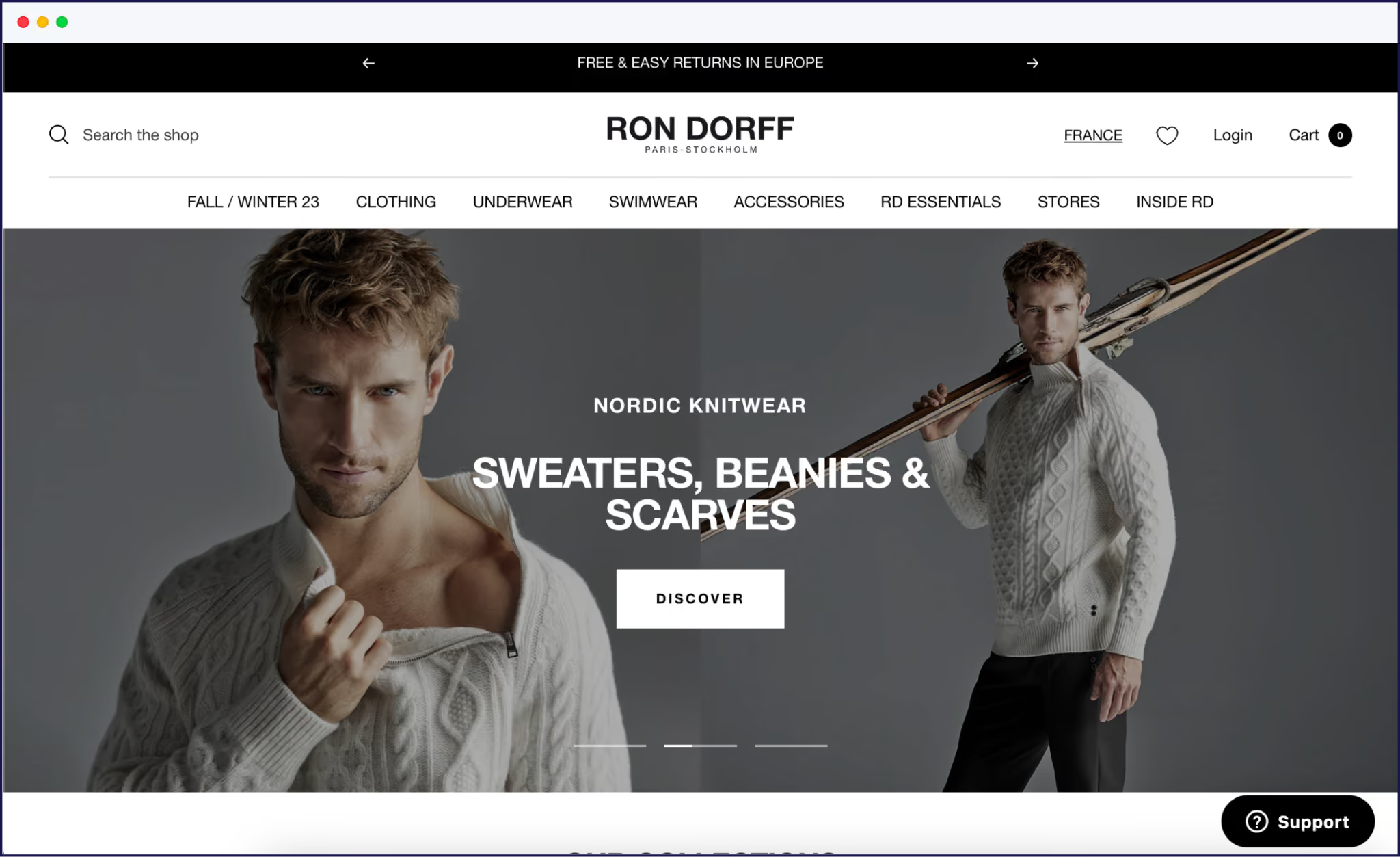
Ron Dorff needed to serve up product info and checkout in multiple languages without months-long projects or constant developer intervention. After using Weglot, the Swedish sportswear brand shipped a full multilingual Shopify store in under fifteen days, covering 150 products, all with SEO best practices in place.
The results speak for themselves – over 70% of annual sales now come from outside their home country. Their team slashed ecommerce translation timescales, let search engines rank every localized product page, and unlocked export sales.
{{quote-image-banner}}
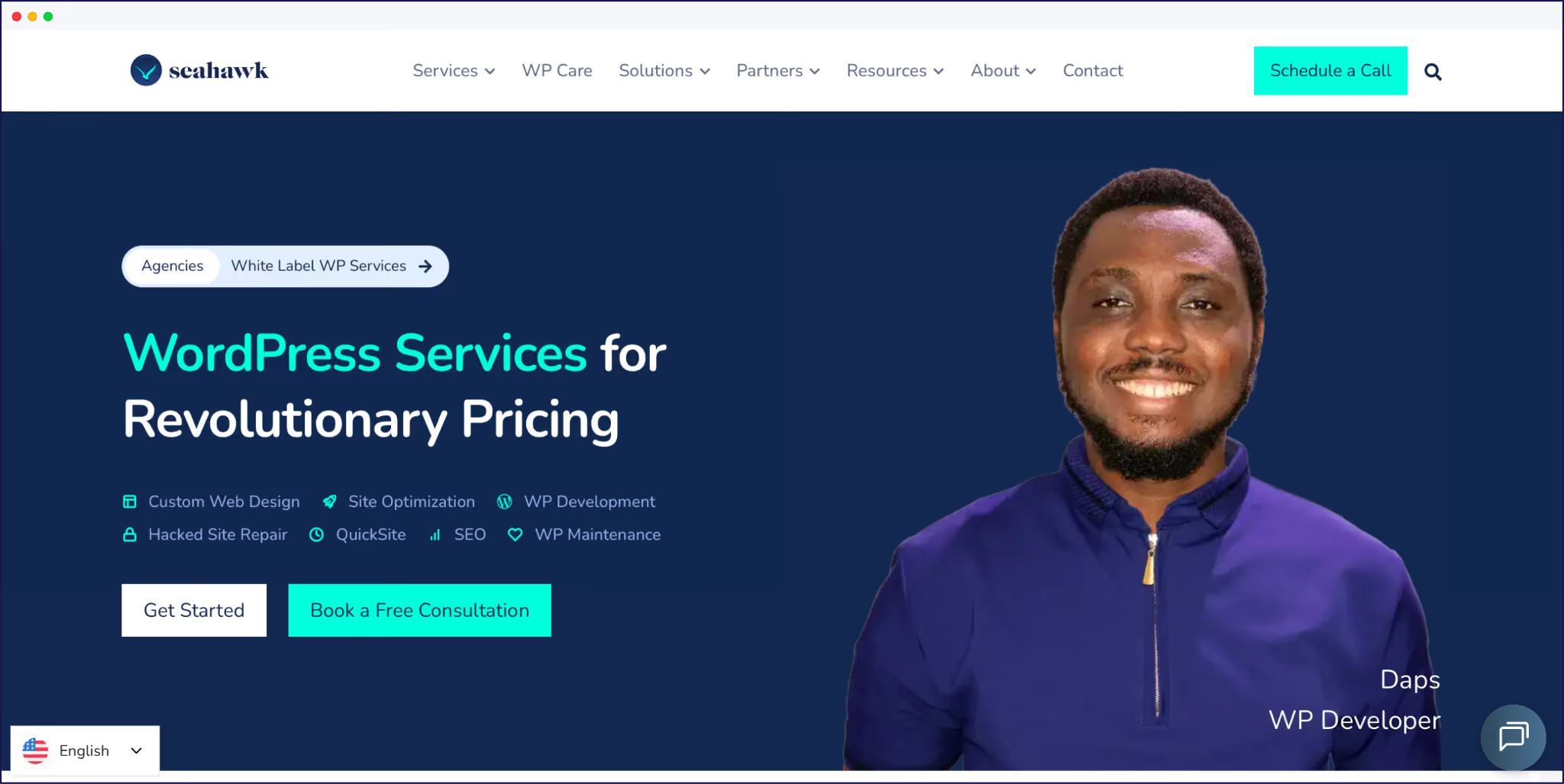
As a WordPress agency, Seahawk’s own site was a sprawling tangle of high-word-count content, with growing foreign traffic and zero time for manual translation. After switching to Weglot, they rolled out six new languages in a matter of minutes.
Localized SEO was handled automatically, and Seahawk saw a 20% boost in foreign keyword rankings, together with a 30% increase in overseas traffic.
“Thanks to the ease of use and the fast, fluid translations, we’ve been able to attract non-English clients faster than ever. It’s been a game-changer for our own business!”
– Aditi Tanwar, Former Head of Content & Affiliate Partnerships, Seahawk Media
{{ai-translation}}
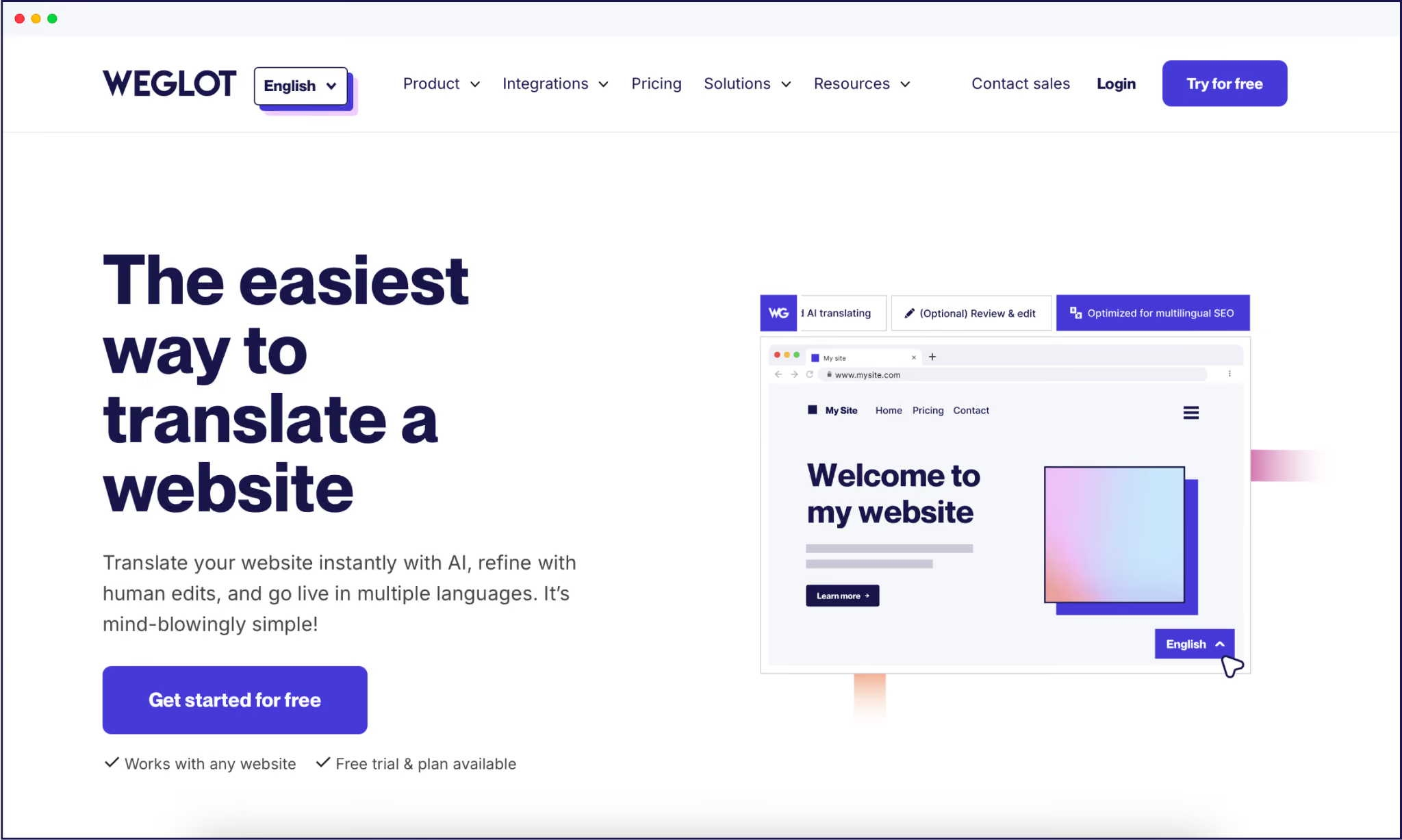
Weglot removes roadblocks so you can launch quickly and start seeing results. Our tool goes beyond translating words – it gives you full coverage over the two biggest ROI levers in ecommerce localization.
First, Weglot instantly translates your entire site across more than 110 languages, including metadata and image alt tags.

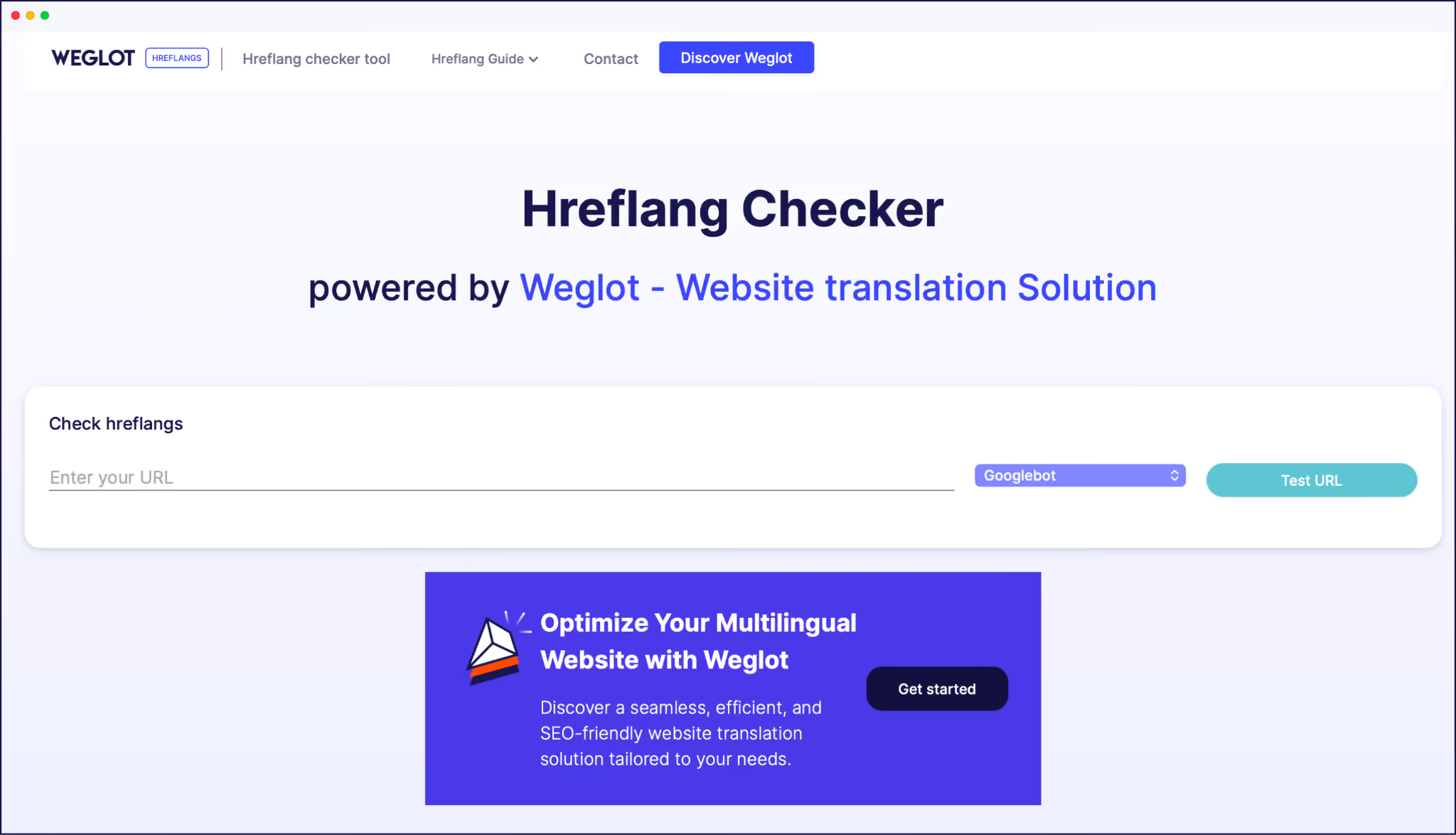
Hreflang tags, translated slugs, and auto-generated sitemaps are handled automatically, so you don’t have to dig through site code. We even have a hreflang tag checker, so you can confirm everything is working as it should.
In terms of site structure, you can choose subdirectories or subdomains to suit your site’s needs, and AI translation detects and translates content the moment any new native pages go live.
Our AI Language Model takes this up a step, with users being able to personalize brand voice to a greater degree. A frontend Visual Editor lets you fine-tune translations to ensure they fit your existing page designs, and Right-to-Left (RTL) languages are also handled with ease.

On the checkout front, Weglot helps your translated store display the right language, payment instructions, and product details for each shopper – a major boost for building trust at the point of sale. Check out our handy guides to localizing checkout for WooCommerce and Shopify, once integrated with Weglot.
While local payment methods, inventory rules, and price rounding are handled through your ecommerce platform or add-ons, Weglot ensures every other element of the experience gets delivered in the right language. And you can even take advantage of a free Weglot plan, translating up to 2,000 words instantly, in a tech-free, five-minute setup.
{{demo-banner}}
Localization is a proven driver of growth. Brands that adapt their sites to match the needs of each new market see more revenue, higher conversion rates, and repeat business. Shoppers want to pay in their preferred ways and find your products in their own language. When you provide the experience that customers expect, your brand will reap the financial rewards.
Weglot’s AI-powered platform takes care of the daily tech, so you can focus on refining your service offering and increasing your own ROI. See the difference Weglot can make to your own international ecommerce with a free 14-day trial today.

We’ll get your first languages live. You decide how far you want to go. Try Weglot for free today.
Trusted by 70,000+ global brands








Weglot is tested and trusted by brands worldwide since 2016. Join them today.


The best way to understand the power of Weglot is to see it for yourself. Test it for free and without any engagement.
A demo website is available in your dashboard if you’re not ready to connect your website yet.