Try Weglot for free





Most SaaS brands stay in one market too long because scaling internationally still sounds like a massive operation.
But expansion isn’t an operational problem for SaaS like it is for ecommerce brands. There’s no warehousing, inventory, or shipping to contend with. The bottleneck is whether you can find and convert users in their language.
That makes international expansion a marketing matter. SaaS brands must choose the right markets, channels, and multilingual content in the right order to avoid burning money on markets that won’t convert.
In this article, you’ll get a step-by-step framework for building that plan, plus examples from SaaS brands that used it to scale.
SaaS has a built-in head start over other business models when it comes to international growth.
These include:
Successful expansion still requires effort. SaaS brands will need to consider regional payment methods, support coverage, and compliance with local laws such as GDPR. But nothing is stopping a customer in France from using a US-based SaaS.
Besides, all of these operational issues are solvable (and only important) once you prove demand.
Compare that to an ecommerce brand building a presence in France. It needs stock in the country (or a long-distance shipping method), a returns process that works across borders, and customs clearance processes. On top of arranging local payment methods, support coverage, and GDPR compliance.
For ecommerce brands, the question is “can we operationally serve this market?” For SaaS companies, the question is “can customers find our product?” If they can’t, operational issues like regulatory compliance don’t matter that much.
Before starting your expansion journey, confirm your SaaS has the foundations in place to succeed. Otherwise, you’ll end up investing in paid campaigns, see no traction, and conclude that expansion doesn’t work.
Use this checklist of signals to confirm you’ve got the go-ahead for growth:
It’s important to flag that you don’t need an internal multilingual team to grow your SaaS in new markets. As you’ll learn below, there are AI translation tools to help you translate your site in seconds without in-house expertise.
That’s the assumption that held back SEO platform SmartKeyword from launching a multilingual project – until it found Weglot’s quick and painless translation solution.
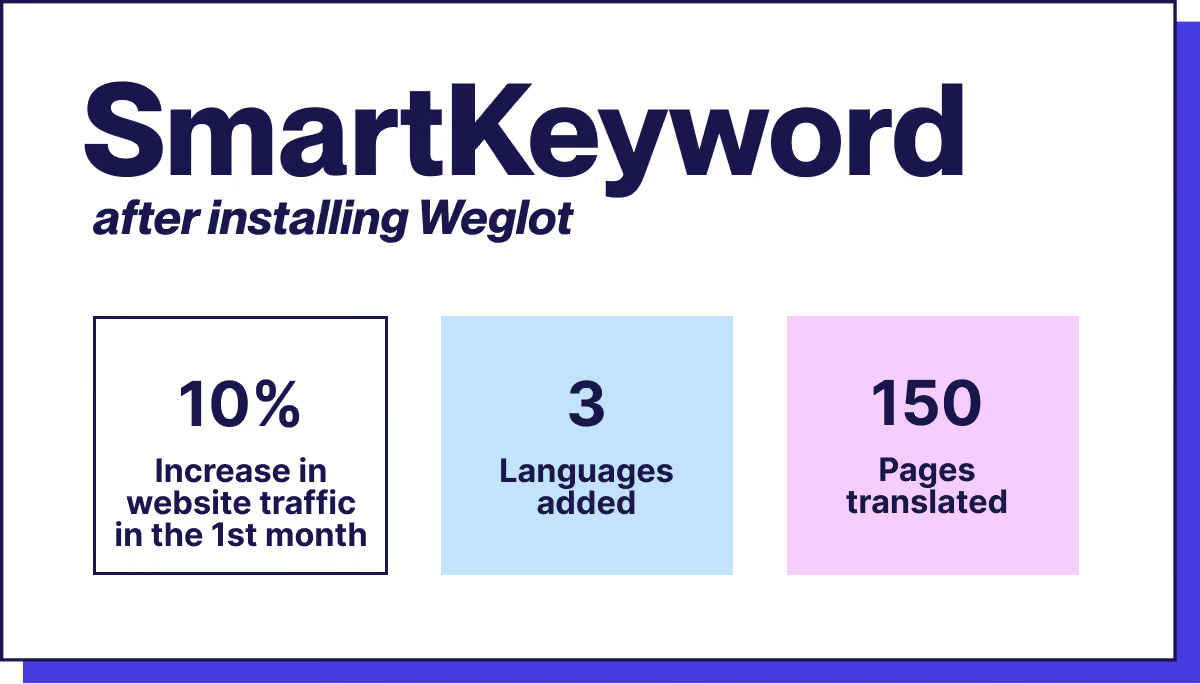
Now you have a foundation for international growth, here’s the framework that every SaaS can follow for a successful multilingual expansion.
One of the most common mistakes SaaS brands can make is translating into 10 languages at once.
Instead, pick 1 to 3 priority markets by judging them against the following criteria:
Your existing channels won’t map seamlessly across markets. You’ll need to audit each and decide how useful it will be for each market.
By the end, you’ll have a channel-by-channel matrix that shows you where to invest first for the greatest success.
Here’s what to bear in mind when running multilingual campaigns across the most popular SaaS marketing channels.
Traffic from search engines and LLMs like OpenAI can occur automatically when you translate your site for local markets. That’s because each translated version becomes its own indexable site, with its own keywords, rankings, and backlinks.
Create a multilingual site for generative engine optimization (GEO), as models appear to prioritize content that matches the query language. If your content only exists in English, AI tools may not cite it in answers to Spanish or French queries.
The good news is there’s a lot of crossover between global SEO (search engine optimization) and multilingual GEO. Many of the strategies and techniques that help your site rank higher in Google also help you appear in AI results.
Assess the cost of running your current creatives for translated keywords in your target markets. CPCs can vary significantly across countries, meaning a campaign that’s viable in the UK won’t necessarily generate a positive ROI in Germany.
Also, think about how your international PPC campaigns look to the end user.
Just because your ads convert well in English-speaking markets doesn’t mean they’ll work abroad. Running English-only ads in non-English markets is a great way to burn your advertising budgets and tank conversions.
Instead, translate every element of your highest converting ad creative, including the copy, design, landing page, and URL.
You probably don’t need to build a fresh content engine for each market, but you’ll want to spend time thinking about which of the following assets work best across markets:
Different markets may prefer to consume different resources. Some of your case studies may be particularly relevant to businesses in a specific location. Prioritize accordingly when building a multilingual content strategy.
That could mean translating your 20 most-read blog posts, your most-downloaded whitepaper, and the 5 customer stories sales teams refer to most often.
Social media can be a cost-effective and early signal of demand in a new market. And a great way to convert interest into sales.
Pick the platform your buyers actually use rather than mirroring your home-market mix. The same platforms that drive conversions in your home country may not work internationally. Take LinkedIn, for example, which is popular in Western markets but less so in the Far East.
You’ll also want to consider the content and tone of your posts, as well as any local social media conventions. For example, the casual, punchy voice that works for US LinkedIn influencers may come across as unprofessional in German.
Now that you know which markets you’re going to enter and which channels will drive traffic, turn your attention to translating your SaaS’s content.
Because 40% of consumers will never buy from a website that doesn’t offer content in their language, translating your content is essential. But it shouldn’t happen all at once.
Start with the pages that drive conversion and retention, then work outward.
Here’s the order most SaaS brands should follow:
Next step: Use Weglot’s content prioritization template to organize your translation efforts and keep your team aligned.
Use AI-powered models, glossaries, and other features to keep translations on-brand across markets.
Weglot’s AI Translation Model trains on your brand voice, edits, and custom instructions to produce incredibly accurate and brand-aligned translations the first time.
Make it even more accurate by creating glossary rules that define how specific terms behave across every language. For example, product names, brand phrases, and technical terms can either stay untranslated or use an approved translation you specify.
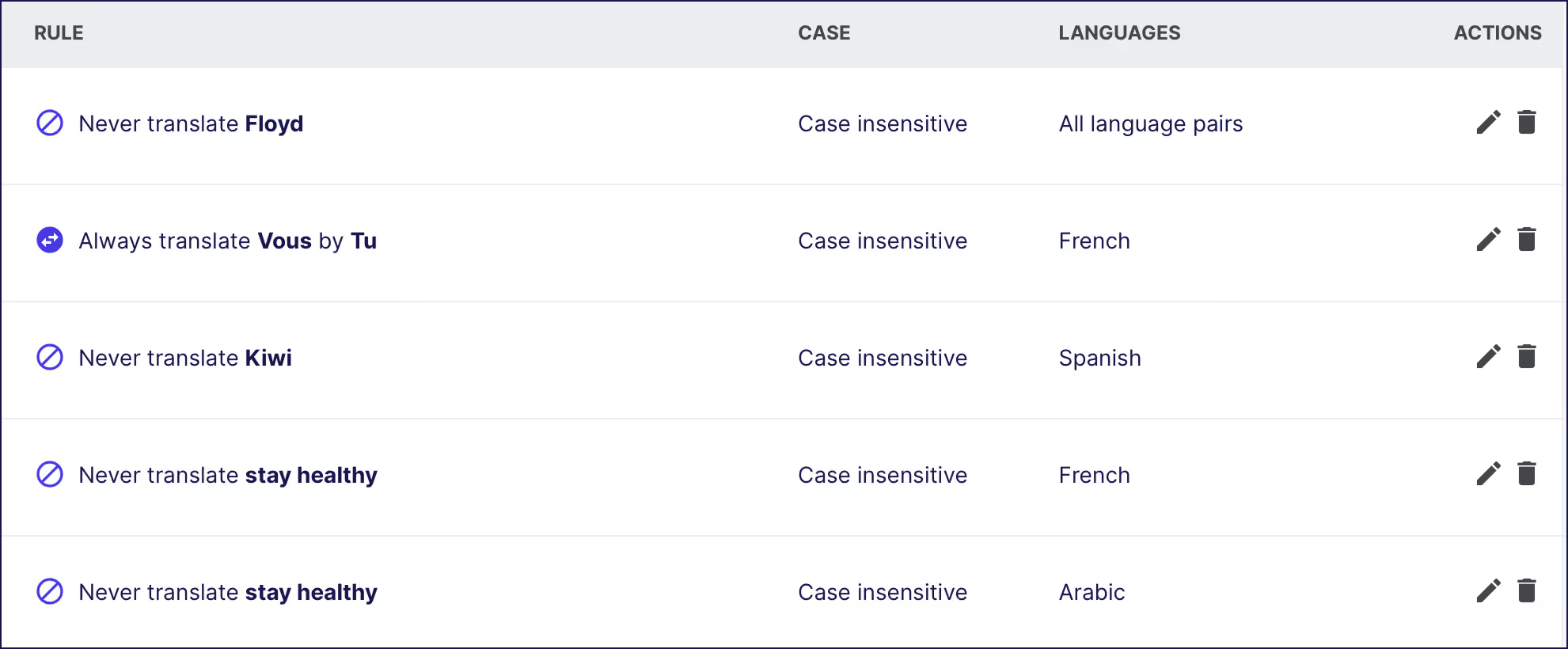
AI agent platform TextCortex put this into practice when expanding into German, where the wrong formal-versus-informal register can make a brand feel bureaucratic and distant.
The AI Translation Model fixed the tone, while the glossary locked in how specialized AI and technical terms got translated across every market.
Decide what success looks like in each market before traffic starts flowing. Otherwise, you’ll have a lot of data but no way to interpret it.
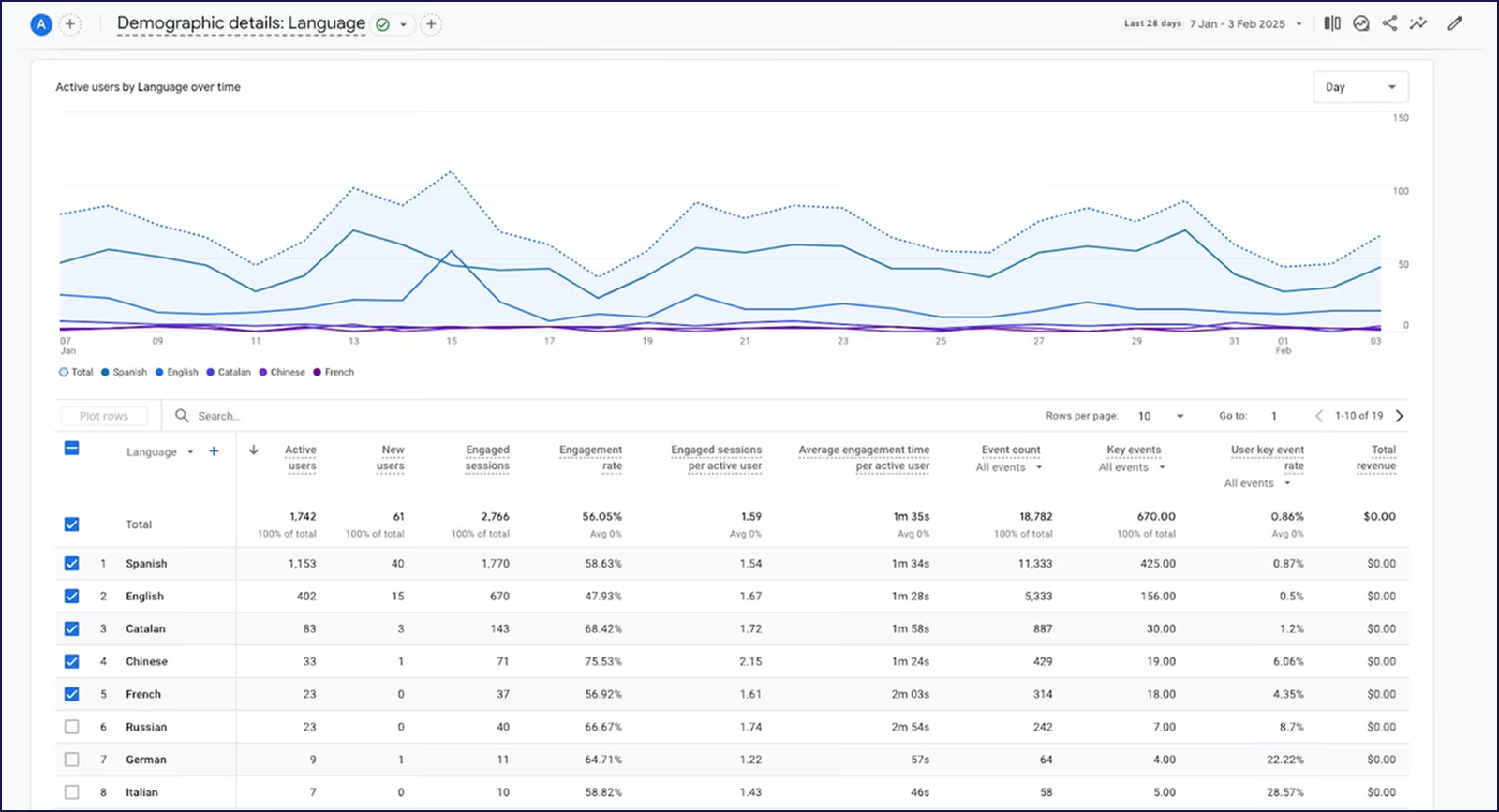
The most important principle is to track your success by traffic and language, rather than just by language. That way, you can tell if a Spanish-language page performs well in Spain but poorly in Mexico – and find out what to do about it.
Here are the metrics you should track:
Use a web analytics platform like Google Analytics 4 to track web visits, Google Search Console for SEO, and your paid ads platform to measure conversions across each language and region.
Localized reports in Google Analytics will look something like this:
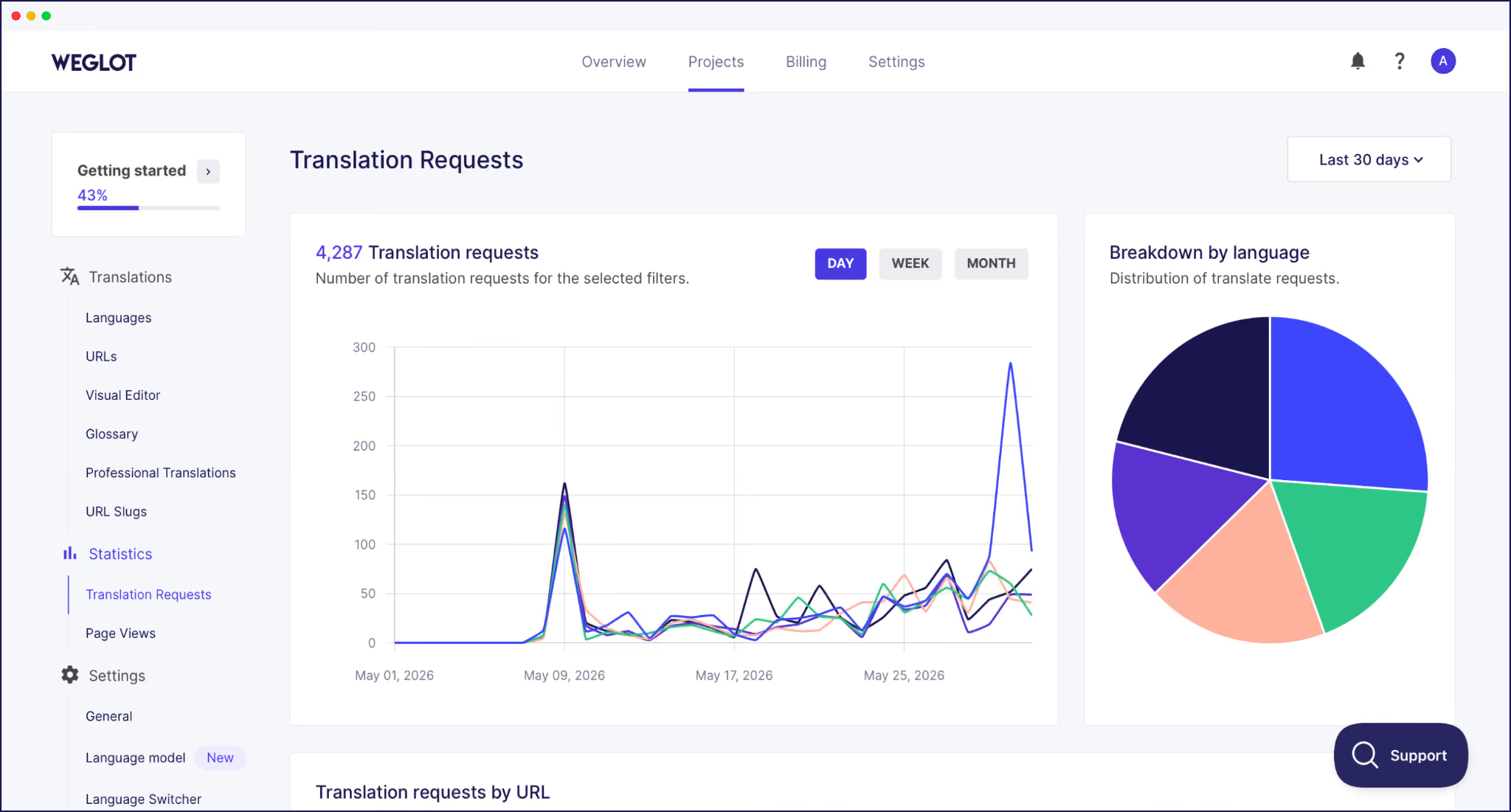
Alternatively, run Weglot’s built-in analytics to track translation requests. These statistics help you understand which content visitors access and how Weglot serves translations.
Here’s what the data looks like on the Weglot Dashboard:
Set a 90-day review point after launching in new markets. By then, you’ll have a clear view of which languages are converting, which are underperforming, and where to invest next.
For example, you could follow the lead of resource management software Napta. After using Weglot to translate its content for the highly competitive German market, Napta hired freelance local SEO experts for additional optimization, resulting in a 4x increase in German traffic.
Even when you prioritize a handful of markets, you still don’t need to launch in each of them at once.
Doing it one market at a time lets you catch any issues and apply lessons learned to the next launch. So you don’t repeat the same mistakes across 5 markets at once.
Here’s a sample 90-day rollout for your first market
To make things much faster, use an AI translation tool like Weglot.
Without Weglot, the translation phase alone can stall a rollout for weeks (think agency deadlines, file exports, and manual content updates). AI translation fundamentally changes the timeline, so what used to take 6 months and a dedicated localization team now happens instantly.
Immediately upon setup, Weglot automatically detects every piece of content on your site (including dynamic content, pop-ups, and checkout flows) and translates it using leading AI engines like DeepL, Google, and Microsoft.
You’ll have a fully translated site (including your blogs and knowledge hub) in under 10 minutes. So by Week 3, you’re already in QA and refinement rather than still waiting on a first draft.
Because Weglot chooses the best translation model for your language pair, you’ll get exceptionally high-quality translations out of the gate. Completely skipping the manual effort it used to take to translate your site. Couple that with your custom AI Translation Model and the translations will sound on-brand, instantly.
You do still maintain full editing control, however.
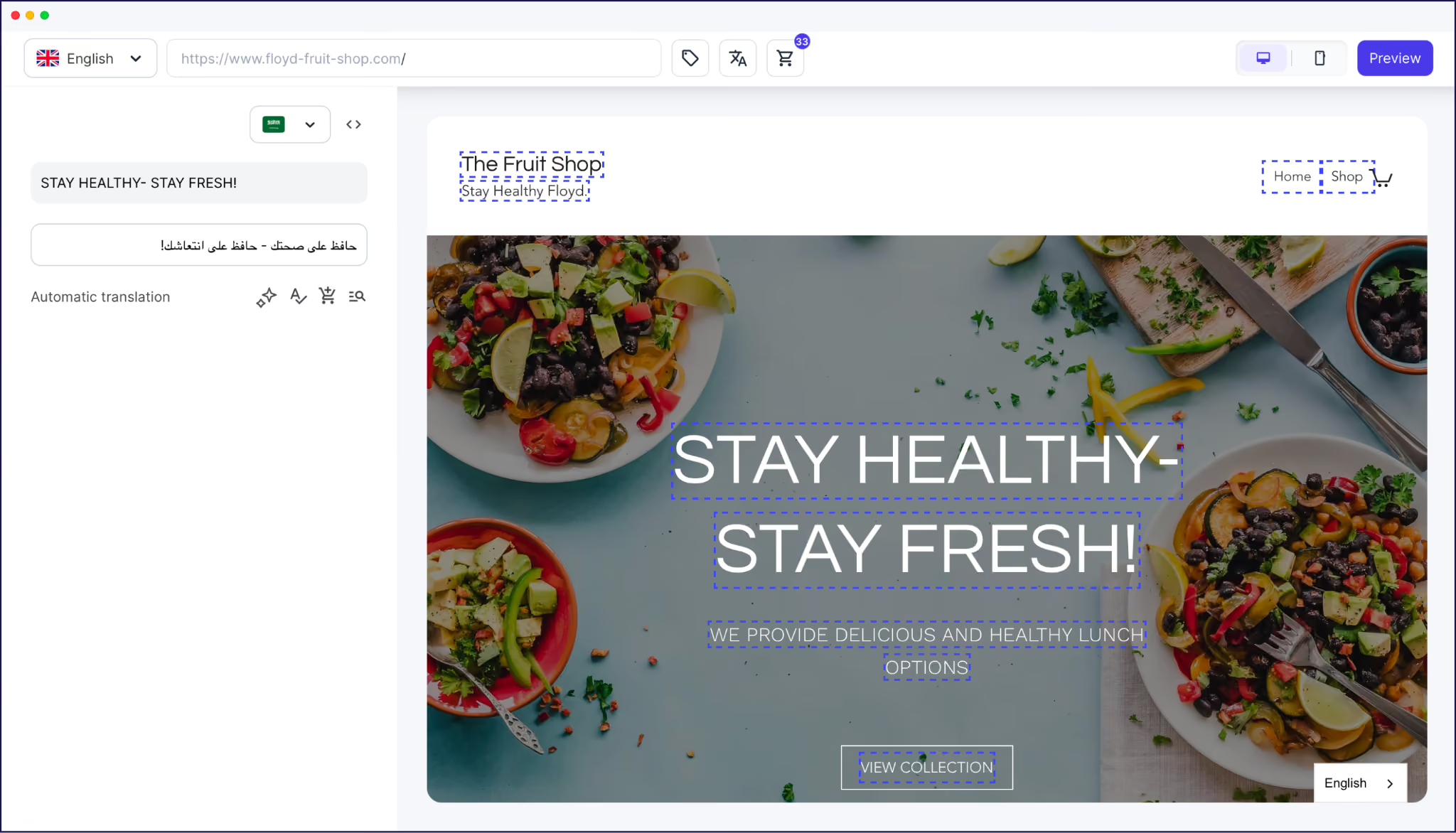
Weglot’s Visual Editor lets you edit translations live on your page, so you can see exactly how the new copy will look. It’s an effective way to make sure translated content doesn’t break your site’s design.
If you need to tweak translations, you can make the changes yourself, ask AI or request help from a human translator.
From then on, Weglot’s continuous translation keeps everything in sync. Every new blog post, product feature added to a landing page, or pricing change is reflected as soon as you hit publish.
Next steps: Build your own 90-day strategy by following Weglot’s International GTM Action Plan template.
Several patterns show up across SaaS brands that expand without a plan. If you spot any of the issues below, pause and fix them before you go further.
Problem: Translating all content before you truly know whether a market will convert is the fastest way to burn time and budget. Even with an AI translation tool like Weglot doing the heavy lifting.
Solution: Translate your site and key marketing collateral first to prove demand, then tackle everything else.
Problem: Your site, product, and marketing materials evolve constantly. If translation doesn’t keep pace, multilingual versions of your Saas assets will fail to convert customers.
Solution: Use a continuous translation solution like Weglot that regularly scans your website and automatically translates new content the moment it goes live.
This significantly reduces your marketing team’s workload and ensures a seamless user experience. It’s how Respond.io’s customer conversation management platform continues to deliver a fully localized experience across 15 languages.
Problem: A literal translation of an English keyword rarely matches how people actually search in another language.
Solution: Run an SEO keyword research tool to explore different variations, spellings or colloquialisms of your keywords in the local language. Watch the video below to learn more:
Problem: A perfectly translated French page that displays pricing in USD can leak conversions. To deliver a fully localized customer experience, you must adapt pricing, currency, and payment methods to your new market.
Solution: Follow our localization guide to tailor every aspect of your user experience to international users. This also includes media assets, dates and time formats, and legal and regulatory compliance.
Problem: A localized PPC ad that clicks through to an English-language landing page decreases trust and significantly reduces conversion rates. It also means you’ve wasted the budget you spent earning each click.
Solution: Translate the landing page before the campaign goes live. Use an automatic translation tool like Weglot to translate every page of your website, including landing pages, in seconds. You can use Weglot’s exclusion feature to ensure you only translate the ad landing pages that matter.
Problem: Winning a customer in a new market and then leaving them without help in their language is a fast route to churn. Customers are far more likely to stay with a brand that offers post-sale support in their language.
In fact, an Intercom survey found that 70% of end users feel more loyal to companies that provide native-language support. 29% of businesses report losing customers because they don’t offer it.
Solution: Plan support coverage into your expansion from the start, not as an afterthought. At a minimum, translate your help center and documentation so users can self-serve in their language. Then scale human support based on demand from each market.
Successful SaaS expansion requires solving marketing problems before operational ones. Your product is already ready for an international audience – you just need to help customers find you.
That’s where Weglot comes in, giving you the fastest route to a multilingual online presence.
AI-powered continuous translation keeps your site versions up to date, while multilingual SEO is configured correctly from day one. When you’re ready, Weglot can help you translate your product, too.
Ready to see how quickly you can expand to new markets? Start a free 14-day Weglot trial.

We’ll get your first languages live. You decide how far you want to go. Try Weglot for free today.
Trusted by 110,000+ global brands





Weglot is tested and trusted by brands worldwide since 2016. Join them today.


The best way to understand the power of Weglot is to see it for yourself. Test it for free and without any engagement.
A demo website is available in your dashboard if you’re not ready to connect your website yet.