

Try Weglot for free


A translation proxy is a server that sits between your visitors and your origin, intercepting requests for translated versions of your site, and serving localized HTML pages on the fly. Instead of rebuilding your CMS, it works as a smart middle layer that fetches the source page, applies translations, and returns a fully-rendered localized version.
However, like most things in life, there’s a catch. Architecture decides whether those translations count for SEO. A server-side proxy sends search engines complete translated HTML on dedicated URLs, while JavaScript overlays only swap text in the browser and often leave Google seeing a single-language site.
If you’re looking for a translation solution that balances speed of launch against depth of integration, the following guide is precisely what you need! Read on to uncover different proxy types, benefits, considerations, and costs, so you see for yourself if a translation proxy fits your stack, budget, and growth plans.
A translation proxy is a middleman server that delivers a translated version of your site without changing your CMS or codebase. Here’s how the workflow looks in practice:
Visually, you can picture it as: browser > translation proxy > your server > translation proxy > localized page back to the browser.
Server-side and JavaScript-based translation proxies both sit between your visitors and your site, but they behave very differently for SEO.
A server-side reverse proxy renders the translated page before it reaches the browser, so search engines receive fully translated HTML, with proper URLs, metadata, and hreflang tags. This is the architecture Weglot’s reverse proxy uses, which means localized pages are indexable like any other static page.
JavaScript overlays load the original page first, then swap visible text in the browser after the fact. Crawlers often index the unmodified source language HTML, so your Spanish or German ‘versions’ are effectively invisible to organic search.
“The real decision isn’t about ‘proxy vs no proxy’, it’s about architecture. If your proxy only runs client-side JavaScript, you’re not creating separate, crawlable international pages at all.”
– Rémy Berda, Co-Founder and CPO at Weglot
Translation proxies are good for SEO when they behave like real localized sites, not cosmetic overlays. As we’ve seen above, the deciding factor is whether they create dedicated URLs for each language, such as subdirectories (yoursite.com/es/) or subdomains (es.yoursite.com).
For SEO, a solid translation proxy setup should meet this checklist.:
<link rel="alternate" hreflang="es" href="https://example.com/es/" />Alt text: Hreflang tag example

Using a translation proxy is a fast way to ship a multilingual site without rebuilding your stack, which suits both SMBs and busy agencies.
For setup, a proxy lets you launch in minutes instead of months, because it sits in front of your existing site rather than inside your CMS. Weglot’s setup, for example, typically takes 5-10 minutes no matter the CMS, with no database migrations or schema changes. Maintenance stays tech-free – there’s no need to create new tables, manage gettext files, or refactor templates every time you add a language.
You also gain automatic content detection. As you publish new English blog posts or update product descriptions, the proxy picks up those changes and serves translated versions on autopilot, so teams don’t maintain parallel CMS structures. This avoids the upfront integration tax of classic CMS localization projects, where you might spend weeks wiring fields, workflows, and templates before the first translated page can go live.
Top-tier proxies guard further against performance woes by using a global Content Delivery Network (CDN). Your translated pages are cached on servers closest to your international visitors, so page speed is unaffected.
Translation proxies do have tradeoffs, and being clear about them helps you avoid surprises.
First, there’s the bleed-through problem. This happens when parts of the original language still appear on translated pages, such as dynamic cart messages, live chat widgets, or third-party embeds that aren’t running through the proxy. These can usually be fixed through targeted rules, though.
Second, the operational work shifts. You skip weeks of integration, but you may want to invest in quality control. This includes glossary terms for brand language, translation rules to handle edge cases, and periodic reviews of important pages. You can see Weglot’s glossary below:
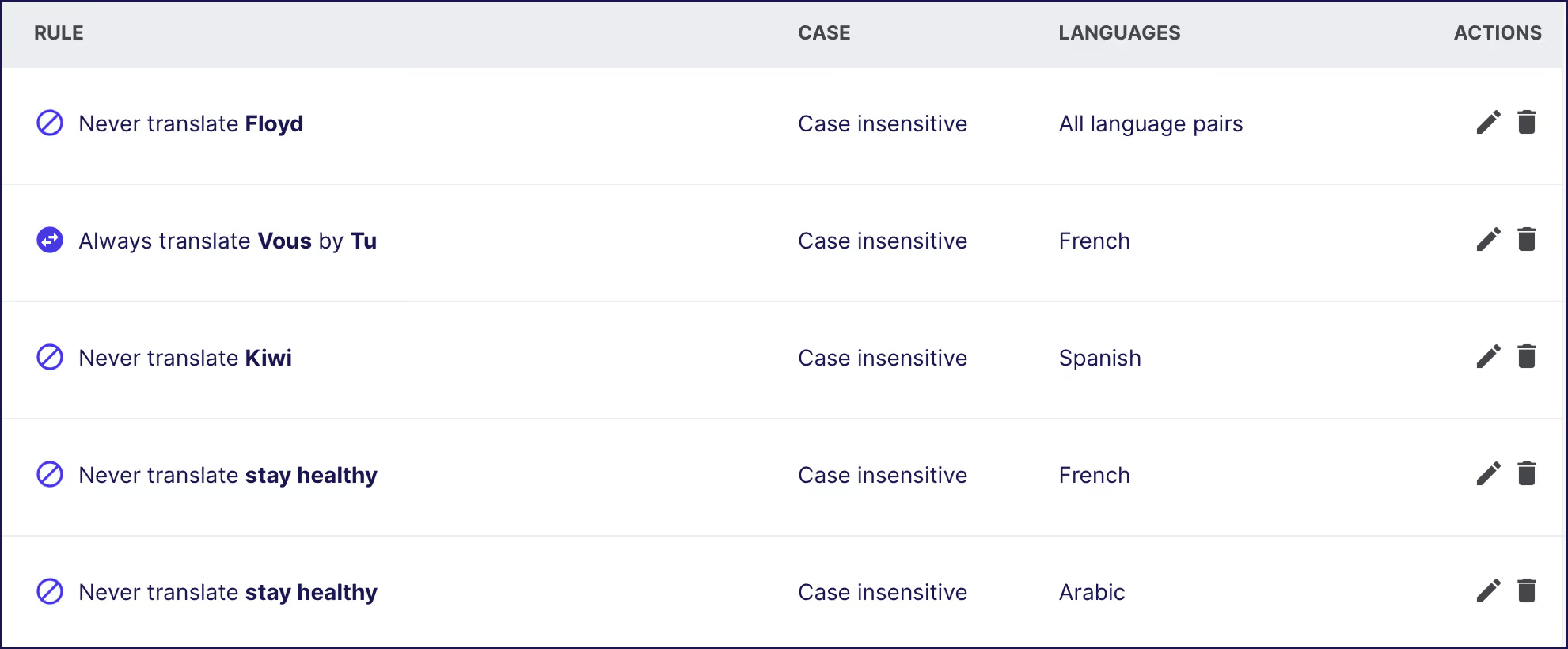
Complex, highly interactive apps or heavily personalized experiences also need more fine-tuning than a straightforward ecommerce catalog or brochure site. Some UI elements update so quickly that you must test and adjust how the proxy handles them.
Finally, watch hidden costs around quota consumption. Every translatable string counts toward your word usage, including form labels, error messages, microcopy, and even translated URL slugs. Large catalogs and frequent changes can push usage higher than the raw page count suggests.
Translation proxy pricing usually scales with usage. You’re paying for three main components:
Language count is straightforward – more languages mean your source content is duplicated more times, which increases both storage and processing.
Word count is trickier. Every translatable string is included – page copy, blog posts, product data, form labels, system messages, and even translated URL slugs – multiplied by the number of languages. Some vendors also tie pricing to traffic or monthly requests, charging more as more users hit the proxy for translated content. Use Weglot’s free word checker in advance, to see how many words your site currently has.

Weglot uses a tiered SaaS model, from Starter through Business and Advanced to Enterprise, based on word count and languages. This lets you test new markets at a lower tier and move up only if the results justify a larger plan.
For example, Weglot’s free tier gives you 2,000 translated words in one language. Our Starter tier comes with 10,000 words, for €15/month. Those needing more can go for our Business package – 50,000 words and three languages for €29/month. Exceed your word or language count and you can take up our Pro tier for €79/month, which gives you 200,000 words and five languages.

You can find our different packages on our pricing page, and remember – our free tier is free forever, and you can start a 14-day free trial, with no credit card required to see exactly how it works
{{ai-banner}}
Proxy translation is a strong fit when your priority is speed, reach, and SEO.
It’s ideal if you want to expand quickly into multiple markets, especially for ecommerce stores on Shopify, WooCommerce, or similar platforms, and marketing sites where organic search matters. With a server-side proxy, you get dedicated localized URLs, crawlable content, and translated metadata without rewiring your CMS.

REVIEWS.io used Weglot to grow German traffic by 120% while improving conversion rates, showing how a proxy can support serious SEO and revenue goals.

The Bradery translates 500+ products per day, which illustrates how this approach scales for large, fast-moving catalogs.
{{quote-image-banner}}
A deeper CMS integration is usually better if you need strict offline control of every data point, have heavy back-office workflows tied to content, or run a highly custom, proprietary architecture that restricts external routing. In those cases, native multilingual fields and bespoke integrations can give you more precise control than a proxy.
Weglot gives you the speed of a translation proxy with the control of a full translation management platform.
We lead with AI translation through a custom AI Language Model powered by OpenAI and Gemini, which learns from your glossary, past edits, and brand guidelines so new translations already sound like you.
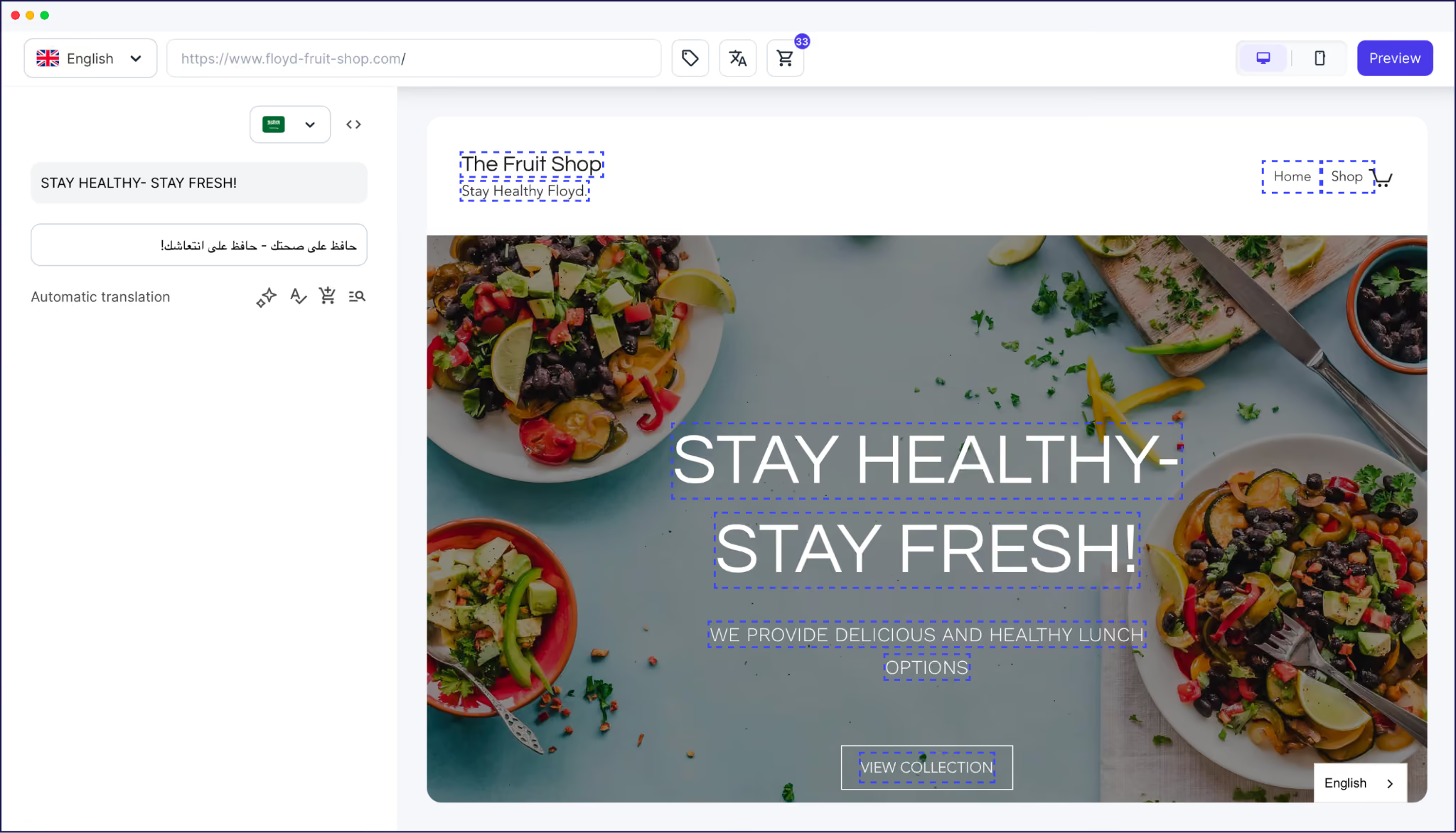
When you want to refine content, you can switch to the frontend Visual Editor to click and edit text directly on the page, or set rules to lock in preferred terminology across your site.
Implementation stays tech-free. You connect Weglot to any CMS in under 10 minutes, without creating new tables, editing templates, or wiring gettext files.
From there, Weglot automates the technical parts of multilingual SEO – dedicated URLs per language, automatic hreflang tags, translated metadata, and updated sitemaps. Marketing and SEO teams get clean, indexable localized pages on autopilot, while keeping full editorial control whenever higher-stakes content needs human review.
Effective website translation is about picking an architecture that actually holds up under SEO scrutiny. As we’ve demonstrated, server-side reverse proxies with dedicated language URLs and translated metadata give you real, indexable pages, while JavaScript overlays leave search engines staring at your source language.
Weglot is built on that server-side foundation, then layers in AI translation and tech-free setup. All technical SEO is handled instantly, with automated hreflang, URLs, metadata, and sitemaps so your multilingual SEO runs on autopilot. If you care about long-term rankings, clean architecture will do more for you than any clever workaround.
Ready to start localizing your website? Sign up for your 14-day free Weglot trial today.

We’ll get your first languages live. You decide how far you want to go. Try Weglot for free today.
Trusted by 70,000+ global brands








Weglot is tested and trusted by brands worldwide since 2016. Join them today.


The best way to understand the power of Weglot is to see it for yourself. Test it for free and without any engagement.
A demo website is available in your dashboard if you’re not ready to connect your website yet.


Yes – translation proxies work very well for ecommerce, especially when they provide server-side rendering, localized URLs, and translated metadata so product pages remain fully indexable. Weglot’s customer base is heavily ecommerce, with brands using it across Shopify, WooCommerce, and other platforms to scale multilingual catalogs quickly.
Translation proxies can handle more than text – they can also localize assets like images by serving different URLs per language version. With Weglot, you can swap image URLs in the dashboard so each locale sees visuals, banners, or screenshots that match their language and context. Through Weglot you can also translate image captions and alt text automatically.
You usually don’t need ongoing IT support because a translation proxy like Weglot is designed for a tech-free setup managed by marketers. Implementation typically happens through a small DNS change or a plugin/connector, and once connected, content detection, translation, and multilingual SEO run automatically from a cloud dashboard.


