Try Weglot for free


Breaking into new markets means you need to connect with customers in their language. However, the challenge is to translate your website in a way that maintains quality, handles any technical requirements, and fits your workflow. Translating a website with DeepL can hit all three points, and there are a number of ways for integration.
DeepL's neural machine translation technology processes entire sentences to understand context and meaning rather than translating word-by-word. This matters when you're translating product descriptions, marketing copy, or customer-facing content where tone influences buying decisions. Here, we'll look at three ways you could implement DeepL website translation depending on your business's needs.
The DeepL Translator gives you a web interface that lets you paste in text or upload documents in multiple file formats, which returns translations that preserve your original formatting. As such, you can translate entire documents without spending time reformatting the output. For short-run translations or testing, it's an accessible way to translate your site.
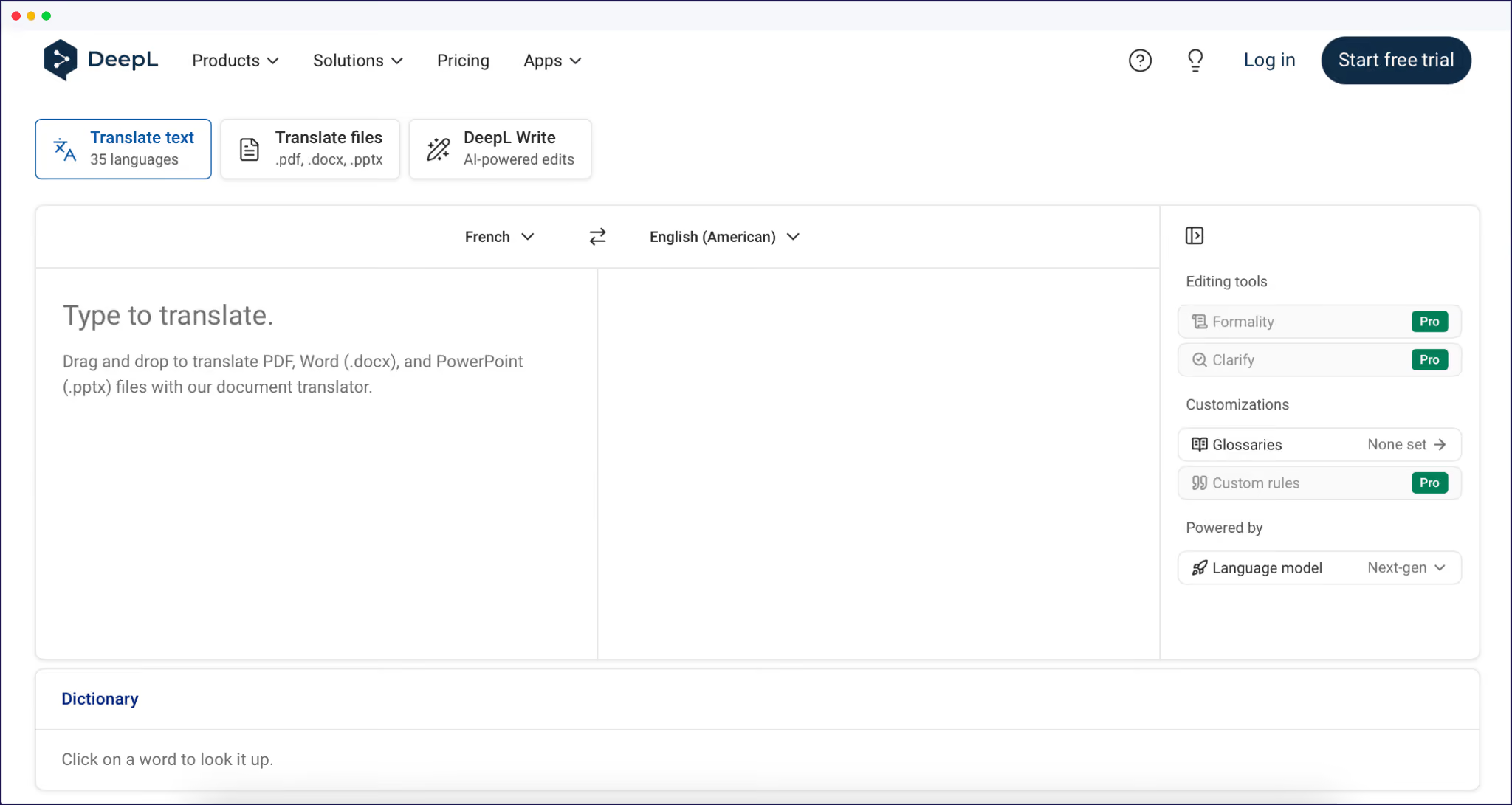
DeepL Translator will make the most sense in the following situations:
However, in this instance, you'll need to copy each piece of content from your site, translate it through the interface, and then paste the translations back. Also, you might find maintaining consistency across your site will be a challenge.
A step up from the Translator, the DeepL API lets you integrate quality translations into your site or content workflow programmatically, which provides a lot of flexibility. For instance, you can set up automated workflows where new content gets translated upon publishing, or build interfaces where editors trigger translations within familiar tools.

There are a few setups where DeepL API is going to be the best fit:
The API gives you access to functionality such as glossaries and formality settings, too, which means you can apply consistent translation rules across your content. Overall, this can open some custom and unique translation possibilities.
With this option, you’ll need to build the surrounding infrastructure: language switching interfaces, URL structure for multilingual content, and systems to manage which content gets translated.
Another option to the DeepL API is to work with a partner solution that combines DeepL's translation technology with a purpose-built website translation platform. Tools such as Weglot will detect your website content, apply translation through DeepL, and then handle the technical implementation of displaying that translated content on subdirectories or subdomains.

There's no technical setup: the most you'll need to do is add a code snippet to your website (depending on your CMS). The platform takes care of your URL structure, adds language switching interfaces, and manages the translation layer without requiring changes to your core website infrastructure.
Partnering up is going to work in the following situations:
The benefit here is the combination of automation and control. Initial translations happen through DeepL, which you can then refine through an editor.
Implementing DeepL into your website translation workflow doesn't lock you into a single approach. The online translator is a good start for testing, at which point you could move to an API integration or partner solution. The choice depends on your current needs and resources and how much control you need over the translation process.
Each approach benefits DeepL's translation quality, but the surrounding workflow and technical setup will ultimately determine how efficiently you can manage multilingual content and scale into new markets. Starting with the option that best fits your current needs allows you to build momentum now and refine your approach as your international presence grows.

We’ll get your first languages live. You decide how far you want to go. Try Weglot for free today.
Trusted by 110,000+ global brands





Weglot is tested and trusted by brands worldwide since 2016. Join them today.


The best way to understand the power of Weglot is to see it for yourself. Test it for free and without any engagement.
A demo website is available in your dashboard if you’re not ready to connect your website yet.