Try Weglot for free





When expanding Notion, Yann Alexandre Petretti (EMEA ecosystem lead) acquired thousands of incubator and VC partners across Europe, the Middle East, and Africa. Then, he deliberately cut the list.
Areej AbuAli founded Women in Tech SEO’s 12,000+-member global community from a single tweet and zero marketing budget. All based on “selfish reasons”.
Both succeeded by doing the opposite of what felt obvious.
This post draws on 2 conversations with operators who’ve achieved international growth in very different contexts. None of what follows is a universal playbook. But if you’re about to build a community with a scale-first instinct, it might make you think twice.
While outbound in a cold market is expensive and slow, a community-first strategy warms potential buyers with connections and opportunities that build trust before a sale.
Imagine you’re an Italian SaaS company expanding into Germany. Rather than hiring a sales rep and blasting cold emails, you spend 3 months showing up in the communities your target buyers already trust.
You answer questions, share useful content, and run a small roundtable for local finance leaders.
By the time you’re ready to launch your own initiative and sell, potential customers already know you and your brand (or have heard from someone who does). That way, they’re more open to your product and pitch.
Yann experienced this firsthand while building Notion’s presence in France. Rather than only chasing immediate sales, he invested in the local startup ecosystem – companies that weren’t ready to buy yet, but would be.
“By starting early and starting to develop those startup segments, I knew that 2 or 3 years down the line, I would have a pipeline that would have just nurtured itself into qualified leads.”
Note: Before it was in a position to expand internationally, Notion spent years in near-obscurity. After co-founders Simon Last and Ivan Zhao laid off their team and took a loan from Zhao’s mother, a full rebuild in 2015 finally made the product fast and stable enough for widespread adoption.
Successful community-building can involve:
But as Yann points out, it depends heavily on what you’re selling.
For SaaS companies, community-building can genuinely shape international expansion. It works especially well when the product itself invites building (e.g., templates, custom workflows, or integrations), as the community naturally forms around what people create with it.
Notion’s users were already sharing their creations, teaching each other, and finding commercial opportunities in the process. Product, market, and community channels all pulled in the same direction.
The same dynamic powers other deep, horizontal tools like Framer. Framer’s community shares components, templates, and assets that help everyone extend their use of the product.
But for government or heavily regulated industries, long procurement cycles and compliance requirements often mean sales must lead from day one.
A community earns you credibility before sales shows up, gets feedback straight from the people using your product, and creates distribution you can’t pay for.
In the UK specifically, Tigerbond research suggests that 89% of CMOs believe communities outperform all other channels for building trust and loyalty. Below, we analyze together why.
A community gives a new market proof that you’re worth paying attention to, long before salespeople ever pick up the phone.
Say local content creators are talking about your product and the startup events you’ve held workshops at. This word of mouth among the people you’re trying to reach all adds up to a credible brand.
And it works both ways. A community gives you real local stories, which earn you the kind of press and credibility that makes the next person trust your space before they’ve joined it.
As Yann puts it:
“You have to have a story to tell. And that story better be local.”
By the time your sales team arrives, that credibility has already done half the work for them.
A local community shows you how a market actually uses your product (not how HQ assumes they do) to help you sell better to similar users.
In a new geography, what counts as intuitive, useful, or even necessary may not overlap. Cultural and workflow differences run deeper than language.
For example, UK software buyers might care most about ease of use and data security, while Spanish users might just need a small UX tweak to simplify their onboarding flow.
According to Yann:
“It’s essentially a way to build in public with extreme power users who are going to be able to give you recurring feedback and help you shape your road map.”
Without a community to surface these insights, you’re left guessing or assuming your product translates as easily as your website does.
Community members create content, recommend your product to peers, and generate word of mouth in local languages and context.
Unlike paid ads, this distribution doesn’t shut off when a budget is cut.
Advocacy compounds. And that durability is so valuable in a new market. Every person who recommends you to a colleague becomes another reason the next 10 people trust you, too.
Areej has seen this play out directly with Women in Tech SEO:
“The majority of new members join because they heard about it. They heard about it from a colleague. They heard about it from someone who shared a LinkedIn post. They heard about it from their manager.”
And Yann says the same dynamic sits at the heart of how Notion goes to market. Advocacy is “the most authentic form of marketing there is”.
Yann and Areej come from completely different worlds. One scaled community across dozens of markets inside a fast-growing SaaS company. The other built a global community of 12,000+ members with no resources behind her.
But strip away the context, and both learned the same lessons through real mistakes and wins.
Here’s what they’d tell you if you were starting today.
Areej founded Women in Tech SEO because she didn’t feel represented in technical SEO spaces and wanted somewhere she belonged.
“My very honest response is that it was very selfish reasons.”
That genuine self-interest meant her community offered something real from day 1 rather than performative value.
Most brand-built communities fail for the opposite reason: they’re extractive. And people notice. If the only reason you’re building a community is to get something out of it, members will disengage just as quickly as they joined.
The fix is a genuine shift in how you think about community. Instead of “What can we get from them?”, start with “What can we give them?”.
Yann arrived at the same principle from a completely different starting point. Notion gave community members the building blocks to host their own events – swag, food-and-beverage cards, and co-working space partnerships.
“The best way to build something which is authentic is to ask yourself the question of what can I give them? How can I empower them?”
Before you ask members to share, give feedback, or refer friends, offer something meaningful first (e.g., early product access or monetization opportunities).
This even works for products that aren’t obviously “community-friendly”.
Yann points to finance tool Spendesk, whose team built a CFO community around career development and networking.
The product was almost beside the point. Spendesk genuinely empowered its audience rather than treating them as a distribution channel.
Salesforce’s Trailblazer Community does this, too. It provides members with free certifications and career credentials that signal expertise to employers.
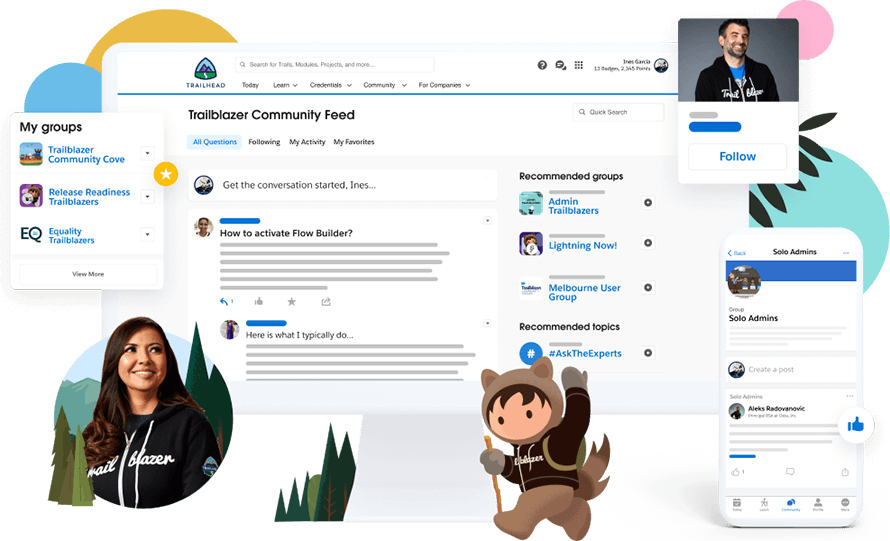
In return, certified Trailblazers naturally become internal Salesforce champions and advocate for the product without ever being asked to.
Your community could offer members:
How to take action: Before launching anything, ask what your audience genuinely gains from being part of this community.
Map out and build exactly what you’ll offer around those needs.
After Yann acquired thousands of incubators, accelerators, and VC partners across EMEA, he found himself invisible.
Spreading attention thin meant every relationship stayed shallow. “I was just another person on the wall”, he says. Nobody was prioritizing Notion because Notion wasn’t prioritizing them.
The moment he shrank his list, tiered partners, and started giving the right ones real attention and communication (e.g., calls, lunches, and co-built events), Notion became top of mind.
“Go smaller where it matters rather than trying to map the entire market. That just dilutes your efforts.”
Areej hit the same wall from the other direction. With Women in Tech SEO, the temptation was to grow her member count as quickly as possible. But size without engagement is just noise.
“If you have 100 active members, it weighs so much more than having 5,000 inactive members.”
Growth for its own sake hollows out the community’s essence. Conversations dry up, the sense of belonging disappears, and what’s left is a number that looks good in a deck but doesn’t actually achieve anything.
Whether you’re building partnerships or a member community, start with a city, segment, or niche. For example, Yann hosted casual drinks in Bordeaux for local power users before ever thinking about a broader rollout there.
That kind of focused, low-stakes start creates something far more genuine than a big launch with 300 people who’ll forget you existed by the following week.
How to take action: Before you think about hitting membership targets or filling an in-person event, focus on making a small number of people genuinely glad they joined.
Going into the UAE, Yann assumed it would be a creator- and podcast-forward market, much like the European markets where he’d already built community. It wasn’t.
The press still carries serious credibility among locals there. According to Edelman research, the UAE has a 59% trust rate in traditional media.

Had Yann stuck to his original playbook, he’d have missed this opportunity entirely.
Yann’s rule for entering any new market is simple: assume you know nothing.
“Until you’re presently there asking questions to people who have experience with the market, you’re probably not going to be the best person to support.”
What works in London may not work in Hong Kong. Instead, go where you’re planning to expand into, meet people, ask questions, and let what you find shape your approach.
It sounds obvious. But most companies skip this step entirely and walk into new markets with baked-in assumptions from wherever they came from.
The channels people trust, the way they build relationships, and the unwritten rules of business all shift. And none of this shows up in a desk-based research doc.
Areej also let geographic demand shape Women in Tech SEO’s international expansion. Philadelphia came first because it’s where a critical mass of engaged members already were. Then, Berlin, Portland, and Melbourne for the same reason.
The community told her where to go next – she just listened.
How to take action: Before entering a new market, get on the ground. Even briefly. If budget is tight, tie the trip to a wider partner event or conference to make the case internally.
When you get there, prioritize introductions over cold outreach. In many markets, a warm intro from a mutual contact carries far more weight than any amount of direct messaging.
Learn how local people establish trust before diving in. As Yann advises, “Shut up and listen”.
Areej AbuAli has over 12,000 members, conferences on 3 continents, and a mentorship program in its 10th cohort. Her first piece of advice to any brand thinking about community? Don’t start by building one.
“Don’t start your own community right away. There are a lot of excellent engaged communities that are very well built and thriving. The first thing to do is tap into those.”
The instinct is to go all-in on your own Slack group, meetup series, or branded hub right away. But you can’t create something genuinely useful for an audience you don’t yet understand.
Rather than building community from scratch in every new market, Yann’s starting point is always to identify who exists, enable them, and let distribution happen through audience-led paths.
These engaged members become “your fiercest advocates”:
“You are advocating for a product, and a company loves that because it’s the most authentic form of marketing that there is.”
But that kind of enthusiasm only happens when the community is worth joining in the first place.
Beauty brand Glossier is another good example. Before launching the brand, founder Emily Weiss spent years building her “Into The Gloss” community.

The blog’s active comment section and wider social groups gave Emily direct access to what real consumers wanted.
This market research reveals crucial information like:
Only once you’ve learned from the inside can you decide whether there’s a gap worth filling.
How to take action: Before building anything, map the platforms your target audience already lives in.
Join them and contribute as a genuine member. Look for patterns in what people ask for, complain about, and wish existed.
If a gap becomes obvious and nobody is filling it, that’s your opportunity. If it doesn’t, consider sponsoring or partnering with an existing community.
A retail brand expands into Japan. The team perfectly translates every page of their checkout flow and product descriptions. But they still lose out on local shoppers who expect a warmer, more deferential tone than the natural brand voice.
Translation gets the words right. Localization adapts the entire experience (tone, cultural references, payment preferences, customer service style, etc.), so each market feels understood by you.
Yann is direct about these differences:
“The biggest myth about international expansion? That it means translating words. There is so much more than that.”
Translation is a crucial foundation that unlocks access for international audiences. But it’s your community that tells you whether a localized product experience feels right once they’re inside.
The data backs up why getting this right matters. Around 80% of consumers won’t buy from brands that don’t offer support in their local language.
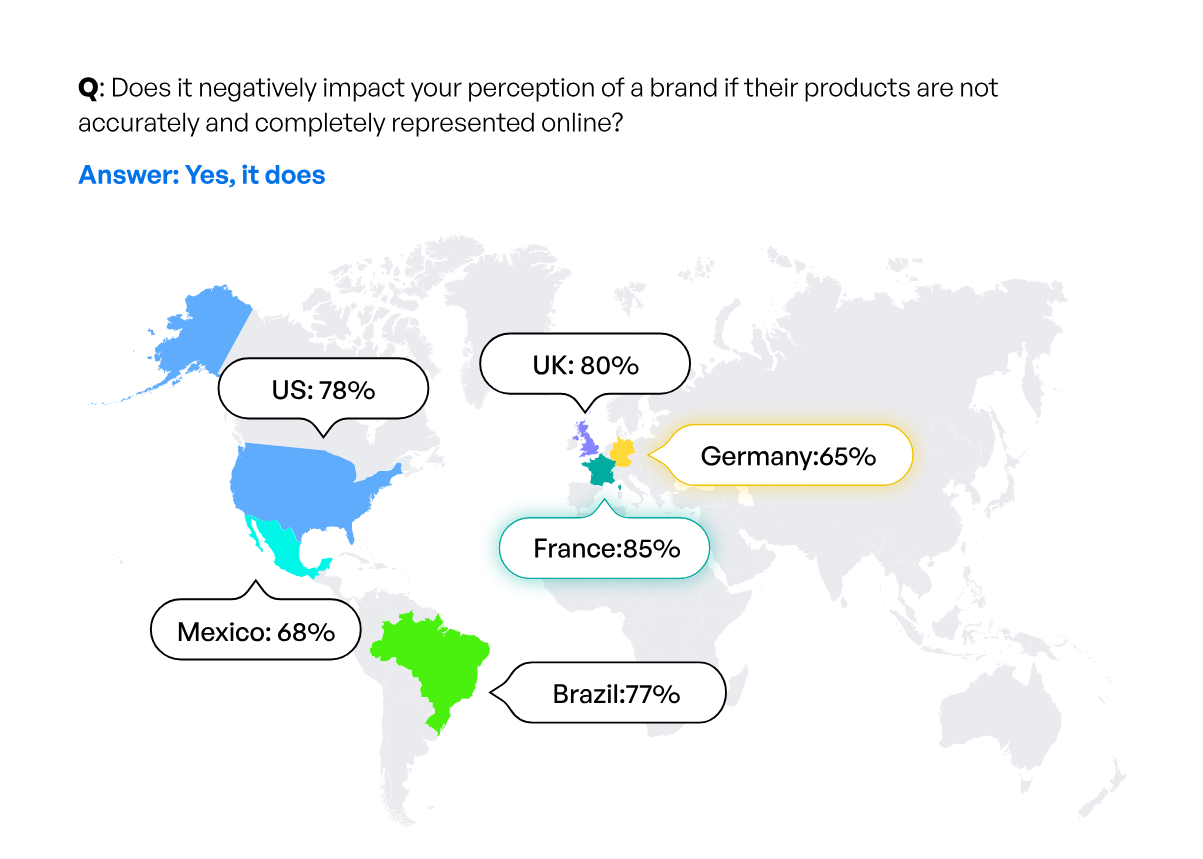
And around 85% of French buyers say inaccurate or missing content negatively impacts brand perception – the highest rate among 6 major countries surveyed.
Localization is also crucial for helping potential community members find you. Our analysis of 1.3 million citations found that translated sites boosted visibility by 327% in AI Overviews.
Beyond the commercial case, Areej explains how localization matters for something less measurable but equally important: belonging.
“Language is just such a big, beautiful thing that connects many people. How beautiful it would have felt for me to be part of a community where I can speak in my own language.”
At Women in Tech SEO, that belief shows up in small decisions:
Each signals to international members that they’re genuinely welcome.
How to take action: Ensure your site, product, and key content are accessible and technically correct in the languages of your target markets. Then, use your community to pressure-test whether it feels right.
An AI-powered website translation and localization tool like Weglot lets you translate and manage your website in 110+ languages from a single place, no code required. It plugs into platforms like Framer (mentioned above) and Shopify, so your growing site stays translated wherever you build.
Built-in AI also handles metadata, images, checkout flows, and dynamic content. So, you can keep pace with wherever your community takes you next.
This is what Weglot’s intelligent localization layer is built for: the more your community grows and your content evolves, the more accurate and on-brand your translations become.
The pattern running through all 5 lessons is the same: slow down, give first, and let the market tell you what it needs before you try to sell it anything.
If you’re entering a new market in the next few months, here’s what week 1 should look like:
Try Weglot free for 14 days to make sure every international user feels like your site was made just for them.
This post came from 2 conversations from our Next Market Live podcast. Listen to them in full for more insights, and make sure you don’t miss the next one.

We’ll get your first languages live. You decide how far you want to go. Try Weglot for free today.
Trusted by 110,000+ global brands





Weglot is tested and trusted by brands worldwide since 2016. Join them today.


Translated versions of this page received 0 visits in the last 90 days

The best way to understand the power of Weglot is to see it for yourself. Test it for free and without any engagement.
A demo website is available in your dashboard if you’re not ready to connect your website yet.