

Try Weglot for free




Changing the language settings of your WordPress site is more than just a convenience – it can seriously improve the user experience for both admins and visitors. When it comes to changing the language, you can achieve the following through your dashboard settings, by adding code, or via a plugin:
The dashboard (or backend) language affects menus, settings, and the interface, while the frontend language is what your visitors see, impacting content, visuals, and page navigation.
Best of all, switching up your WordPress site language is easy! This article will equip you with the knowledge to manage your language settings, and explore how translation plugin Weglot simplifies the process of going multilingual.
When working with a multilingual team – or if you simply prefer to navigate the WordPress dashboard in your native tongue – changing the admin language is easy!
If you’re setting up a new WordPress installation, you can select your preferred admin language during the installation process, and you’ll have 60 to choose from. And if WordPress is already installed, each user can set their own admin language by following these steps:
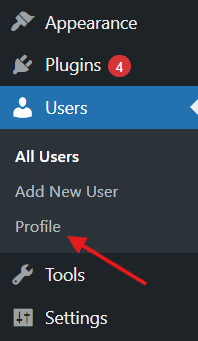

This feature is particularly useful for multilingual teams, as each user can work in their preferred language without affecting others. But it’s important to note that changing the admin language only affects the WordPress dashboard and does not modify the website’s frontend language.
In some cases, WordPress may automatically download the necessary language files when a new language is selected. However, if the desired language is not available, you may need to manually download and install the appropriate language pack before setting your admin language preference.
Translating your entire WordPress site into a single language may be done as a means of reaching a specific audience.
Changing your frontend language in WordPress is just as easy as changing the dashboard language:
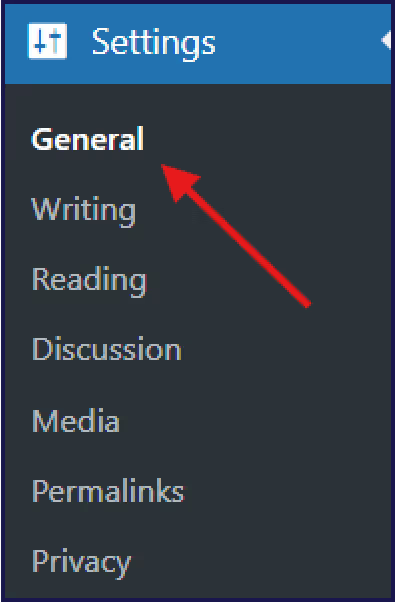

It’s important to note that this method only changes the default language for built-in content like dates and page headings. It won’t automatically translate all site content, such as posts, pages, and custom fields. To fully translate your site, you’ll need to manually translate this content or automate the process through a dedicated plugin like Weglot.
For smaller sites, you can define a custom translation function in functions.php:
function translate_site_text($text) {
    $search  = ['hello', 'world'];
	$replace = ['hola', 'mundo'];

	return str_ireplace($search, $replace, $text);
}

add_filter('the_content', 'translate_site_text');
add_filter('the_excerpt', 'translate_site_text');
add_filter('widget_text', 'translate_site_text');
add_filter('widget_title', 'translate_site_text');
add_filter('the_title', 'translate_site_text');
add_filter('comment_text', 'translate_site_text');
add_filter('wp_nav_menu_items', 'translate_site_text');
This one’s fun to watch in action but, frankly, it’s impractical for anything but the most barebones of websites.
Plugins like Weglot take less than 10 minutes to set up, and you can switch dashboard languages during set up:
Once set up, simply add your desired destination language via a drop-down menu. Your site’s backend will stay in your original language, with the frontend being automatically translated for users.
This method is easy to do and adds multilingual capabilities beyond just the dashboard, with options for customization and SEO enhancements. In the next section, we’ll take an in-depth look at the benefits.
{{demo-banner}}

Considering 65% of consumers prefer to read websites in their own language, a multilingual solution can make a huge difference in expanding your website’s reach and engaging users from across the world. And there’s so much more to an effective multilingual site than just changing the language!
Plugins like Weglot offer full website translation and localization functionality, making the process of creating a multilingual site much more manageable. Weglot provides an integrated, automated solution to take care of all your multilingual needs:
Weglot ensures that all content is translated through its automated machine capabilities. It provides a first layer of translation, fully translating and displaying the website in a single click.
Unlike using native WordPress methods, Weglot translates all parts of your site, including posts, pages, menus, widgets, and even SEO metadata like titles, descriptions, and alt texts.
For higher accuracy and cultural relevance, Weglot also has many translation management tools integrated into all plans for collaboration and project management. These include options for manual translation edits through the Visual Editor, training your custom AI language model with your manually reviewed translations, and hiring professional translation services directly inside Weglot.
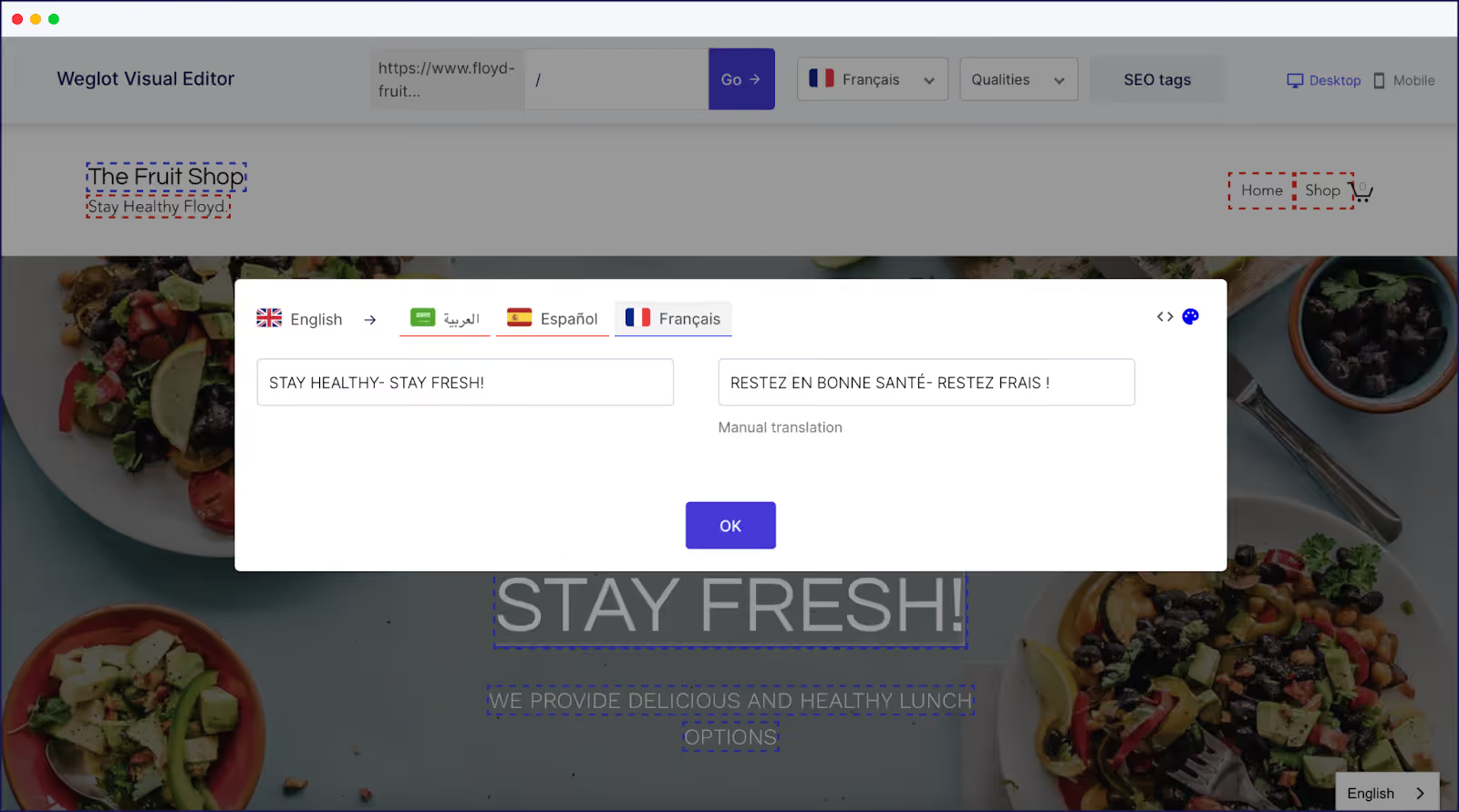
To explore Weglot’s wider features in action, read our guide on How to Set Up a Multilingual Site in WordPress.
As a further boost to the user experience, Weglot provides a handy language switcher for visitors to shift between your site’s available languages. You can also turn on the Auto Switch feature, which changes the language based on the user’s browser language preferences.
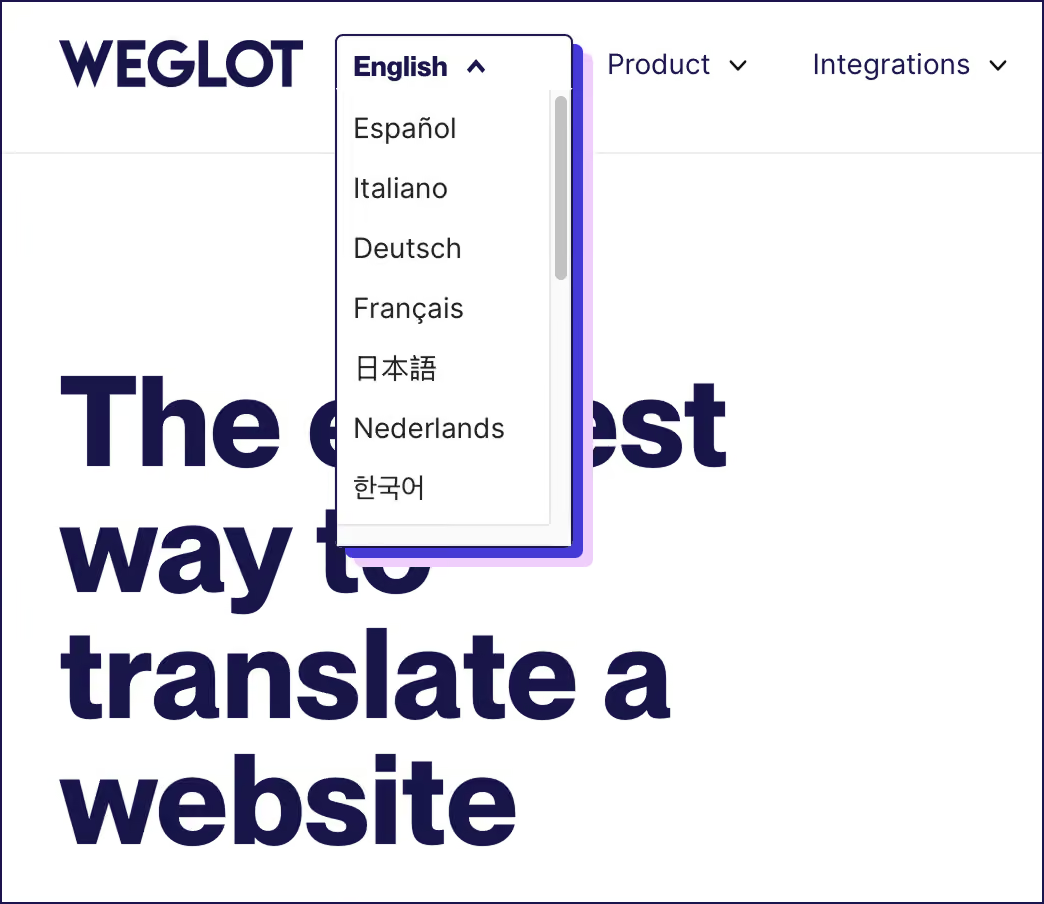
Weglot’s built-in language switcher lets visitors toggle between your available languages, giving more choice to those finding your pages.
With our plugin installed, hreflang tags will automatically switch languages based on a user’s location. You can also enable an auto-redirect function, which selects language based on a user’s browser preferences. The language switcher gives users a DIY option – so useful for multilingual speakers or those in a region where multiple languages are spoken.
By default, the switcher will magically appear at the bottom-right of your site, but you can easily move and customize it to fit your design.
Weglot offers several flexible options for placing your language switcher exactly where you want it. You can add it to your main navigation menu by going to Appearance > Menus in your WordPress dashboard, selecting Weglot Switcher, and dragging it to your preferred spot.
Alternatively, use the Switcher Editor in your Weglot Dashboard for a visual, drag-and-drop experience – just preview your site and move the switcher to the ideal location.
You can also place the switcher in widget areas (like your footer) via Appearance > Widgets, or embed it directly in your site’s source code for total control using this piece of code:
<div id="weglot_here">Customizing the look of your language switcher is simple. Head to Settings > Language Switcher to modify display options. Choose between language codes or full names, select different flag styles (square, circle, rectangle), and pick a dropdown or list layout.

For advanced customization, add your own CSS directly in the dashboard to match your site’s branding. The Switcher Editor also provides templates and visual tools for unique designs, or you can build a fully customized switcher using Weglot’s developer resources.
As we’ve seen, it’s easy to transform your site and cater to diverse teams and audiences. Start by changing the WordPress dashboard language for backend convenience, then allow individual user language preferences. When it comes to what your customers see, you can set a single language for your entire site, or use a plugin like Weglot to create a multilingual experience, benefiting both site admins and visitors.
With Weglot on board, you’ll no longer struggle to reach international audiences through your content, nor face the tiring task of manual translations. Our plugin can improve your user experience, increase traffic, and unlock the full potential of your WordPress site.
Install the Weglot plugin with our 14-day free trial, and take your first steps on the road to globalization!

We’ll get your first languages live. You decide how far you want to go. Try Weglot for free today.
Trusted by 70,000+ global brands


.jpg)





Weglot is tested and trusted by brands worldwide since 2016. Join them today.


The best way to understand the power of Weglot is to see it for yourself. Test it for free and without any engagement.
A demo website is available in your dashboard if you’re not ready to connect your website yet.
