

Try Weglot for free


.avif)


Travel and hospitality businesses live or die by their ability to connect with international guests before a single booking is made. A potential visitor in São Paulo or Seoul isn't going to struggle through an English-only website when a competitor offers the same beachfront villa listing in their native language.
And, the data backs this up. CSA Research's study found that 76% of online consumers prefer to buy products and services presented in their own language, and 40% will never purchase from websites in other languages. For hotels, tour operators, and travel agencies, that's not a minor inconvenience. It's a big revenue leak.
Most guides on website translation for travel and hospitality businesses skip the parts that actually matter: the technical implementation, the cultural nuances around hospitality-specific language, and the resources needed that justify the investment.
This article provides a step-by-step guide, so you can make smart decisions about which markets to enter, what to translate first, and how to avoid the costly mistakes that trip up dozens of travel brands every year.
Open Google Analytics 4 and pull your Acquisition reports filtered by country for the last 12 months, and then cross-reference this with your booking or reservation data.
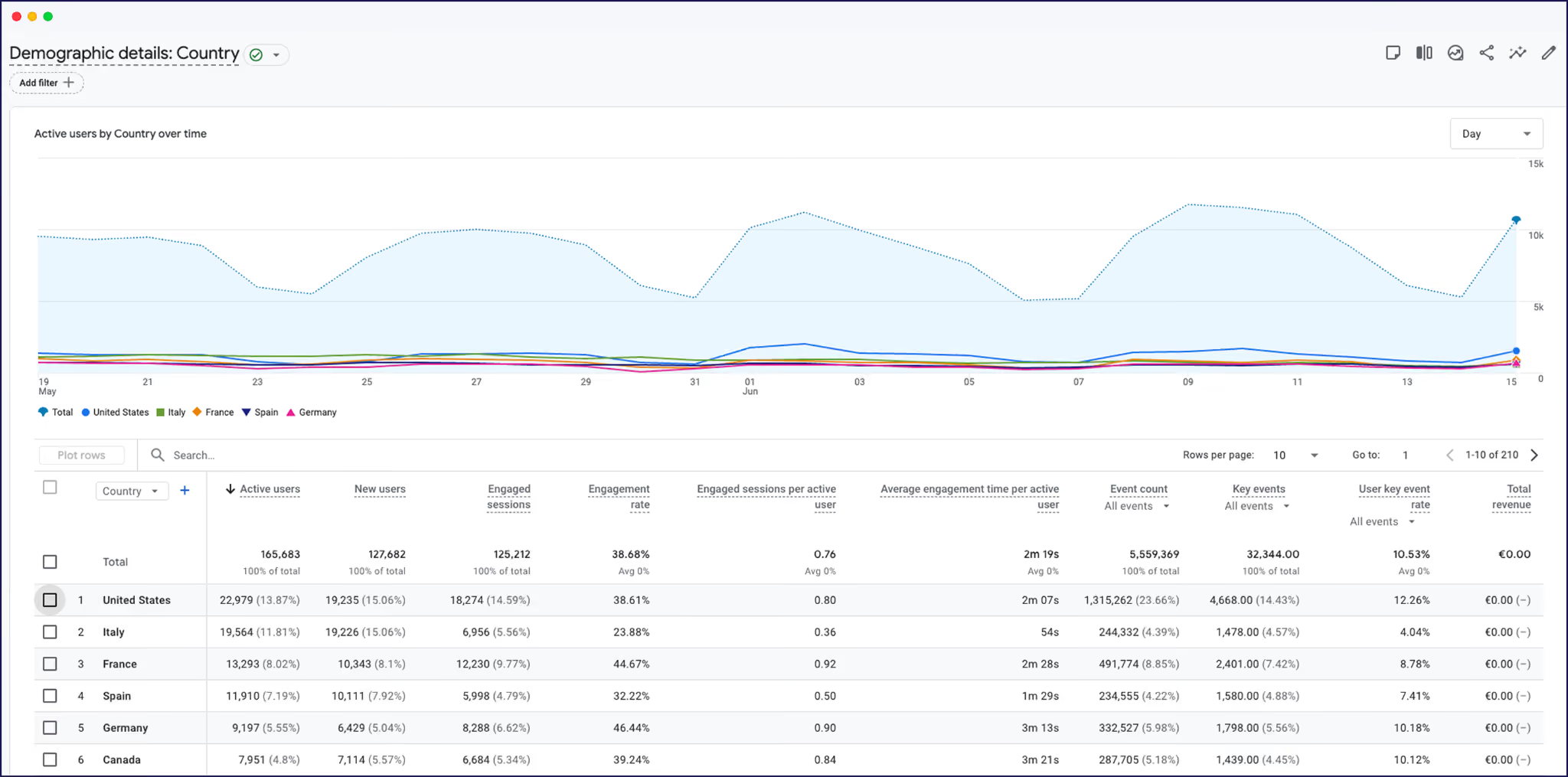
You're looking for countries where you already have traffic or bookings but aren't serving content in the local language. A hotel in Barcelona might discover 18% of its traffic comes from Germany and 12% from France, with the site only available in English and Spanish. That's your starting point!
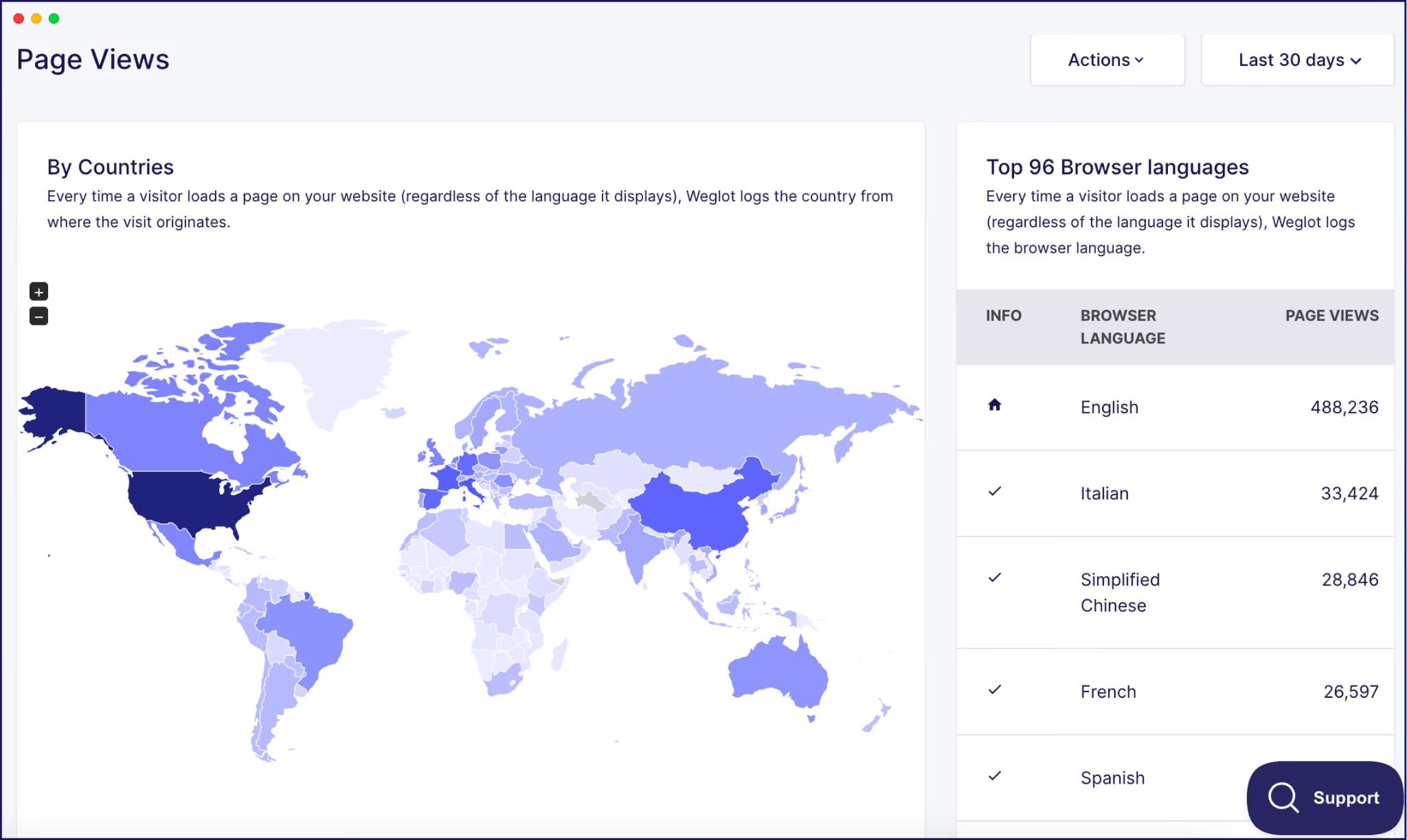
If you’re already using Weglot, our page view statistics show you exactly which languages your visitors' browsers are set to, which can surface demand you haven't spotted in GA4 yet. It's worth checking both.
With Weglot, once you’ve added our tool to your site, it automatically detects and translates everything all your content. That means, you no longer need to decide what pages get the attention vs budget restraints.
However, through the Weglot Dashboard, you can choose to spend more time with human review on your key revenue pages to perfect them for conversion. Of course, customizing your AI Translation Model through Weglot (powered by Gemini and OpenAI) will improve the overall tone and ensure your translations remain on-brand no matter what language you add, and gives you a hands-off way to increase your translation accuracy instantly.

You can also use Translation Exclusion to keep specific URLs, blocks, or strings out of the AI translation process entirely, so region-specific content that doesn't apply to your new market never shows up in the translated version. This can be useful for hotels that don’t wish to show the same offer in a certain region or country.
You have 2 main options: subdirectories (yoursite.com/de/), or subdomains (de.yoursite.com).
Subdirectories are the most practical choice for most travel businesses because they inherit your existing domain authority and are easiest to manage. Subdomains work if you need entirely different site architectures per market.
Weglot supports both subdirectories and subdomains and lets you configure your preferred structure directly from the dashboard, no manual server setup required.
You can read more about the differences between subdirectories and subdomains through our dedicated guide.
Install the Weglot plugin (WordPress or WooCommerce), app (Shopify), or tool (Webflow, Squarespace) and connect it to your site.
Weglot detects all translatable content automatically and delivers a first layer of AI translation from Microsoft, DeepL, and Google straight away. There's no spreadsheet handoff, no manual string extraction, no dev backlog.
The best part is that any new content added to your site is detected and translated automatically going forward, so your translated pages stay in sync without a separate workflow.
This is particularly useful if you’re running promotions across your travel or hospitality website, and means you don’t need to manually trigger any translations for campaign impact.
AI translation gives you a strong starting point, but your hospitality content might need human review.
For example, "Complimentary breakfast" might not translate literally in most languages, and the cultural expectation around what breakfast includes varies widely between Japan and Italy. It’s at this stage that you may need to train your AI Translation Model further or add translators (or bilingual teammates) to localize, not just translate.
In Weglot, use the Glossary to define how brand terms, property names, and key phrases should always be translated (or never translated).

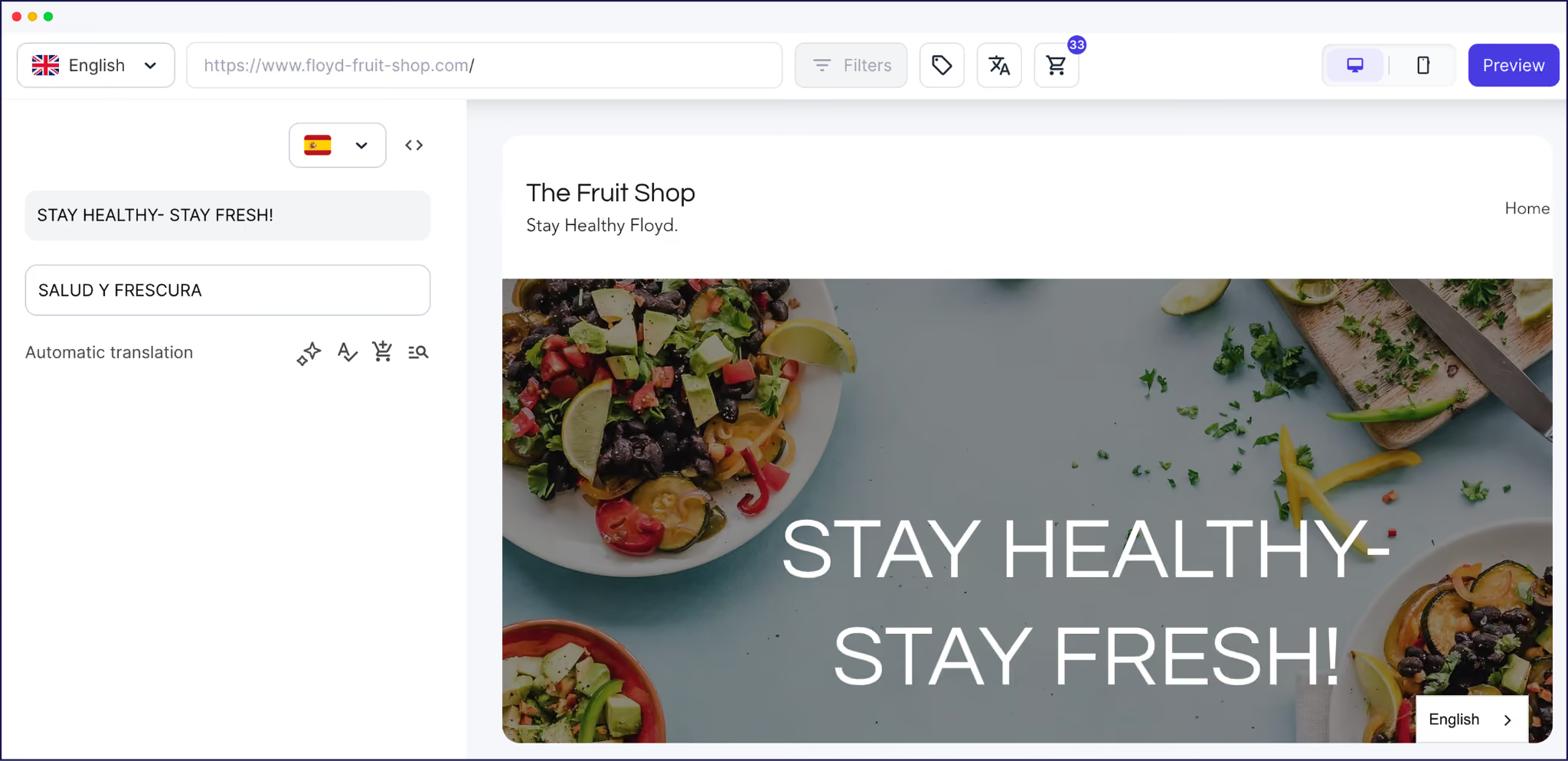
Use the Visual Editor to review and edit translations directly on a live preview of your website, so translators can see context rather than working from a list of stripped-out strings.
And, add teammates to your Weglot project and assign them translation tasks without any additional tooling.
Hreflang tags tell Google which language version to show to which user. Missing or incorrect tags mean Google might serve your German visitors the English page, or flag your translated pages as duplicate content.
Known for their tricky implementation, it’s at this point that many manually configured setups go wrong.
Weglot generates and maintains hreflang tags automatically for every translated page, so you don't have to touch them manually.
It also translates metadata and URL slugs to follow multilingual SEO/GEO best practices set out by Google, giving your translated pages the best chance of ranking in each target market.
Translation gets users to your site. Localization helps them trust it.
Adapt the experience to local expectations by offering familiar payment methods (e.g., iDEAL in the Netherlands, SEPA in Germany, Klarna in Scandinavia), displaying prices in local currencies, and using local date, time, and number formats.
For travel and hospitality businesses, go a step further: show local phone numbers with country codes, display check-in and check-out times using local conventions, use the correct units of measurement, and provide market-specific booking, cancellation, and support information.
These details signal that you're genuinely serving a market – not just translating for it – which can improve both conversions and visibility in AI-powered search results.
Travel brands face a unique set of localization challenges that go beyond simply translating website content.
Seasonal content updates are constant. Travel websites frequently refresh destination guides, promotional offers, seasonal campaigns, and availability information throughout the year. Keeping every language version aligned with the latest updates can quickly become a bottleneck if translations rely on manual workflows.
Travel companies also serve audiences across multiple markets simultaneously. A hotel group, tour operator, or booking platform may target travelers from Germany, France, Spain, the United States, and Japan, each with different search behaviors, expectations, and language preferences. Localization helps brands create more relevant experiences for each audience while improving visibility in local search results.
Finally, booking flows are one of the most critical parts of the customer journey. Travelers are more likely to complete a reservation when they can browse accommodations, understand pricing, review policies, and finalize bookings in their native language. Even small points of confusion during the booking process can increase abandonment rates and reduce international conversions.
For travel brands, effective website localization isn't just about translating content – it's about creating a consistent, conversion-ready multilingual experience from first click to booking confirmation.
Luckily, website translation tools like Weglot, handle the instant translation and displaying of your site’s content automatically. This means 100% of the customer journey is always translated, as well as any specific seasonal campaigns that get added along the way.
As for localization, with AI translation, AI Translation Model, and human review, Weglot gives you the freedom to customize and edit your translations how you prefer.
The difference between a translated travel site that converts and one that just exists comes down to a handful of details most teams overlook.
Social proof is the single biggest conversion driver in hospitality, and leaving reviews in English on a German-language page creates a jarring disconnect.
A guest who books through a beautifully translated German site and then receives a confirmation email in English will immediately question whether the booking went through correctly.
Translate your entire email sequence: confirmation, pre-arrival, post-stay, and review requests.
Translated Google Ads in the target language typically see 30 to 50% lower cost per click compared to English ads targeting the same market, because competition is thinner. The organic and paid channels reinforce each other.
Travel is inherently seasonal. A ski resort's German pages should highlight winter packages in October, not still be promoting summer hiking trails. Build quarterly content reviews into your translation workflow.
The path to translating your travel website doesn't need to be overwhelming. With the right website translation tool in place, like Weglot, you can have a fully multilingual website up and running in minutes.
The travel businesses that win international bookings in 2026 aren't necessarily the ones with the biggest budgets. They're the ones that made their guests feel understood from the very first click. A well-translated website does exactly that.
Ready to make your website multilingual? Start your free 14-day trial of Weglot.

We’ll get your first languages live. You decide how far you want to go. Try Weglot for free today.
Trusted by 70,000+ global brands





Weglot is tested and trusted by brands worldwide since 2016. Join them today.


The best way to understand the power of Weglot is to see it for yourself. Test it for free and without any engagement.
A demo website is available in your dashboard if you’re not ready to connect your website yet.


Check your analytics data. The answer is market-specific, not universal. That said, German, French, Spanish, and Simplified Chinese are the most common first choices for European and global hospitality brands in 2026, based on outbound travel volume and online booking behavior.
Most travel businesses report measurable increases in organic traffic from target markets within 60 to 90 days. Booking revenue typically follows within 1 to 2 quarters, depending on your booking lead time. Short-stay properties see faster returns than luxury resorts with longer planning cycles.
A hybrid approach works best. AI translation handles high-volume, lower-stakes content like metadata and internal navigation well. Human translators are essential for property descriptions, marketing copy, and any content designed to inspire a booking decision. Post-editing AI output is a solid middle ground for informational pages.


.avif)


