Try Weglot for free





Language access laws often read like translation checklists for government agencies. New Jersey’s latest mandate goes further, reshaping how agencies must manage their websites day to day.
The law significantly expands statewide requirements for translating vital public information and ensuring its ongoing accessibility.
For public sector digital teams, this shift creates an immediate challenge: translating large volumes of public content quickly while keeping those translations up to date over time.
In this article, we explain what the law requires, when those requirements take effect, and why compliance matters for how state agencies publish and maintain information online.
Law details: New Jersey Bill S2459 ScaAca (2R) (Session 2022–2023)
Enacted on: January 12, 2024
Who it applies to:
Main requirements:
The enacted law sets clear expectations regarding how state government entities must provide access to programs, services, and public information for individuals with limited English proficiency.
Roughly 33% of New Jersey households speak a language other than English at home, and more than 38% of those speakers report limited English proficiency. These realities drove the efforts to expand translation and interpretation requirements for New Jersey residents.
The bill states that the purpose of the legislation is:
“...to ensure that all individuals, regardless of their proficiency in the English language, have meaningful access to programs, services, and activities conducted by State agencies.”
To put that purpose into practice, every state government entity within the Executive Branch that provides direct services to the public must:
The law also establishes centralized oversight through the Department of State, which reviews agency plans, issues guidance, and monitors compliance over time.
The statute defines vital documents and information to include a broad range of content that drives action or decision-making.
Specifically, the bill says:
“Vital documents” means documents that affect or provide legal information about access to, retention of, termination of, or exclusion from program services or benefits; which are required by law; or which explain legal rights.
Examples of vital documents include:
Including both documents and information signals that its scope extends beyond paper forms and legal notices – suggesting that instructions, deadlines, and guidance published online are also covered.
This distinction reflects how residents access government information today, primarily through digital channels.
Example: Agencies routinely use their websites to publish eligibility rules, application steps, and required documentation. Many also require residents to complete applications and various forms online.
Although the law does not explicitly reference websites, its broad scope makes treating online content as secondary to printed materials a compliance risk.
When agencies rely on websites to explain services, untranslated or outdated pages can limit access. Over time, those gaps can expose agencies to complaints, audits, or enforcement actions tied to failures in meaningful access.
Example: In February 2025, a settlement required the New York City Department of Education to improve language access after families alleged they were denied critical translation and interpretation services.
The law’s language requirements are tied directly to population data in New Jersey.
Agencies must rely on the most recent American Community Survey data to identify the 7 most common non-English languages spoken statewide, ensuring language coverage aligns with real demographic patterns.
Under the law’s phased rollout, agencies had to:
Hitting these milestones alone does not ensure compliance. The quality of translated content matters just as much.
The bill requires state agencies to provide meaningful access to public programs and information. That access depends heavily on translated content that conveys the same meaning as the English version. Inaccurate or inconsistent translation quality limits access and leaves residents with limited English proficiency without usable information.
The law permits agencies to provide translations in additional languages when the population needs justify broader coverage. This flexibility allows agencies to respond to local or program-specific needs beyond the statewide minimum.
Example: If a state agency primarily serves a community where Haitian Creole is widely spoken, but that language does not fall within the statewide top 7, the agency may still translate key materials to meet local needs.
For agencies, managing multilingual support website content is far more complex than translating static, printed materials.
Agency websites often contain thousands of pages of information, many of which change regularly. Policies shift, deadlines move, and agencies publish new guidance directly on their sites. Keeping that volume of content translated and in sync requires ongoing localization workflows, not one-time efforts.
Outdated translations can create more problems than no translation at all. When a page reflects updated eligibility rules or requirements only in English, residents can receive misleading or incomplete guidance.
Preventing those gaps requires constant monitoring and updates, which quickly becomes difficult to manage without dedicated resources.
Small digital teams often feel this pressure most strongly. Many state agencies operate with lean staff and limited budgets. Adding multilingual content on top of accessibility, SEO, and content governance can overwhelm manual workflows without scalable systems and clear ownership.
Government websites change too frequently for one-time translation to work.
Agencies regularly update instructions, eligibility rules, and public guidance, so translated content can quickly become outdated.
To keep information accessible, continuous localization must occur alongside content updates. AI-powered website translation tools, like Weglot, make this possible by:
Centralizing translated content also simplifies ongoing maintenance. Tools that manage all languages in one place help agencies spot gaps more easily, maintain consistency, and keep information accessible as content changes.
New Jersey’s language access requirements expand the role of web and communications teams.
These teams directly influence whether residents can understand essential services. As a result, updates to webpages, forms, and instructions can directly affect language access.
To keep up, agency teams need scalable, repeatable processes that support ongoing translation. These processes need to fit into day-to-day publishing workflows rather than operate as separate translation projects.
Addressing these challenges often requires tools designed for continuous multilingual content management. With the right processes and workflows in place, state agencies can:
Digital teams also need to coordinate with program owners, compliance teams, and vendors, all of which can slow translation efforts. To keep everyone moving and on the same page, they can benefit from tools that handle translation centrally and simplify how updates are reviewed and shared across stakeholders.
Language access also requires long-term planning. As services expand and communities change, multilingual content requires ongoing maintenance.
While it’s certainly true that all of the above changes require more coordination and planning, the payoff is significant. It streamlines communication for agencies while giving residents clearer, more reliable access to the services they need.
For agencies working to meet New Jersey’s language access requirements, Weglot helps simplify multilingual website delivery in a number of ways.
Weglot’s AI-powered translation technology allows teams to automatically translate any website into more than 110 languages.
Using its custom AI Language Model, agencies can ensure translations stay aligned with agency guidelines, tone, and program-specific language across all content.
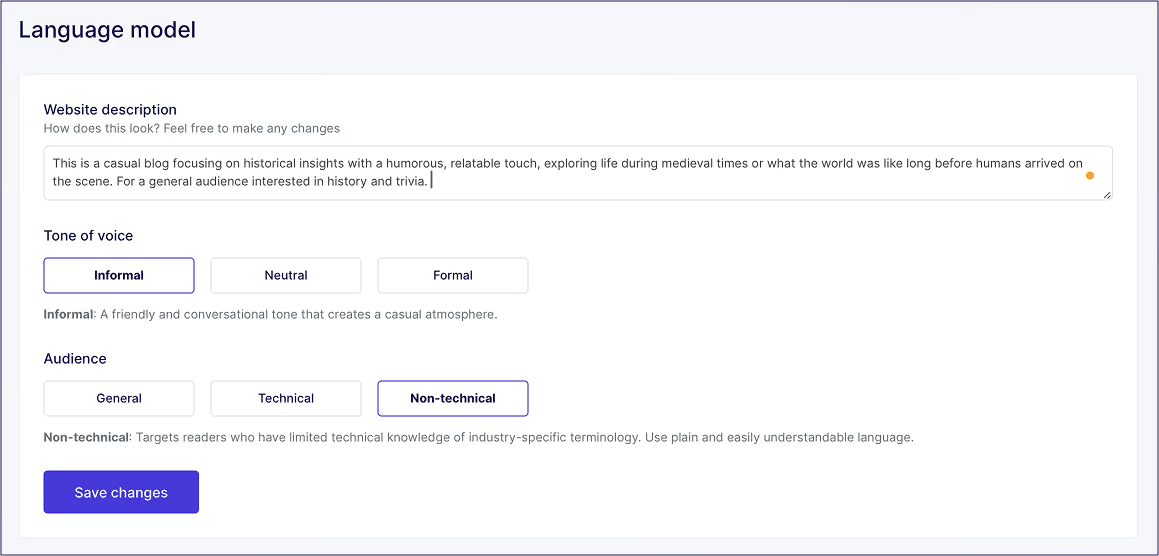
Agencies don’t lose control by using AI, but they don’t need to manage every translation either. Weglot combines high-quality AI translation and its custom model with set-and-forget translation rules and simple collaborative editing, so teams can step in when needed while trusting the system to run autonomously.
Weglot automatically detects new and updated content and keeps translations aligned as those changes go live.
Instead of teams having to manually check what’s been updated, the tools automatically detects new text and ensures those changes are translated across all supported languages.
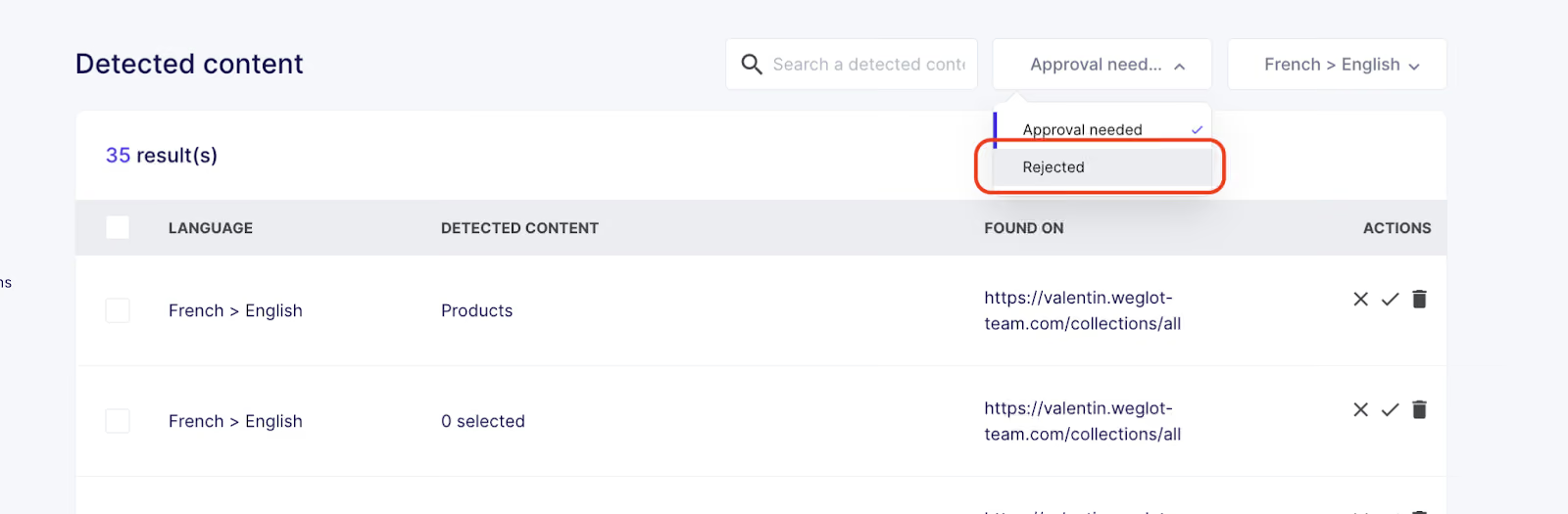
This automatic syncing reduces the risk that English updates outpace translated versions, and gives agencies clear visibility into what’s current and what needs review.
Instead of chasing updates across files or spreadsheets, state agencies can focus their attention where it matters most.
Weglot brings all translations into one central dashboard, so teams don’t have to jump between multiple tools to track language versions.
From that interface, agencies can see translations in context, make human edits, apply glossaries, and enforce consistent terminology across languages.
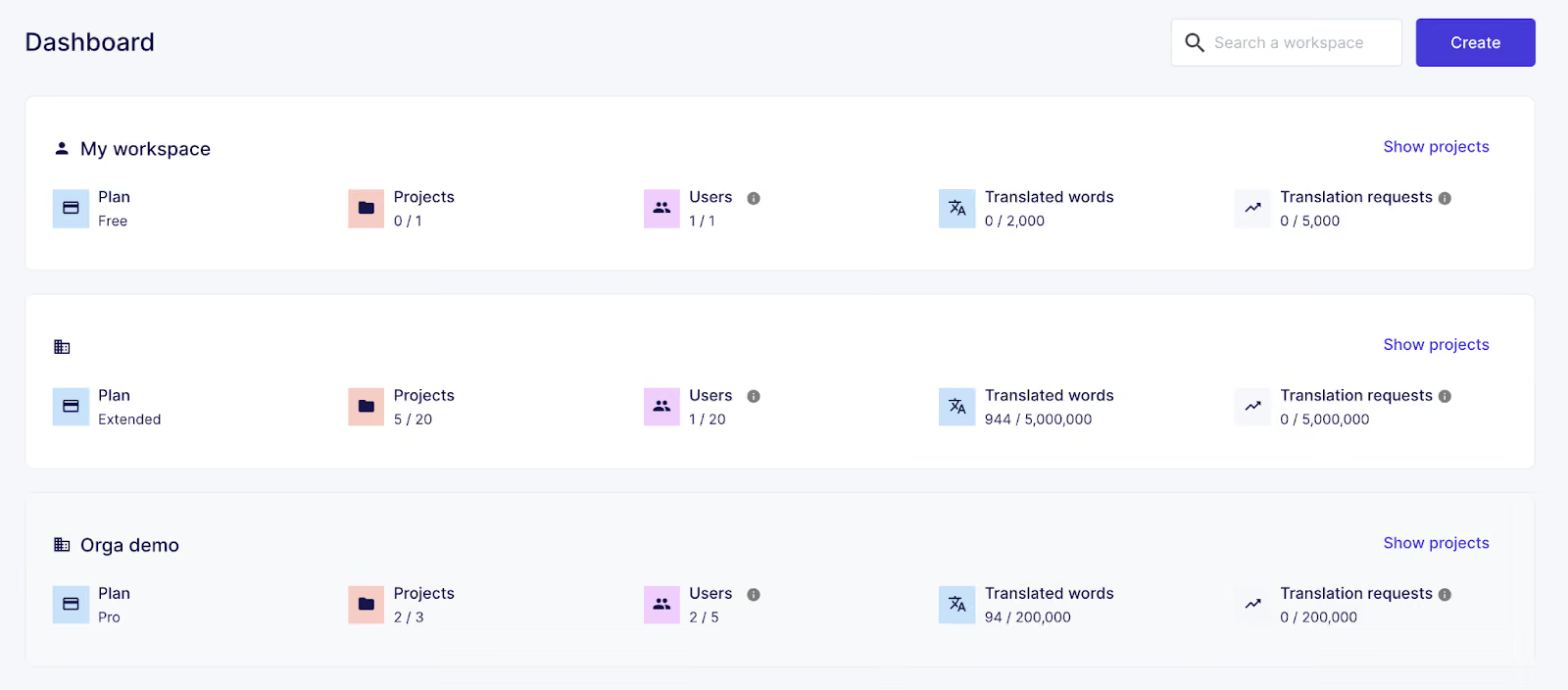
Working from a central view also makes it easier to maintain quality over time. Instead of relying on scattered spreadsheets or email chains, agencies can track translation status, spot inconsistencies, and ensure that everyone is working from the same content.
Supporting New Jersey’s language access requirements requires keeping multilingual websites accurate as information changes, not just translating content once.
Agencies must manage that ongoing reality by keeping translations aligned with regular updates. The end result isn’t just accurate, updated content, as essential as that is. It’s providing easier, better access to the services and programs offered by the state.
If your agency is navigating new language access requirements, Weglot helps you manage multilingual websites without added complexity.
With automated AI translation, centralized management, and built-in collaboration, Weglot makes it easier to keep public content translated as changes occur. Explore how it can support long-term multilingual language access with a 14-day free trial.

We’ll get your first languages live. You decide how far you want to go. Try Weglot for free today.
Trusted by 70,000+ global brands





Weglot is tested and trusted by brands worldwide since 2016. Join them today.


The best way to understand the power of Weglot is to see it for yourself. Test it for free and without any engagement.
A demo website is available in your dashboard if you’re not ready to connect your website yet.