Try Weglot for free


.avif)


If you've sat through a planning meeting where someone uses internationalization and localization like they mean the same thing, you're not alone. But although they're often used interchangeably, the two terms refer to sequential phases of one process, not competing approaches.
Doing one without the other – or doing them in the wrong order – creates avoidable problems, cost, and risk. In this guide, we'll clarify the exact difference between i18n and l10n, show how globalization (g11n) ties them together, and spell out the real business impact of skipping or mishandling either step.
Internationalization is the one-time engineering work that prepares a product to support multiple languages. For websites, this foundational prep includes:
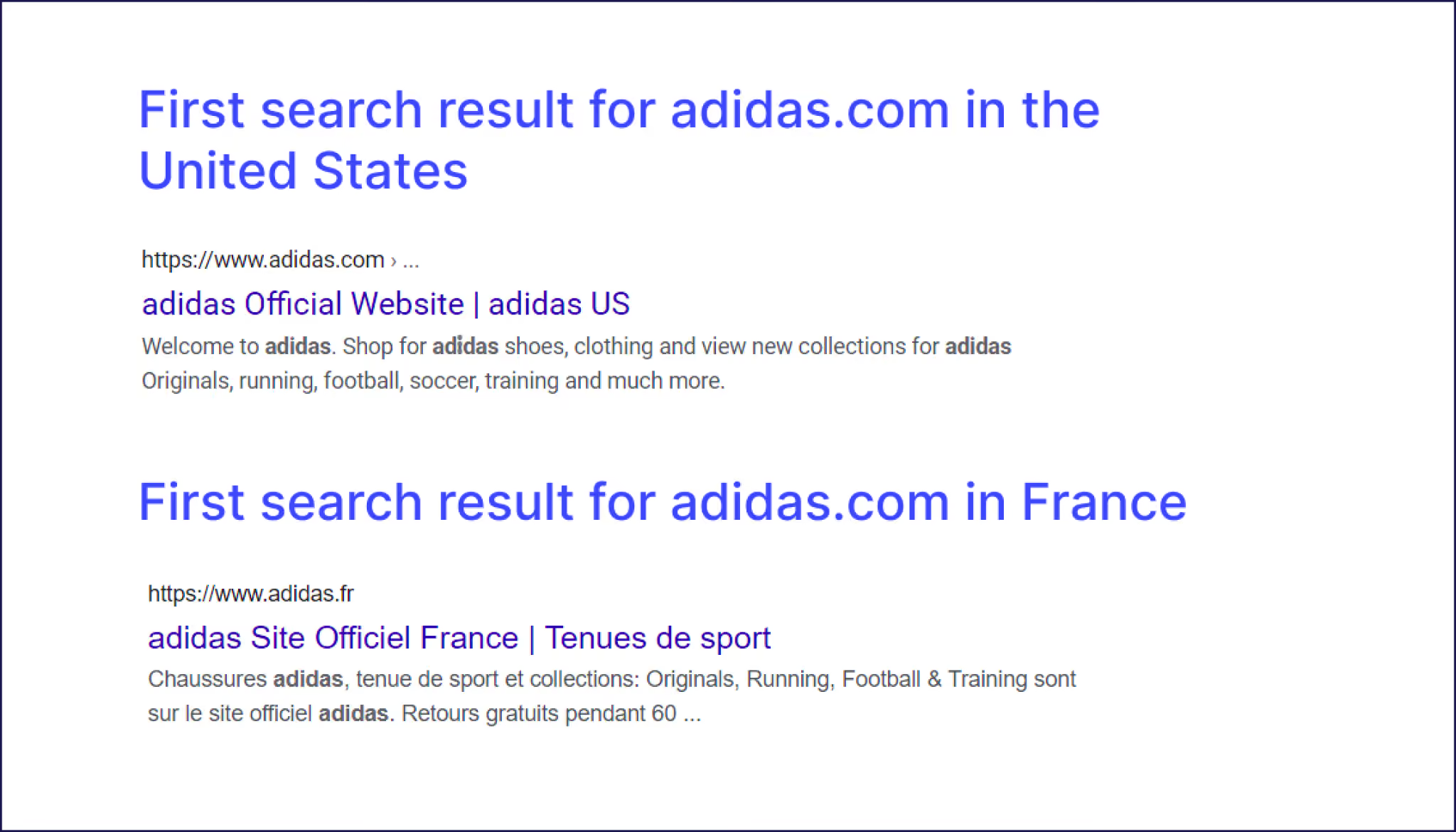
The most concrete reason i18n matters is text expansion. Short English strings under 10 characters expand by 200-300% on average when translated into European languages. 'Sign in' is 7 characters in English, 8 in German ('Anmelden'), and 15 in Finnish ('Kirjaudu sisään'). If your design doesn't account for this expansion at the engineering stage, buttons break, layouts overflow, and navigation becomes unusable.
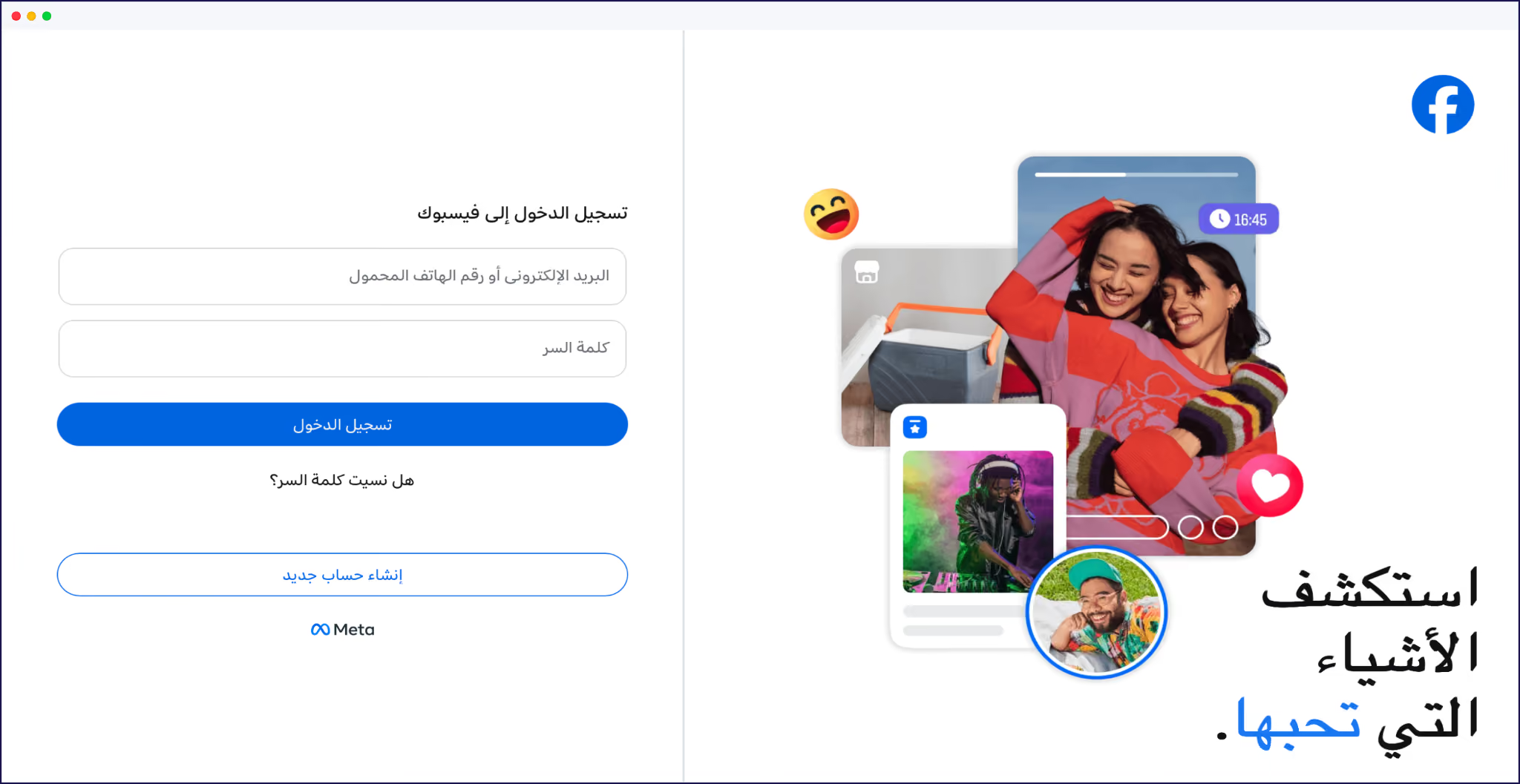
Websites serving Right-to-Left (RTL) languages like Arabic and Hebrew also need UI mirroring built in at design time, flipping everything from navigation menus to form fields.
A website translation tool like Weglot handles much of this technical i18n setup automatically, including URL structures, hreflang implementation, and multilingual font support, so you can skip the heavy engineering lift.
{{demo-banner}}
Localization (often shortened to l10n) is the repeated, market-by-market adaptation of your product or website so it feels local and familiar. Where internationalization is a one-time engineering foundation, localization is the ongoing execution layer that gets applied every time you enter a new country or language.
Translation is only one part of that work. Effective localization also adapts:
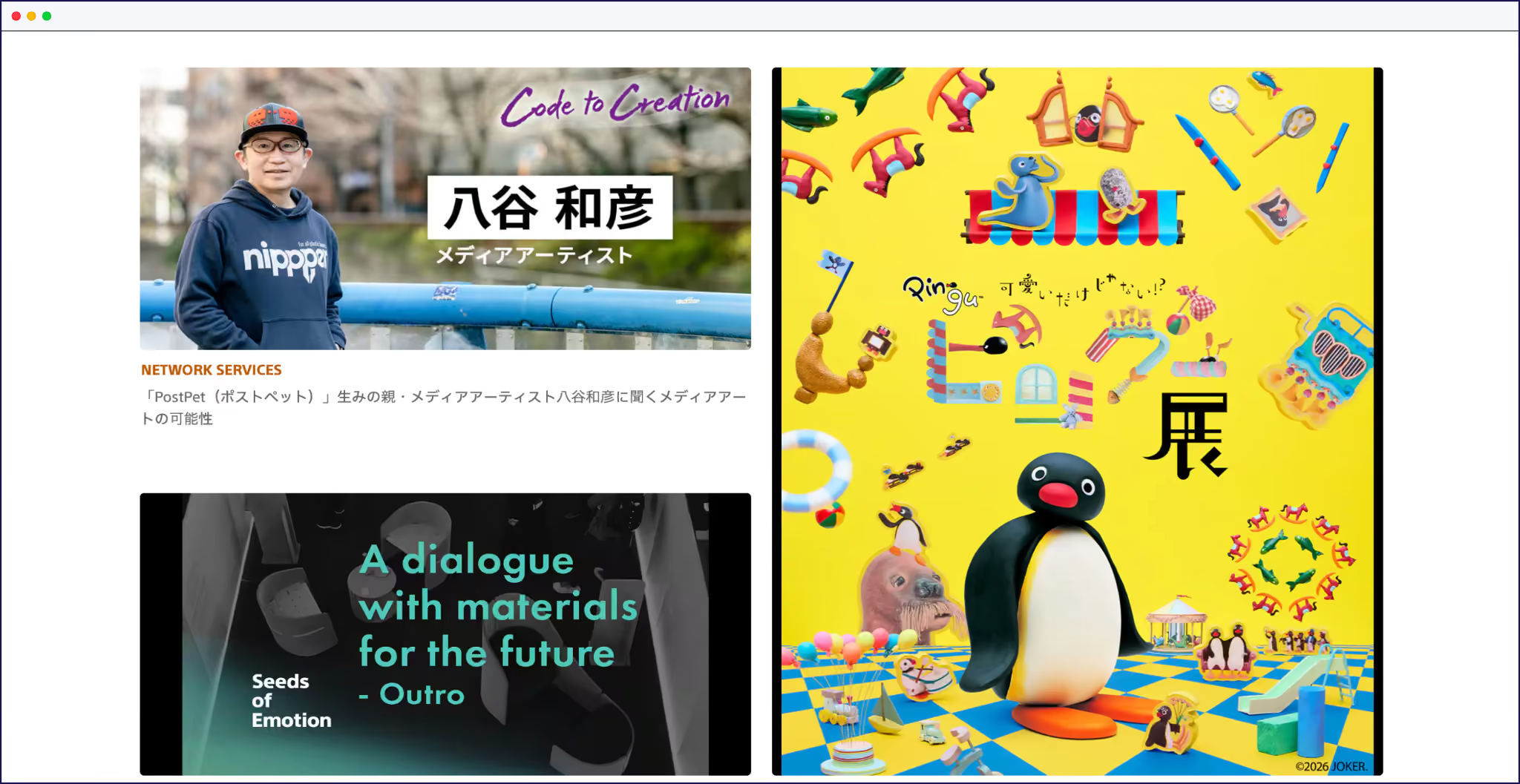
You can see this in practice with brands like Sony, whose Japanese product pages often use denser layouts and information-rich visuals that match local browsing habits.
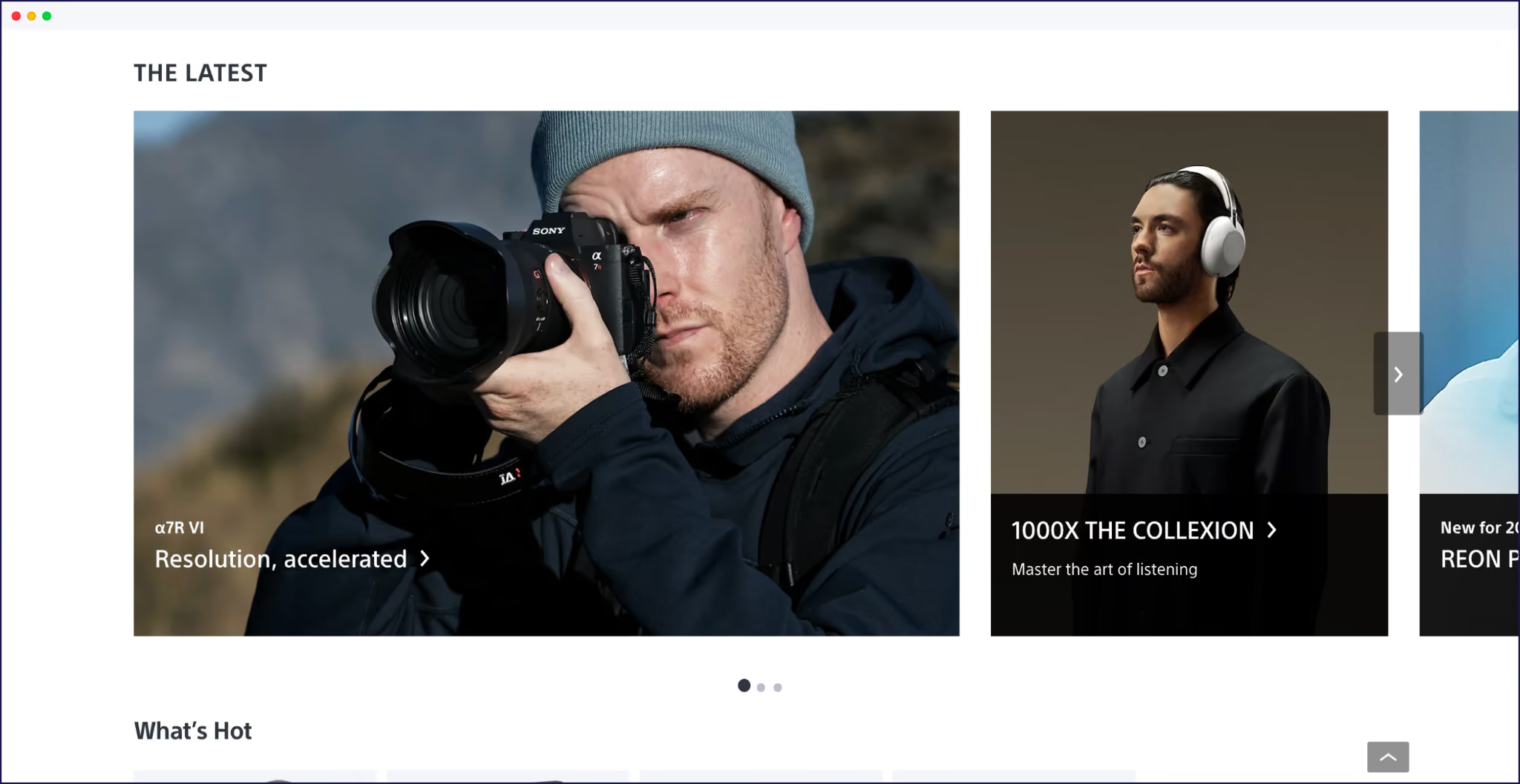
Meanwhile Western versions of the Sony website feel more spacious.
Facebook's Arabic interface is another example. The entire UI is mirrored right-to-left, so it aligns with how Arabic speakers read and navigate.
This is where the translation-vs-localization distinction matters. Translation converts text from one language to another. Localization tunes the entire experience – language, layout, visuals, and compliance – so the product feels native in every market. Translation is a task, while localization is a cross-functional process that involves translators, designers, marketers, and legal teams working together.
– Elizabeth Pokorny, Head of Content and Brand at Weglot
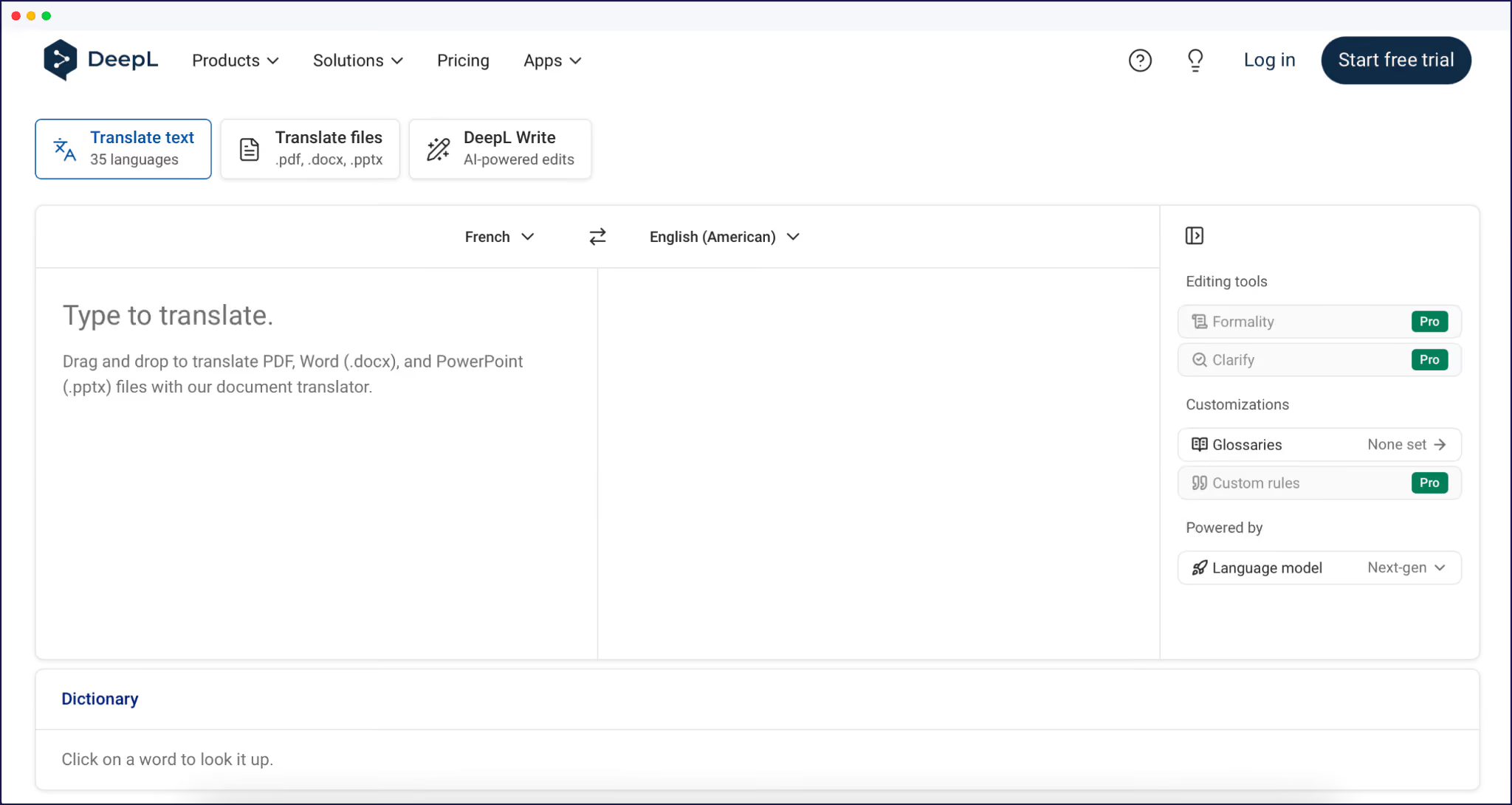
Modern tooling blurs this line in a helpful way. Weglot first uses leading machine translation engines (like DeepL, Google Translate, and Microsoft Translator) to generate the initial layer of AI translations for your site at scale.
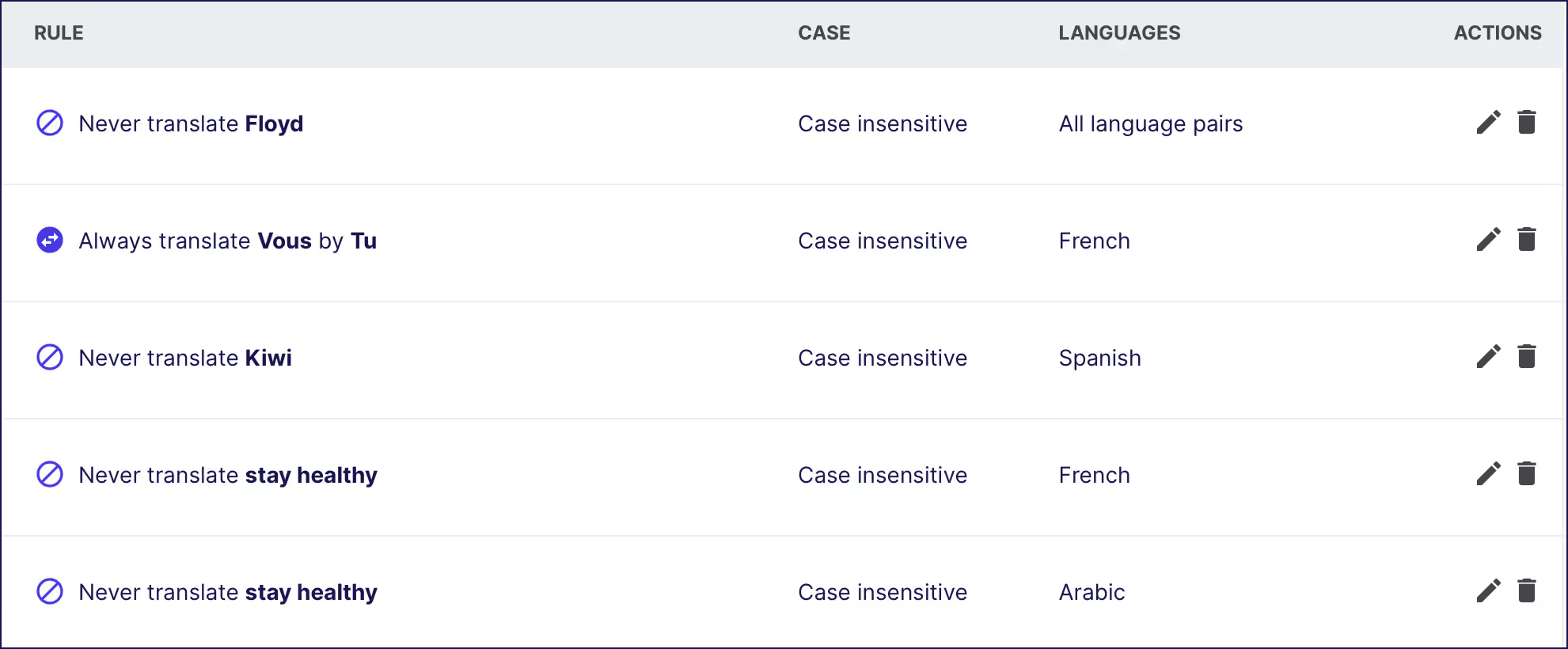
On top of that, create your own AI Translation Model through Weglot, trained on your brand description, tone of voice, target audience, glossary rules, and any additional guidelines that provide it context for on-brand translation at scale.
{{ai-banner}}
Think of internationalization as designing an apartment block with flexible floor plans, universal plumbing, and electrical systems that work anywhere. Localization is furnishing each unit for the specific tenant who'll live there – choosing furniture that fits the space, appliances that match local voltage, and décor that reflects personal taste.
The table shows why mixing up the two creates real problems. Different teams own each phase, they happen at different points in the timeline, and reversing the order means engineering rework that could have been avoided.
If i18n isn't done first, developers end up hard-coding translations directly into the product, which makes every subsequent localization effort exponentially harder and more expensive.
One concrete example concerns pluralization. English has two forms (one cat / two cats), but Russian has three and Arabic has six. If your code doesn't abstract pluralization during i18n, every l10n project breaks differently, forcing developers back into the codebase to patch rules market by market.
Globalization is the umbrella business strategy that drives both internationalization and localization. It's the executive decision to enter international markets, which then triggers the technical and cultural work required to make that expansion successful.
The three-level taxonomy breaks down like this:
The numeronym g11n follows the same pattern as i18n and l10n. There are 11 letters between 'g' and 'n' in globalization. Companies like IBM and Oracle use g11n to describe the combined effort of internationalization plus localization, treating it as the complete package of going global rather than just the strategic layer.
Each level maps to different organizational ownership. Globalization sits with business leadership and strategy teams who decide where to expand and allocate budget. Internationalization belongs to developers and product architects who build the technical foundation. Localization is owned by translators, content teams, and cultural specialists who adapt the experience for each market.
This matters because when a stakeholder says 'we need to globalize the website', they're actually describing three different work streams that need separate scoping, timelines, and budgets. Treating g11n, i18n, and l10n as a single task leads to misaligned expectations and missed requirements.
– Elizabeth Pokorny, Head of Content and Brand at Weglot
Skipping i18n means rebuilding the codebase for every new market instead of preparing once upfront. The W3C compares the cost to retrofitting systems for Y2K, where organizations paid exponentially more to fix what should have been architected correctly from the start.
One of the most cited examples is Lotus 1-2-3, which dominated the US spreadsheet market in the 1980s. But it required a two-year retrofit to support international markets because the software wasn't designed with i18n in mind. By the time Lotus launched in Europe, Microsoft Multiplan had already captured the market.
Concrete failure modes show up immediately. German translations run 30-35% longer than English text, causing buttons to overflow and navigation menus to break. Arabic and Hebrew interfaces collapse when RTL support isn't built in, leaving users with backwards layouts that are unusable. Concatenated strings – where code joins separate text fragments like 'You have' + [number] + 'messages' – produce grammatically broken sentences in languages with different syntax rules.
What most articles skip is the feedback loop. Localization work routinely uncovers i18n gaps mid-cycle, bouncing tasks back to engineering after translators have already delivered content and deployment timelines are locked. The cost asymmetry is brutal. Fixing a flexible layout during the design phase costs pennies, but the same fix mid-flight after translation and QA can cost thousands in rework and delays.
For website owners, a website translation tool like Weglot removes this engineering blocker entirely by handling URL structures, hreflang tags, and multilingual layouts automatically, so you can skip the retrofit trap and launch translated sites in minutes instead of months.
{{demo-banner}}
You now know which work belongs to which phase, who owns each part, and what it costs to reverse the order. Internationalization builds the technical foundation once, localization adapts content and experience for each market, and globalization is the business strategy that drives both.
For website owners without engineering resources, a website translation tool handles the i18n setup and l10n execution in one workflow, removing the rebuild risk entirely.
REVIEWS.io used Weglot to launch a German site and saw 120% more German traffic and a 20% increase in conversion rates without touching their codebase.
If you're ready to expand overseas, sign up for your 14-day free Weglot trial today and launch a fully translated, SEO-optimized site in minutes.

We’ll get your first languages live. You decide how far you want to go. Try Weglot for free today.
Trusted by 110,000+ global brands





Weglot is tested and trusted by brands worldwide since 2016. Join them today.


The best way to understand the power of Weglot is to see it for yourself. Test it for free and without any engagement.
A demo website is available in your dashboard if you’re not ready to connect your website yet.


The numeronym i18n comes from counting the 18 letters between 'i' and 'n' in internationalization. The same logic applies to l10n (10 letters between 'l' and 'n' in localization) and g11n (11 letters between 'g' and 'n' in globalization). The convention was coined at Digital Equipment Corporation (DEC) because technical writers were tired of typing 'internationalization' repeatedly. The same pattern produced the term 'a11y' for accessibility.
No. Unicode (UTF-8) handles character storage and encoding, but it doesn't automatically support all languages. You still need to address layout flexibility for text expansion, RTL language support for scripts like Arabic and Hebrew, pluralization rules that vary by language, and culturally appropriate date and currency formatting. Unicode is a foundational part of i18n, but it's only one piece of the technical preparation required.
No. Localization is recurring work that happens every time you enter a new market or update existing content. Every content change – new product pages, blog posts, feature updates – needs to propagate to every localized version of your site to keep the experience consistent across markets. Unlike internationalization, which is a one-time engineering foundation, l10n is an ongoing cycle tied to your content production schedule.
Yes, with a tech-free website translation tool that handles both i18n setup and l10n execution automatically. Weglot connects to your site in under 10 minutes and manages URL structures, hreflang tags, translations, and multilingual SEO without requiring any coding or engineering resources per language. This makes website localization accessible to small businesses that don't have dedicated development teams.