Try Weglot for free





Not necessarily. It depends on your setup and target markets. A subdirectory structure (example.com/fr/) works well for the majority of multilingual sites, consolidates SEO authority under one domain, and is cheaper to run than separate domains.
You have three real options when you add languages to your site:
Each option has a different impact on SEO, technical setup, and cost. Below, we break down what to pick, when to pick it, and the URL patterns to avoid along the way.
A few setups will hurt your multilingual visibility no matter how well you execute everything else. Skip these:
Each language version of your site needs its own distinct, crawlable URL. That's where subdirectories, subdomains, and ccTLDs come in.
Subdirectories keep every language under one main domain. That means all the backlinks, traffic, and authority your site already has flow to your translated pages too. For most businesses adding 2 to 10 languages, this is the simplest and most effective option.
Nike is a good example. They use subdirectories for both region and language: nike.com/ca/ for English Canada, nike.com/ca/fr/ for French Canada, and nike.com/fr/ for French France. One domain, layered paths, shared authority.
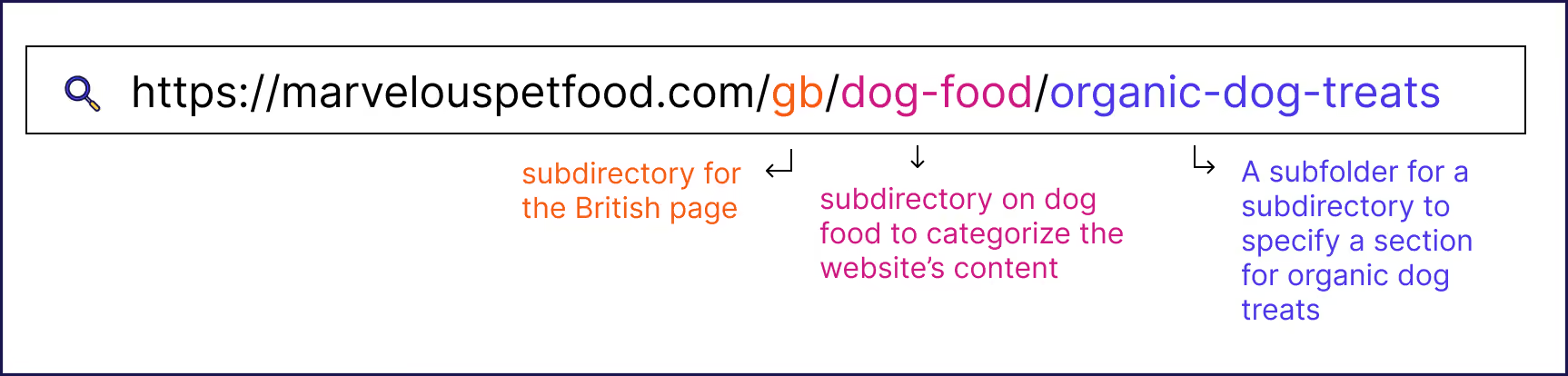
Subdirectories are also the cheapest to run. There's no extra DNS setup, no separate SSL certificates, and no new server configuration.
A subdomain is a child partition of your root domain. Search engines treat it as a semi-independent site: it inherits some authority from the main domain, but not all. You'll need to build some SEO signals for the subdomain separately.

Wikipedia uses subdomains (en.wikipedia.org, fr.wikipedia.org) and HubSpot uses them for content that behaves differently from the main site (blog.hubspot.com, developers.hubspot.com). Gap Inc. uses the same pattern for its brand family: Old Navy at oldnavy.gap.com and Banana Republic at bananarepublic.gap.com. Each brand keeps its own identity while sharing the parent infrastructure. The pattern makes sense when each language version has distinct content, branding, or editorial strategy.
The tradeoffs: subdomains require DNS records and sometimes dedicated hosting per language, which adds complexity.
ccTLDs like .fr, .de, and .co.uk send the strongest possible geo-targeting signal to Google. A French visitor seeing a .fr URL immediately understands the site is for them, and search engines give ccTLDs a ranking advantage in their home country.
According to a 2024 study by GA Agency and SE Ranking, ccTLDs hold 56% of Google's top three ranking positions globally, rising above 80% in some European markets. It also dominated top positions, while subdomains showed up in only about 3% of SERPs.
The catch: each ccTLD starts from zero in terms of SEO authority. You'll need to build backlinks, manage separate DNS and SSL setup, and meet country-specific registration requirements (some ccTLDs like .de require a local administrative contact). L'Oréal Group uses this approach for its distinct brands (maybelline.com, lancome.com) because each targets a different audience. It works for them because they have the teams and budget to support it.
Google has been clear that subdomains and subdirectories aren't weighted differently in ranking algorithms. John Mueller, Google's Search Advocate, has said the choice comes down to what's sustainable long term for your setup.
That said, the real-world data tilts toward subdirectories for one reason: authority consolidation. SE Ranking's study found subdirectories accounted for roughly 20% of all SERP positions studied, while subdomains came in at just 3%.
Whichever structure you choose, you'll need hreflang tags to connect your language versions. They tell search engines which pages are translations of each other, so the right version shows up in the right market. Without them, search engines may treat your translated pages as duplicate content.
This is notoriously hard to get right. An Ahrefs study of 374,756 domains found 67% of websites struggle with hreflang implementation. Weglot handles hreflang automatically for every translated page, regardless of whether you use subdirectories or subdomains.
There are cases where going beyond subdirectories is the right call:
For most SaaS and ecommerce businesses adding a few languages, none of these apply. A subdirectory structure is lighter, faster, and keeps your main domain working for you.
Whether you pick subdirectories or subdomains, Weglot creates them automatically (example.com/fr/, de.example.com) with no manual configuration. Either way, Weglot handles hreflang tags, translates your metadata, and serves SEO-friendly URLs without any developer time.
Behind the scenes, Weglot uses AI to translate your content instantly. Our AI Translation Model generates on-brand translations based on your brand guidelines, tone of voice, custom instructions, and your Glossary, which you or your team members can review and refine.
For a deeper comparison across the two options, see our guide on subdirectory vs subdomain.
For most websites, you don't need a separate domain or subdomain per language. A subdirectory structure handles multilingual SEO cleanly for the vast majority of businesses. Subdomains and ccTLDs have their place, but only when your setup calls for them: distinct legal entities, local teams, or content that genuinely functions as a separate site.
The structure matters less than what sits on top of it: good translations, hreflang done right, and a reason for each language version to exist.
Try Weglot free for 14 days to see how subdirectories and hreflang work on your site, with no DNS or setup work on your end.

We’ll get your first languages live. You decide how far you want to go. Try Weglot for free today.
Trusted by 70,000+ global brands





Weglot is tested and trusted by brands worldwide since 2016. Join them today.


The best way to understand the power of Weglot is to see it for yourself. Test it for free and without any engagement.
A demo website is available in your dashboard if you’re not ready to connect your website yet.


Three options: subdirectories (example.com/fr/), subdomains (fr.example.com), and country-code top level domains (example.fr). Subdirectories are the default for most multilingual sites because they share SEO authority with the main domain. Subdomains work when each language version needs to behave like a semi-independent site. ccTLDs send the strongest geo-targeting signal but require separate SEO work for each domain.
Google treats each ccTLD as an entirely separate site. Subdomains are semi-independent, inheriting some authority from the root domain but not all. Subdirectories are treated as integrated components of your main domain, so they benefit directly from your existing backlinks and rankings.
No. A ccTLD helps in one specific country but starts from zero in SEO authority. For most businesses, a subdirectory structure with hreflang tags captures the same targeting benefit without the overhead. Separate domains are worth it when you have local teams, country-specific legal entities, or distinct brand identities per market.
Yes, but it's painful. Migrating from a subdomain or ccTLD to a subdirectory requires mapping 301 redirects across every translated URL, and rankings usually dip during the transition. Pick a structure that fits where you are and where you're going, so you don't have to migrate later.
Neither. John Mueller, Google's Search Advocate, has said subdomains and subdirectories are treated the same. The practical difference comes from how authority flows and how much SEO work you have to repeat for each language version. For most multilingual sites, subdirectories reduce that work the most.