

Try Weglot for free


%402x.avif)


If you sell to consumers in France, the short answer is yes, French has to be there. France's language law, the loi Toubon (the Toubon law), requires French across the in-scope commercial content that presents, describes and advertises what you sell. The reassuring part is what it does not require: French does not have to be the only language. You can run your site in English, or any language, as long as the in-scope commercial content is available in French alongside it.
This page explains what the law actually asks for, who it applies to, what has to be in French, and how to add a French version without rebuilding your site. It is general information to help you understand the rule, not legal advice for your specific case.
The law is the loi Toubon, Loi n° 94-665 du 4 août 1994 relative à l'emploi de la langue française. Its Article 2 is the operative one for commerce: the French language is required in the designation, offer, presentation, instructions for use, and description of the scope and conditions of a warranty for a good or service, as well as in invoices and receipts as per the loi Toubon, Article 2.
.avif)
The law was written before the modern web, and it does not use the word "website." It is technology-neutral, and commercial websites and digital content aimed at French consumers are generally treated as in scope. So a site that offers and describes products or services to people in France is usually treated like any other commercial communication, with French expected across the consumer-facing parts.
Anyone offering goods or services to consumers in France. The trigger is the audience, not where your company is registered, so an international brand selling into the French market is in scope the same way a French company is.
The law is aimed at the business-to-consumer relationship. Communication purely between professionals, or internal to a company, sits in a different place, and the heart of the obligation is the consumer-facing commercial content.
The consumer-facing commercial parts of what you publish. Drawing on Article 2, that means the designation and presentation of your products and services, the offer, instructions for use, warranty terms, invoices and receipts, and all written, spoken or audiovisual advertising aimed at French consumers.
In website terms, that is the part of your site that sells: product and service pages, pricing and offers, the buying and checkout flow, the terms a customer reads to decide and to complete a purchase, and your advertising. These are the pieces the law expects a French consumer to be able to read in French.
This is the point that turns a worry into a manageable task. The loi Toubon requires French to be present, not to be the only language. Other languages are allowed alongside a complete French version of the in-scope commercial content. You are not forced to take English off your site or to choose between markets.
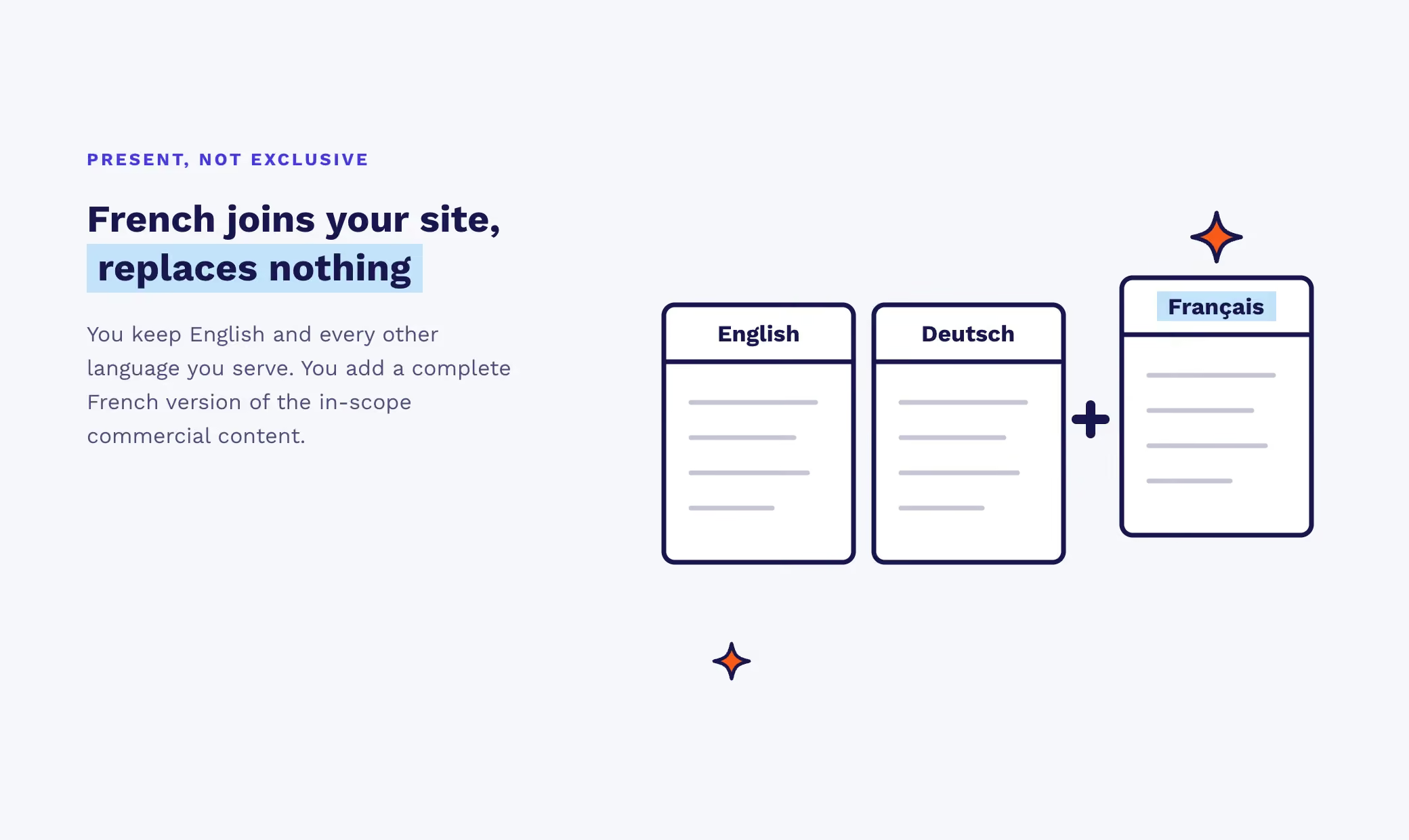
For an international brand that matters in practice. You keep your English site, you keep any other languages you serve, and you add a French version of the in-scope commercial content that is complete rather than a partial summary. French sits next to the rest, it does not replace it.
Enforcement sits with the DGCCRF, the French consumer-protection authority. A breach of the loi Toubon is treated as a 4th-class contravention, which carries a fine of up to 750 EUR for an individual. For a company, the 3,750 EUR figure is derived by applying the 5x legal-person multiplier to that 750 EUR ceiling; it is not a number written directly in the loi Toubon.
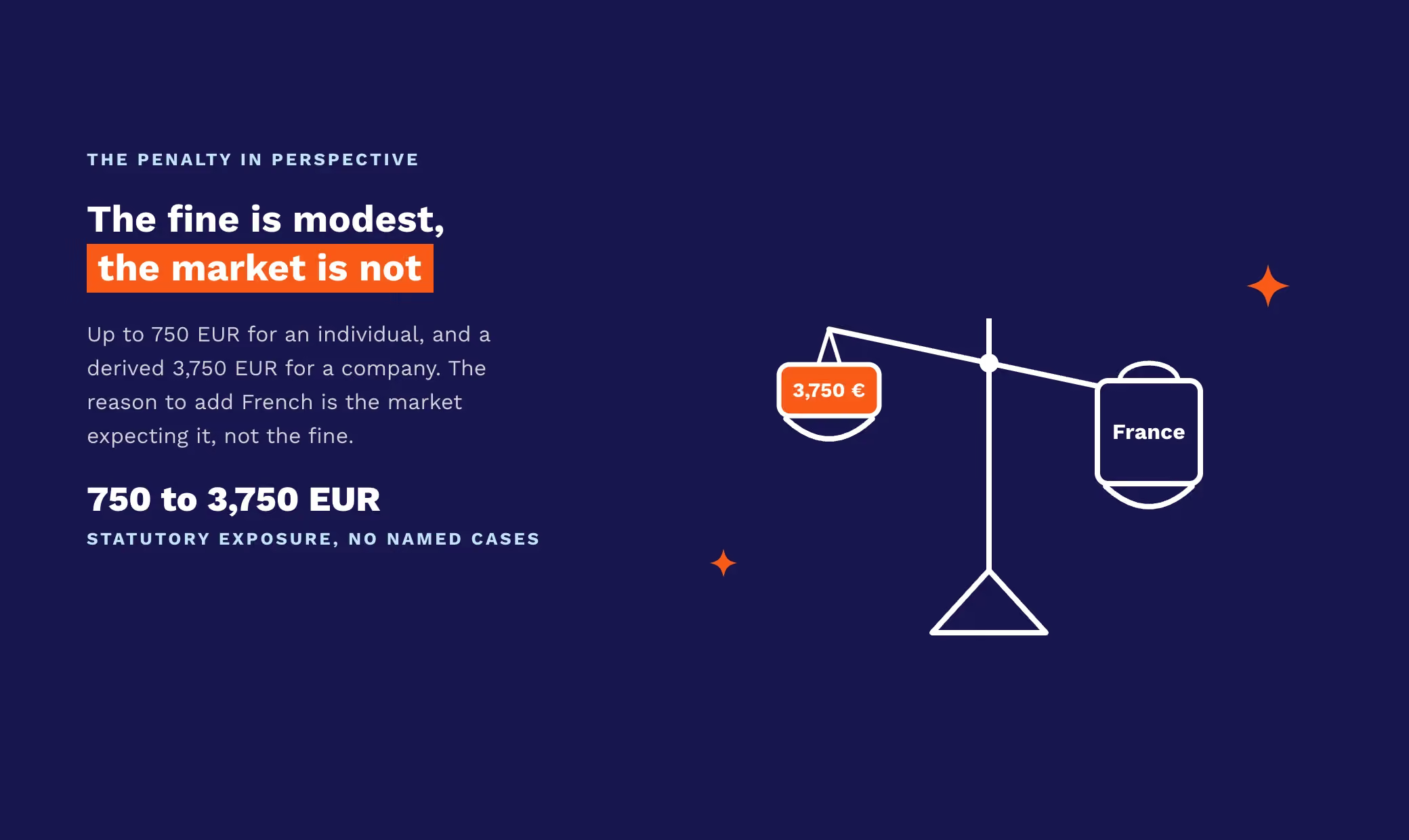
The fine is modest, and that is worth saying plainly rather than dressing it up. The reason to add French is not fear of a 3,750 EUR penalty, it is that French is the working language of the market you are selling to and the law expects it. The business case, beyond the law, sits in its own section further down.
A practical checklist:
Weglot helps you create and manage the French version of your existing site, so the French content sits alongside the original and is reachable from the same navigation. The translation is AI translation that stays true to your brand voice and your page context. For legal-facing copy, keep a human review step before you publish, rather than putting an unreviewed automatic translation live. If your site runs on WordPress or an e-commerce platform, Weglot connects directly, so adding French does not mean rebuilding.
.avif)
Not sure how much content you would be translating? The website word count tool gives you a quick estimate before you start.
Even where the obligation is light, a French version is a strong investment in the French market. France is a large consumer market where many visitors expect to read, compare and buy in French. A French version makes it easier for them to understand your offer and move forward with confidence, law or no law. Learn more here about the reasons a multilingual site benefits your business.
There is a visibility case too. A French version of your pages can appear for French search queries you do not show up for today, including in AI-generated answers where relevant. If your competitors stay English-only, a clean French presence is a way to be found where they are not. Because yes, multilingual SEO impacts your brand visibility in LLMs.
And it is far less work than people expect. You are not running a separate French site, you are serving a French version of the one you have, kept in step automatically as you update the original. Plenty of brands already do exactly this as how in our multilingual website examples post.
The consumer-facing commercial parts do, the pages that present, offer, describe and advertise what you sell to French consumers, plus warranty terms, invoices and advertising. French has to be present and complete, but it does not have to be your only language.
Yes. The loi Toubon requires French to be present, not exclusive. A complete French version of the in-scope commercial content alongside your English one is the usual compliance path, subject to legal review for your case.
The trigger is selling to consumers in France, not where your company is registered. If you offer goods or services to French consumers, do not assume being based elsewhere puts your commercial content outside the rule.
For commercial and legal-facing content, an unreviewed automatic translation can miss legal wording, product details, or brand tone. The French has to be complete, correct and on-brand, which is why a reviewed AI translation is the safer route. Learn more on the topic here: how accurate is Google Translate, How to leverage AI to translate your website.
It depends on how much content you have. The website word count tool gives you a quick estimate, and you can see plans on the pricing page.
This page is general information about France's language requirements for websites. It is not legal advice, and it does not create a lawyer-client relationship. For how the rules apply to your specific business, consult a qualified French lawyer.

We’ll get your first languages live. You decide how far you want to go. Try Weglot for free today.
Trusted by 110,000+ global brands








Weglot is tested and trusted by brands worldwide since 2016. Join them today.


The best way to understand the power of Weglot is to see it for yourself. Test it for free and without any engagement.
A demo website is available in your dashboard if you’re not ready to connect your website yet.


