

Try Weglot for free


%402x.avif)


The short answer is reassuring: usually not the whole site. If you sell to consumers in Catalonia, the law does not ask you to translate everything into Catalan. It asks for something narrower, that the information a consumer needs to buy from you, and to use what they bought safely, be available in Catalan.
So before anything else, here is the shape of it:
This page explains what the law asks for, who it applies to, exactly which parts of your site need Catalan, and how to localize just those parts without rebuilding. It is general information to help you understand the rule, not legal advice for your specific case.
The operative source is the Consumer Code of Catalonia, Llei 22/2010, del 20 de juliol, del Codi de consum de Catalunya, which builds on the Language Policy Act, Llei 1/1998.
Its Article 128-1 sets a consumer language right: people have the right to receive the consumer-facing information about goods and services in Catalan. The Catalan Consumer Agency states the practical version plainly, no rule forces a company to have a Catalan website, but where a site targets Catalan consumers, the consumer-required information on it must be available in Catalan.
.avif)
It can apply to businesses offering products or services to consumers in Catalonia, including businesses serving Catalan consumers online from outside Catalonia. There is no size threshold in this rule; the practical trigger is whether you are targeting Catalan consumers. One useful carve-out, your trademarks and trade names do not have to be translated, so your brand name stays as it is.
The rule is about what a page does, not what it is called. A page is consumer-essential if it carries an offer, a price, or the product, contract or safety information a buyer relies on. So judge each page by its function. A page that looks like marketing but lists prices and an offer is in scope, and a page with none of that usually is not.
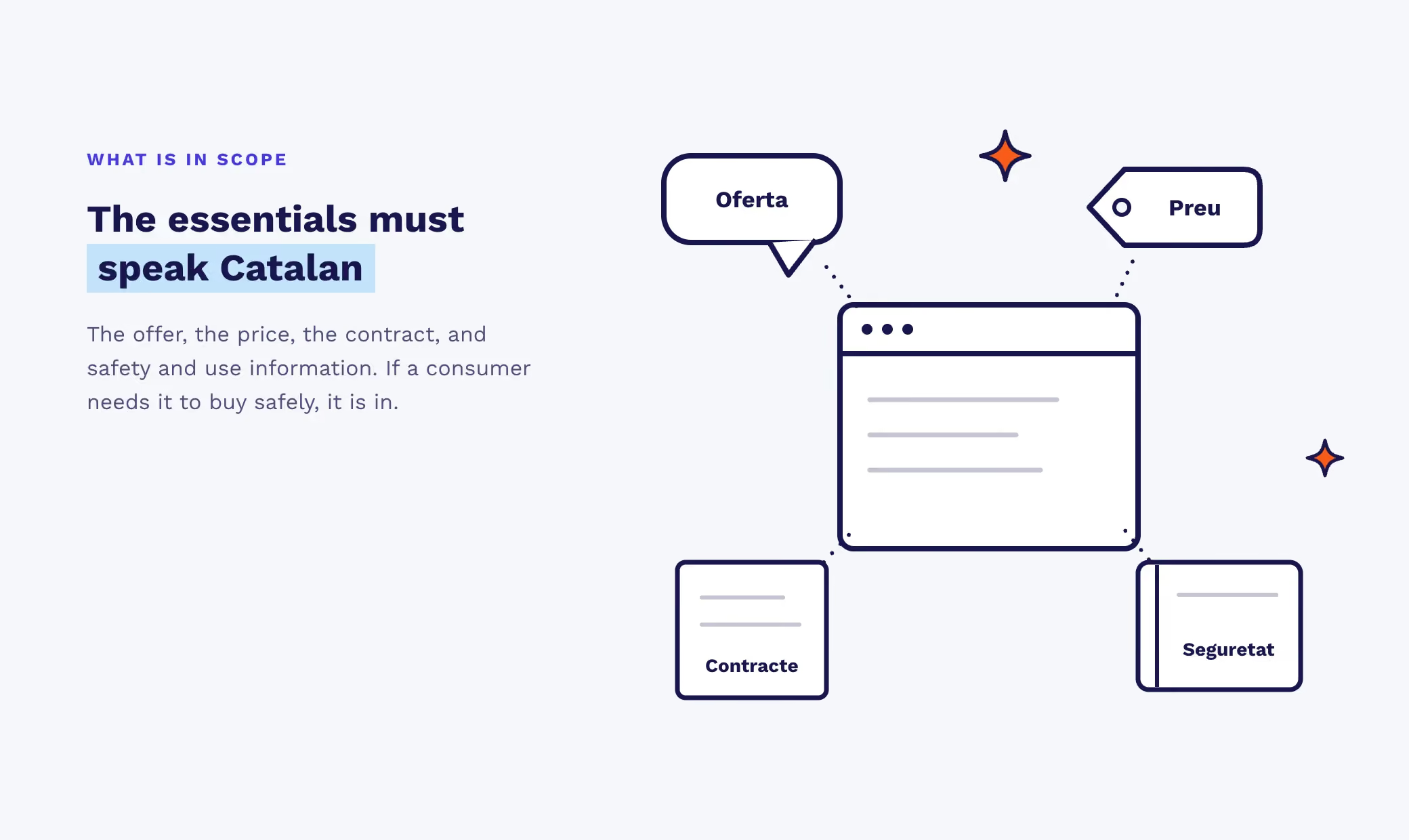
Drawing on Article 128-1, the consumer-essential set that should be available in Catalan:
The law applies this "regardless of the medium, format or support," so a website is covered the same as anything else. Alongside the documents, Catalan law recognizes consumer language rights in customer service too. For private businesses, Spanish Constitutional Court rulings limit how directly that becomes an oral-language duty for each worker, so treat customer-service handling as a legal-review point. The written document-and-information duty above is the clearer online obligation.
The whole site does not have to be in Catalan. Pages that are not consumer-essential are generally outside the rule. Because the test is function, not page name, the safe way to read this is simple: if a page carries an offer, a price or product, contract or safety information, treat it as in scope, and if it carries none of that, it usually sits outside.
This is the point people get wrong, so it is worth stating cleanly. The floor is "at least in Catalan." Spanish is also an official language in Catalonia, so Spanish content does not disappear and does not, on its own, satisfy the Catalan requirement. This is an add-Catalan story, not a replace-Spanish one. If your site already serves Spanish, the task is to make sure the consumer essentials are also there in Catalan, alongside it. Aranese is the third official language and applies in the Aran Valley.
Enforcement sits with the Agència Catalana del Consum. Fines are tiered by how serious the breach is: minor infringements can run up to 10,000 EUR, serious infringements from 10,001 to 100,000 EUR, and very serious infringements from 100,001 to 1,000,000 EUR. For serious and very serious cases, the amount can also scale with the value of the goods or services involved.
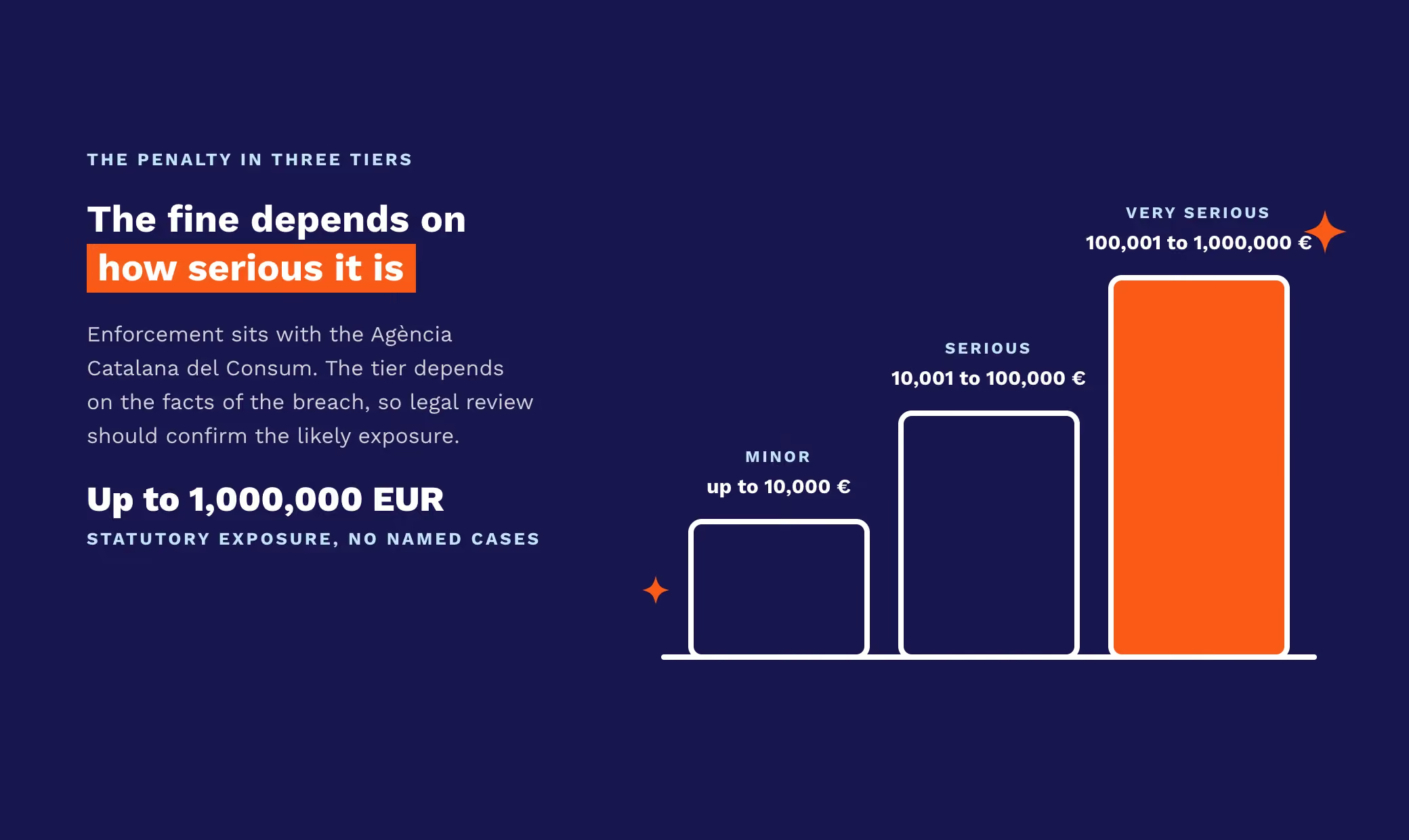
The applicable tier depends on the facts of the breach, so legal review should confirm the likely exposure. Practically, the first step is contained: identify the required consumer-essential pages and documents, then make that set available in Catalan.
A practical checklist:
Weglot lets you add and serve Catalan versions of the pages you identify as in scope, so you can localize the consumer essentials without rebuilding or translating the whole site. The translation is AI translation that stays true to your brand voice and your page context. For legal-facing copy, keep a human review step before you publish, rather than putting an unreviewed automatic translation live. If your site runs on WordPress or an e-commerce platform, Weglot connects directly.
Once you have identified the pages that need Catalan, the website word count tool can estimate how much content you would translate.
No. Only the consumer essentials, the product and service information, offers, contracts and adhesion terms, quotes, invoices, and use and safety information, plus customer-service duties where they apply under the current legal standard. The rest of your site is generally not what the rule is reaching for.
No. The requirement is at least Catalan. Spanish is also official and stays, but it does not satisfy the Catalan requirement by itself.
The trigger is targeting Catalan consumers, not where your company is registered. If you actively sell to consumers in Catalonia online, the consumer-essential information may need to be available in Catalan.
No. Trademarks and trade names are carved out, so your brand stays as it is.
For consumer and legal-facing content, an unreviewed automatic translation can miss legal wording, product details, or brand tone. The Catalan has to be complete, correct and on-brand, which is why a reviewed AI translation is the safer route.
It depends on how much consumer-essential content you have. The website word count tool gives you a quick estimate, and you can see plans on the pricing page.
This page is general information about Catalonia's consumer language requirements for websites. It is not legal advice, and it does not create a lawyer-client relationship. For how the rules apply to your specific business, consult a qualified lawyer in Catalonia.

We’ll get your first languages live. You decide how far you want to go. Try Weglot for free today.
Trusted by 110,000+ global brands







Weglot is tested and trusted by brands worldwide since 2016. Join them today.


The best way to understand the power of Weglot is to see it for yourself. Test it for free and without any engagement.
A demo website is available in your dashboard if you’re not ready to connect your website yet.


