Weglot vs Bablic: which one can your SEO and IT teams sign off, and still run next year?
Weglot is a website translation platform, with translations, glossary and multilingual SEO managed in one workspace your team runs across different website technologies. Bablic, now part of TransPerfect, is a website localization tool built around on-page visual editing.

- No credit card details
- No commitment
- 14-days free
The short answer
Weglot is best for when you translate websites across more than one technology and want glossary control and multilingual SEO handled in one workspace. Bablic wins when you want to localize a single site visually on the page, including per-language images, video and layout, or when you need full right-to-left support.
The two also meter usage differently. While they both bill on the number of languages, Weglot charges based on word count, and Bablic charges based on the pageviews your translated content receives.
What is the main difference between Weglot and Bablic?
On features, the 2 overlap almost completely. Both install with a JavaScript snippet, both detect new content on your site, and both give you a visual editor, a glossary and a way to order professional translation. The difference is what each product publishes for the teams that have to approve it, and where each product is heading.
Search. Weglot publishes automatic hreflang tags, translated metadata and image alt tags, language-specific URLs with translated slugs, and server-side rendering so crawlers receive a complete translated page. Bablic does not publish hreflang support on its product pages, and its entry plan excludes multilingual SEO.
Procurement. Weglot's pricing page lists what an IT or legal review asks for, on the Enterprise plan: SAML single sign-on with OneLogin, Ping, Microsoft Azure and Okta, an SLA, an MSA and a DPA, an account manager and security assessment support. Bablic's public pages list none of them.
Trajectory. Bablic is retiring its legacy platform on 30 November 2026, and accounts that do not migrate have their data permanently deleted. Its WordPress.org plugin was closed in December 2025. Weglot is a standalone company whose only product is website translation.

How does each one connect to your site?
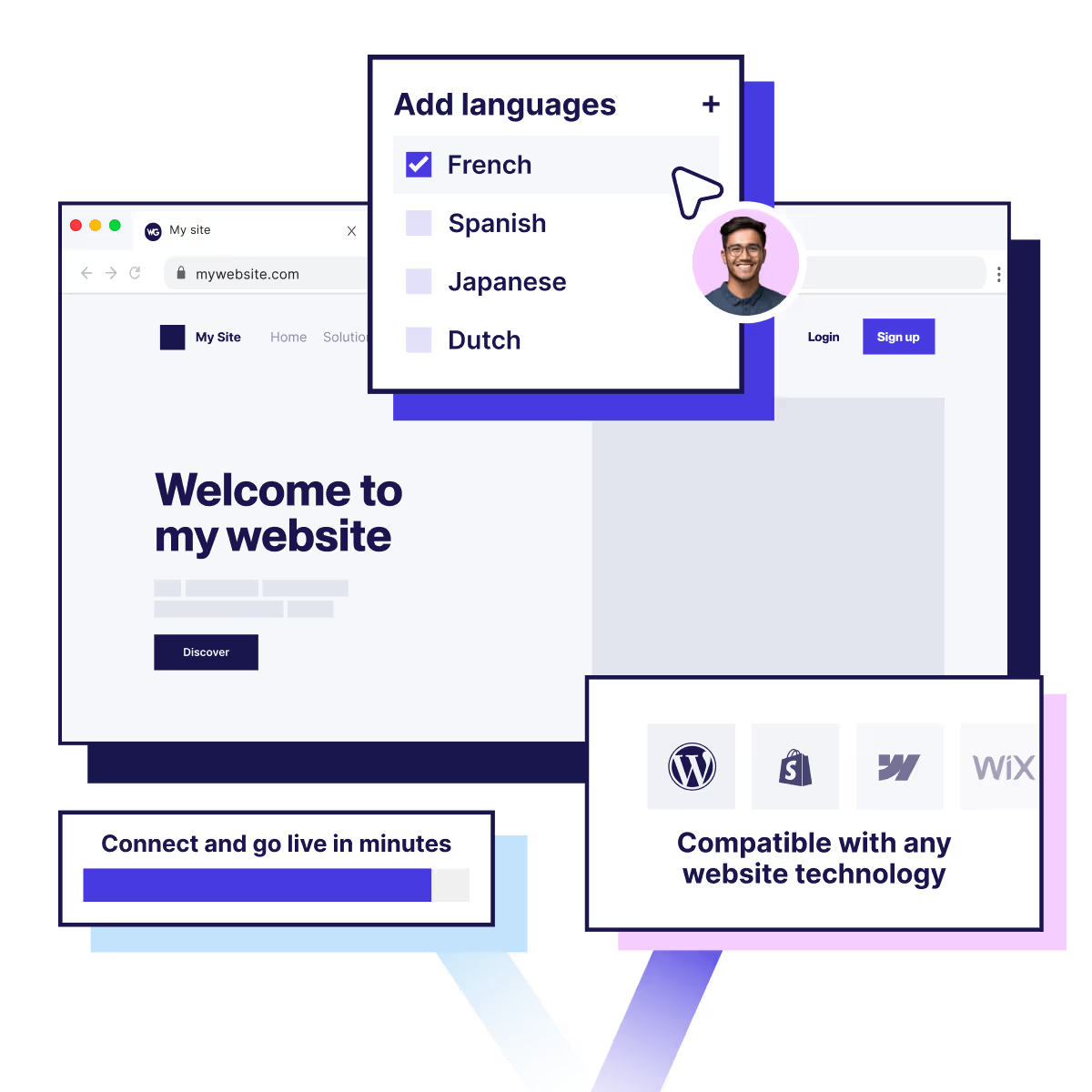
Both connect to an existing site without rebuilding it. But they differ in the platforms they support.
Weglot works across Shopify, WordPress, Webflow, Squarespace, Framer, custom sites and other website technologies, which suits a team running a store alongside campaign sites, documentation or a second CMS.
Bablic documents integrations for Shopify and WordPress, along with website builders including Duda and Weebly, and offers APIs for other setups.
How are Weglot and Bablic priced?
Weglot prices on the total unique words translated across your languages and the maximum number of languages. It publishes a free plan covering 2,000 words in one language, then paid plans up to 5,000,000 words across 20 languages, plus an Enterprise plan on request, so you can size your own cost before contacting anyone.
Bablic prices on the number of languages you add and the pageviews your translated content receives. Its billing documentation is specific about the counting: only pageviews on translated content count against your quota, so traffic to your original language does not, and quotas renew monthly on every plan. Machine translation words come as an allowance per plan, with additional words and optional professional translation charged separately.
Weglot's cost depends on your unique word count and how many languages you publish. Bablic's depends on how many languages you add and how much traffic your translated pages receive. Which works out cheaper depends entirely on your own numbers, so price both against your actual word count, language count and translated pageviews before deciding.
How does each handle multilingual SEO and localized media?
Weglot handles multilingual SEO automatically. Bablic does not publish hreflang support on its product pages, and its entry plan excludes multilingual SEO and deployment methods. But you can visually change localization aspects on the translated page.
Weglot creates hreflang tags, translates metadata and serves language-specific URLs without configuration, so your translated pages can be indexed as pages in their own right. It also supports right-to-left languages like Arabic, Farsi, and Urdu.
Bablic supports language-specific domains, so each language can sit on its own domain if that is how you want your site structured.
You can use its Visual Editor to restore a page's original appearance after translation. Like Weglot, it supports right-to-left languages and flips the orientation accordingly.

Who should choose Weglot?
Here are some real examples. If the translated pages need to rank, Weglot generates hreflang tags, translates metadata and image alt tags, serves language-specific URLs and translated slugs, and renders pages server-side so crawlers receive them complete.
Bablic does not publish hreflang support on any of its product pages, and its entry plan excludes multilingual SEO and deployment methods. If IT or legal will review the purchase, Weglot's pricing page lists, on the Enterprise plan, SAML single sign-on with named identity providers, an SLA, an MSA and a DPA.
And if you are choosing something you will still be running in 3 years, Weglot is a continuous product, while Bablic is retiring its legacy platform on November 30, 2026 and permanently deleting the data of accounts that do not migrate.
None of that makes Bablic the wrong tool. Just a different purchase.
Who should choose Bablic?
If your localization is visual and sits on one site, Bablic may be the better fit.
Here are some real examples. If a translated language breaks your layout, you can adjust font size, margins and padding from within the Visual Editor rather than sending you back into your CMS. If your site holds a lot of translated content but draws modest translated traffic, a pageview meter may simply cost you less than a word-based plan. It also supports hosting language versions on ccTLDs (country code top-level domain) like .fr, .jp, etc.
What should you do next?
Decide whether you are buying a translation workflow across your website technologies, or visual localization of one site's pages.
If you want to see it working on your own site before committing to anything, install Weglot on the free plan and look at your own content translated. If precise controls about language versions through an in-context editor, like being able to adjust font sizes and such, are crucial to your project, Bablic may be a better fit for you. In that case, Bablic against your own translated traffic and compare it with the Weglot plan covering the same languages.

Translate your website with Weglot
Translations, glossary and multilingual SEO in one workspace your team runs. Free for the first 14 days.
